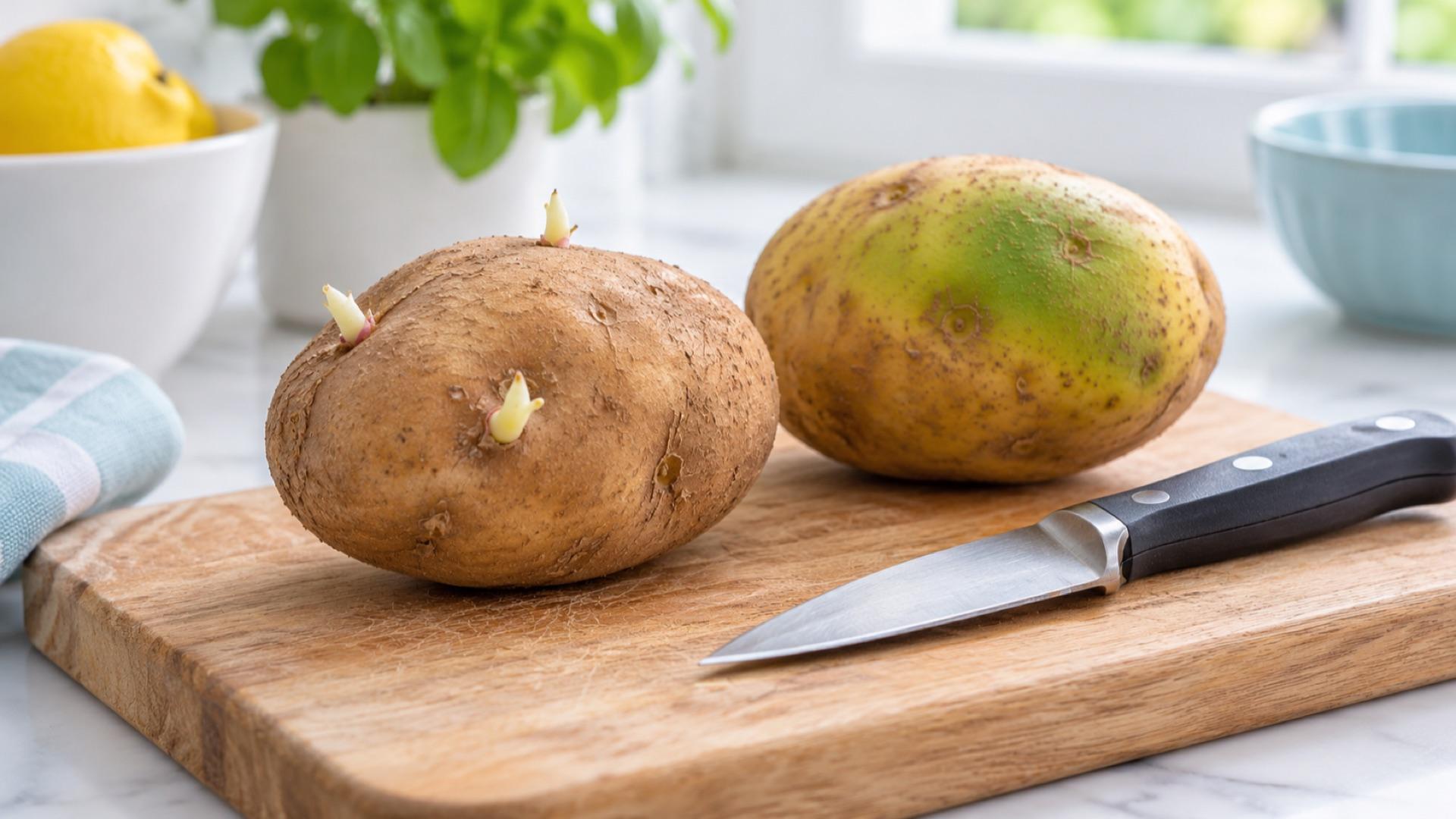
A sprouted potato is usually safe to eat if it is still firm and the sprouts are small: cut out the sprouts and the eyes around them, peel away any green skin, and cook it. If the potato is soft, shriveled, has long sprouts, tastes bitter or is green beneath the skin, throw it out.
The reason for caution is a group of natural compounds called glycoalkaloids, mainly solanine and chaconine, which build up in sprouts, eyes and green skin. Below is what official and university sources say, how to decide between trimming and tossing, and how to store potatoes so they do not sprout in the first place.
What Makes Sprouted and Green Potatoes Risky
Potatoes are part of the nightshade family, and like the rest of the plant, the tubers naturally contain small amounts of solanine and chaconine. In a normal, firm, well-stored potato, levels are low and concentrated in and just under the skin.
Levels go up in a few situations:
- Sprouting. Iowa State University Extension notes that glycoalkaloids are most concentrated in sprouts, eyes and green skin, and least concentrated in the flesh.
- Light exposure. Light makes potatoes produce chlorophyll, which turns the skin green. Purdue University's horticulture team explains that the chlorophyll itself is harmless, but the same light exposure triggers more solanine, and the amount increases with the length and intensity of the light.
- Damage and age. Bruised, cut or very old potatoes can also build up more of these compounds.
Green color is a warning sign, not a precise measure. A potato can have raised solanine without turning very green, which is why a bitter taste is another signal to stop eating it.
Does cooking destroy solanine?
No. According to the National Capital Poison Center (Poison Control), baking, boiling, frying and microwaving do not eliminate glycoalkaloids. Iowa State Extension says the same. Peeling and trimming before cooking are what actually reduce them, because most of the compounds sit in the skin, eyes and sprouts.
Sprouted Potatoes: Trim or Toss?
University extension guidance gives a practical rule based on how far the sprouting has gone. Poison Control is more cautious and says you are better off throwing away potatoes that have turned green or grown sprouts. If you are unsure, the conservative choice is always to discard.
| What you see | What to do | Source |
|---|---|---|
| Firm potato, tiny sprouts or "eyes" just starting | Cut out sprouts and eyes deeply, peel, cook soon | Iowa State Extension |
| Firm potato, small green patches on the skin | Peel or cut away all green areas generously | Iowa State Extension, Purdue |
| Sprouts 1 inch or longer | Discard | Iowa State Extension |
| Soft, wrinkled or shriveled potato | Discard | Iowa State Extension |
| Green extends into the flesh | Discard | Iowa State Extension |
| Bitter or burning taste after cooking | Stop eating and discard | Purdue, Poison Control |
| Mold, rot, oozing or bad smell | Discard | General food safety |
| Children are the ones eating it | Lean toward discarding | Michigan State University Extension recommends discarding green and sprouted potatoes |
How to trim a sprouted potato
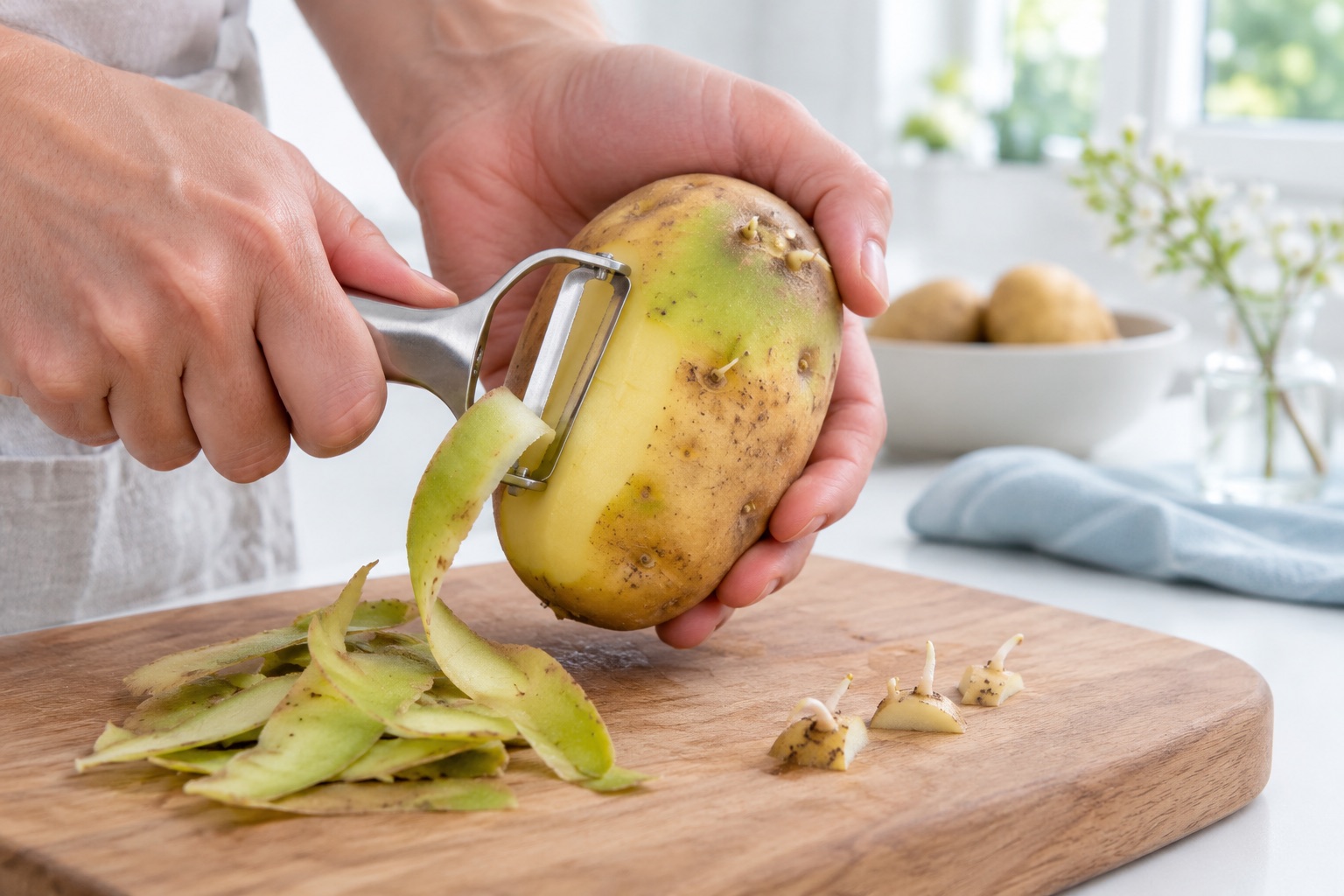
- Snap or cut off all sprouts.
- Dig out each eye with the tip of a peeler or a paring knife, taking a small cone of flesh with it.
- Peel the whole potato, rather than just the sprouted spots.
- Cut away any green, going about 1/4 inch past where the green ends.
- Taste a small bite after cooking. If it is bitter, throw the rest away.
Pro tip: Trimmed, sprouted potatoes are a cook-today ingredient, not something to store again. Once you have cut into one, refrigerate any raw cut pieces covered in water and cook them within a day, or cook them right away and refrigerate the leftovers for 3 to 4 days.
Is It Safe to Eat a Green Potato?
A potato with a light green tinge on part of its skin is usually salvageable: peel it and cut away every green area. Purdue notes that removing the green portion also removes most of the toxin, since most of it is in the skin.
Throw it out if the green runs deep into the flesh, covers most of the potato, or the cooked potato tastes bitter. Do not eat the skins of green potatoes, even as baked potato skins or skin-on fries, since the skin is where the compounds concentrate.
Small potatoes and new potatoes are often cooked with the skin on, so check them carefully under good light before cooking. If you notice a green tinge on a few, peel those or set them aside.
What Happens If You Eat Too Much Solanine
Poison Control lists the typical effects of eating potatoes with high glycoalkaloid levels as vomiting, abdominal pain and diarrhea, sometimes with headache, flushing, confusion or fever. Symptoms usually start within a few hours but can be delayed up to a day. Serious cases are rare, partly because potatoes with dangerous levels taste noticeably bitter.
This article is general food-safety information, not medical advice. If someone feels unwell after eating green, bitter or heavily sprouted potatoes, contact Poison Control at 1-800-222-1222 or use its online tool, which is free and available 24 hours a day, and follow their guidance.
What About Sprouted Sweet Potatoes?
Sweet potatoes are not related to white potatoes. They belong to the morning glory family, not the nightshade family, so the solanine concerns above do not apply to them in the same way. A firm sweet potato with sprouts can have the sprouts and any soft spots cut off and be cooked soon. Discard sweet potatoes that are soft, moldy, oozing or smell bad. Our guide on how to store sweet potatoes covers the rest, including why they should never go in the fridge raw.
Sprouted garlic and onions are a separate case again: they are safe but milder and softer. See how to store garlic for details.
How to Keep Potatoes From Sprouting or Turning Green
Most sprouted and green potatoes are the result of storage that is too warm, too bright or too long. The USDA FoodKeeper recommends pantry storage for whole potatoes, where they keep 1 to 2 months. It notes, citing the United States Potato Board, that refrigeration can make potatoes darken during cooking and taste unpleasantly sweet.
| Storage | How long whole potatoes last | Notes |
|---|---|---|
| Cool, dark pantry, 45 to 50°F (7 to 10°C) | 1 to 2 months | Best option (FoodKeeper; temperature from Iowa State Extension) |
| Warm kitchen, 70°F (21°C) or more | A couple of weeks before sprouting | Buy smaller amounts |
| Refrigerator | 1 to 2 weeks | Not recommended for quality (FoodKeeper) |
| Cooked or mashed, freezer | 10 to 12 months | FoodKeeper |
To slow sprouting and greening:
- Keep them dark. Use a closed cabinet, a lidded bin or a paper bag. Even kitchen light causes greening over time.
- Keep them cool and dry, with some airflow. Avoid sealed plastic bags.
- Keep them away from onions, apples and bananas, which can encourage sprouting. Our guide on how to store potatoes and onions explains the details.
- Buy what you will use in a few weeks. A cheap 10 lb bag is not a bargain if half of it sprouts.
- Freeze extras before they sprout. Cooked potatoes freeze well; raw ones need to be blanched first. See can you freeze potatoes for methods.
Cutting down on forgotten produce is one of the simplest ways to waste less food overall, as we cover in how to reduce food waste at home.
FAQ
Is it safe to eat potatoes with sprouts?
If the potato is firm and the sprouts are small, yes, after you remove the sprouts and eyes and peel it. Discard potatoes with sprouts 1 inch or longer, or that are soft or shriveled.
Can you eat a potato that has turned green?
Peel and cut away all green areas from a firm potato and cook the rest. If the green goes deep into the flesh or the cooked potato tastes bitter, throw it out.
Does cooking a green potato make it safe?
No. Poison Control says baking, boiling, frying and microwaving do not destroy solanine and chaconine. Only peeling and trimming the green parts reduce them.
Are sprouted sweet potatoes safe to eat?
Generally yes, if they are firm. Sweet potatoes are not nightshades, so solanine is not the concern. Cut off the sprouts and any soft spots and cook them soon.
Can you plant a sprouted potato?
Yes. A shriveled, heavily sprouted potato that is no longer good to eat can go in the garden or compost instead of the trash.
Use Potatoes While They Are Firm
The safest potato is one that never had the chance to sprout. Keep them cool, dark and dry, buy only what you will use in a few weeks, and trim or toss at the first sign of trouble. Freezer Inventory Tracker lists your pantry next to your fridge and freezer, with a reminder before that bag of potatoes in the back of the cabinet starts growing eyes.