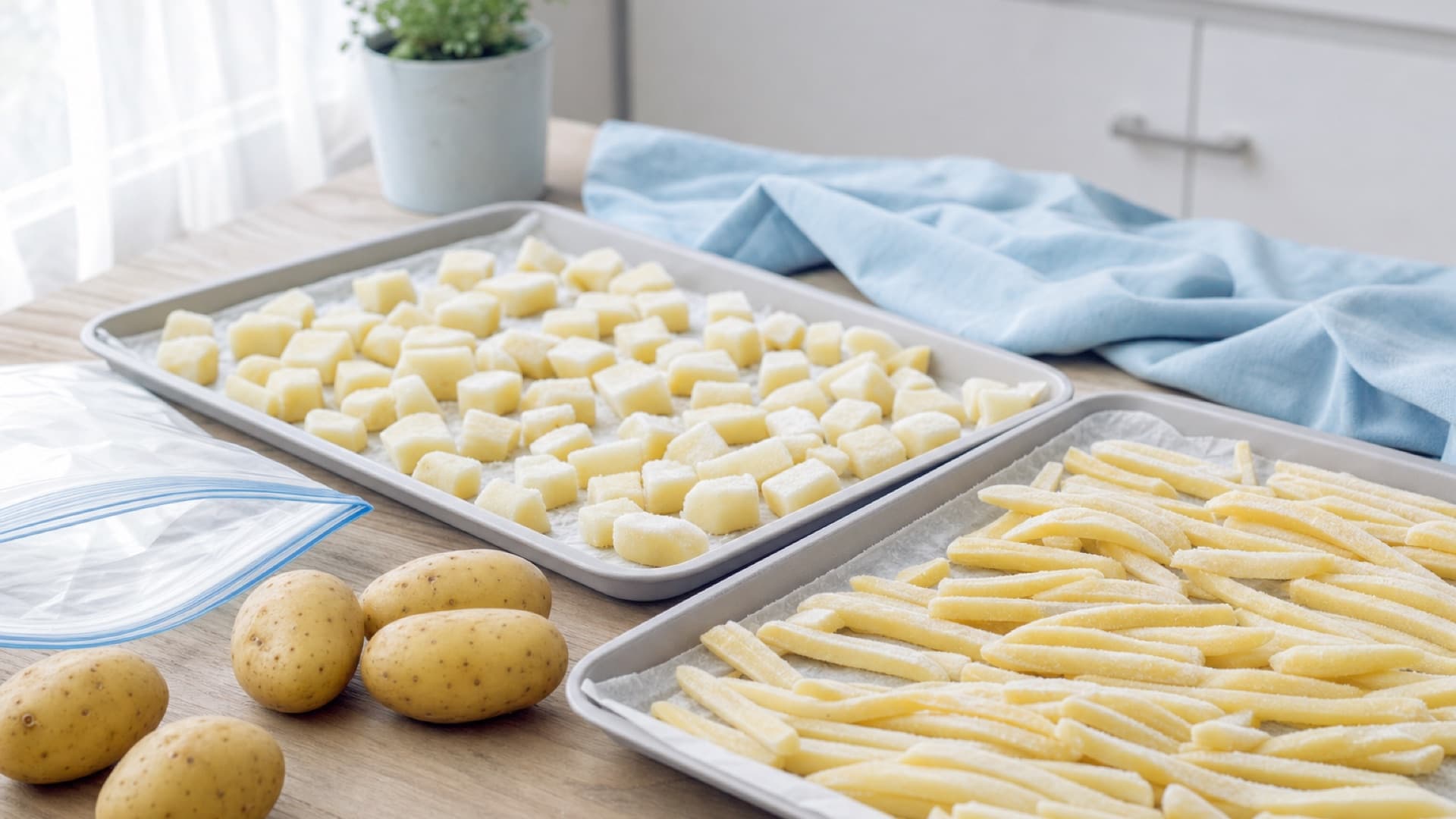
Yes, you can freeze potatoes, but you should not freeze them raw. Potatoes need to be blanched or partly cooked first, otherwise they turn gray, grainy and watery when you thaw them.
Once they are blanched, cooked or fried, potatoes freeze very well: think diced potatoes for hash, homemade fries, twice-baked potatoes and mashed potatoes. This guide covers each method, how long frozen potatoes keep, and how to cook them straight from the freezer.
Why You Shouldn't Freeze Raw Potatoes
Raw potatoes are mostly water, close to 80 percent by weight. When that water freezes, the ice crystals rupture the cell walls, and when the potato thaws the starch and water separate. The result is a soft, mealy, often weeping texture.
There is also a color problem. The USDA explains that freezing only slows enzyme activity in vegetables; it does not stop it. In raw potatoes, those enzymes keep working in the freezer and cause darkening and off flavors. That is why the USDA recommends blanching (a brief cook in boiling water) for vegetables before freezing.
So the real answer to "can you freeze raw potatoes" is: technically yes, practically no. Spend the extra five minutes to blanch them.
Storage Times for Frozen Potatoes
| Potato product | Freezer, 0°F (-18°C) | Source |
|---|---|---|
| Potatoes, blanched or cooked before freezing | 10 to 12 months | USDA FoodKeeper |
| Commercial frozen fries, hash browns, tots | 12 months | USDA FoodKeeper |
| Cooked potato leftovers (roasted, boiled) | 1 to 2 months | USDA FoodKeeper |
| Stuffed baked potatoes | 2 to 4 weeks | Penn State Extension |
| Cooked sweet potatoes | Up to 1 year | Michigan State University Extension |
Remember these are quality limits. According to the USDA, food kept constantly at 0°F (-18°C) stays safe indefinitely; it just slowly loses flavor and texture. Prepared, cooked potato dishes lose flavor faster, so Penn State Extension suggests using them within a few weeks.
How to Freeze Diced or Small Whole Potatoes
Waxy potatoes (red, gold, new potatoes) hold their shape better than starchy russets after freezing.
- Wash and peel if you like. Cut into 1/2-inch cubes, or leave small new potatoes whole.
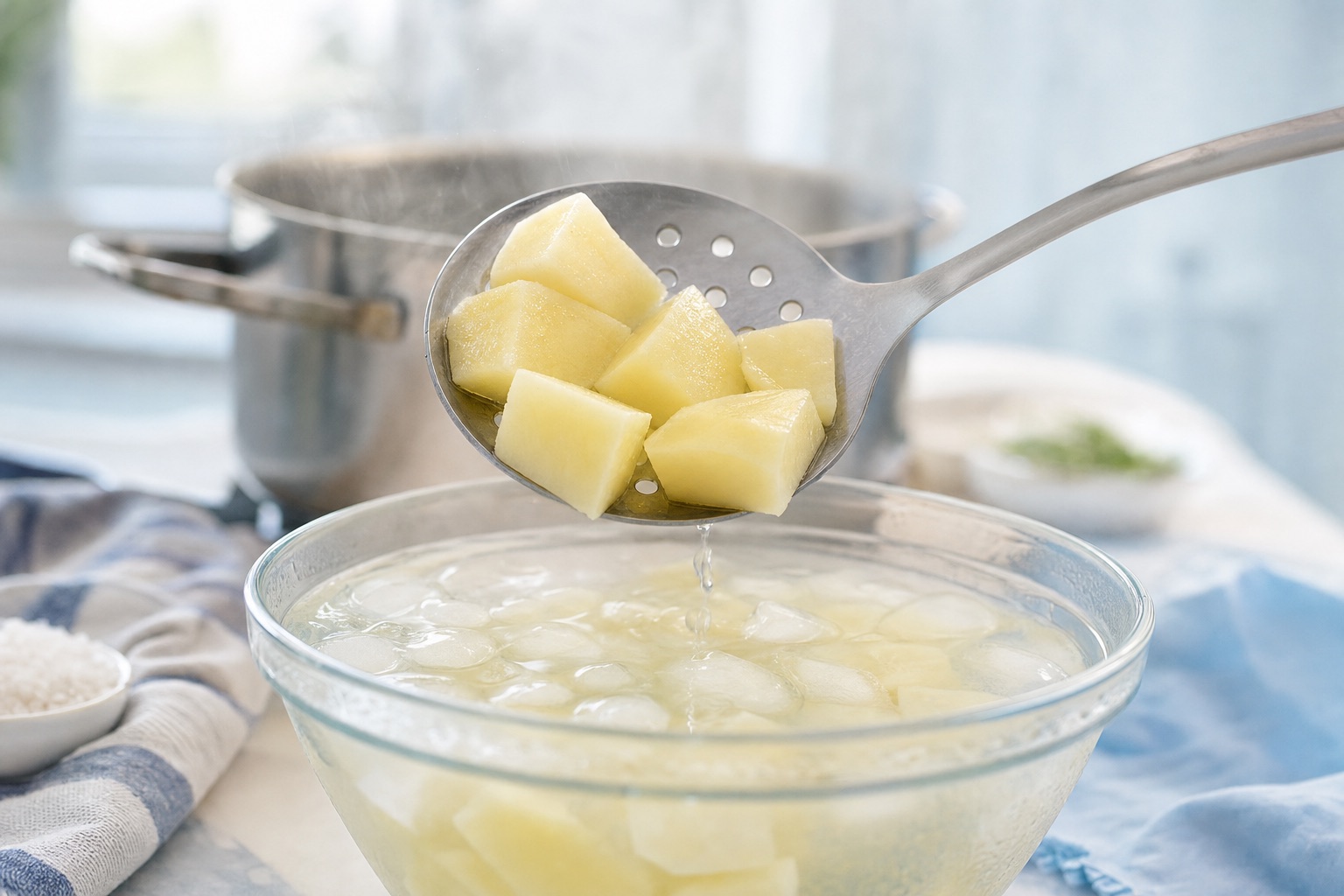
- Blanch in boiling water. Penn State Extension recommends 4 to 6 minutes for whole potatoes smaller than about 1 1/2 inches across, and 8 to 10 minutes for larger ones. For 1/4- to 1/2-inch cubes, University of Idaho Extension suggests about 5 minutes.
- Chill fast in a bowl of ice water for the same amount of time.
- Drain and dry thoroughly with a clean towel. Surface water turns into ice crystals and freezer burn.
- Flash freeze in a single layer on a lined baking sheet until solid, about 1 to 2 hours.
- Bag and label with the date, pressing out as much air as you can.
To cook: drop frozen whole potatoes into boiling water and cook about 15 minutes until tender, or roast frozen cubes on a hot sheet pan. No need to thaw.
Pro tip: Freeze in the portion size you actually cook. One bag of diced potatoes per breakfast hash or per soup means you never need to break apart a frozen block.
How to Freeze Homemade French Fries
Fries are one of the best reasons to freeze potatoes, because they go from freezer to oven with no thawing.
Penn State Extension's method:
- Choose mature potatoes and cut into strips about 3/8 inch thick. Rinse in cold water to remove surface starch, then dry well.
- Par-cook either by frying in oil at 360°F (182°C) for about 5 minutes, until tender but not browned, or by baking at 450°F (232°C).
- Cool, flash freeze on a tray, and bag.
- To serve, bake frozen fries at 475°F (246°C), turning occasionally, until golden brown. An air fryer works too.
Hash browns follow the same logic: shred, blanch briefly, squeeze very dry, and freeze in flat patties or thin layers. If you are short on time, commercial frozen fries and hash browns keep about 12 months, per the USDA FoodKeeper.
How to Freeze Baked and Twice-Baked Potatoes
Plain baked potatoes frozen whole tend to go watery. Twice-baked (stuffed) potatoes freeze much better because the mashed filling has fat in it.
- Bake the potatoes, scoop out the flesh and mash it with butter, sour cream or cheese.
- Refill the skins, cool, wrap each one tightly, and freeze.
- To serve, unwrap and bake at 425°F (218°C) for about 30 minutes, per Penn State Extension, which recommends using stuffed potatoes within 2 to 4 weeks.
Mashed Potatoes
Mashed potatoes freeze well when they contain enough fat. Butter, cream, sour cream or cream cheese help the texture survive the freezer. Freeze in portions, and reheat to an internal temperature of at least 165°F (74°C). We have a full guide on freezing mashed potatoes, including how to reheat them without a gluey texture.
Can You Freeze Sweet Potatoes?
Yes, and like white potatoes they should be cooked first. Extension services that follow the National Center for Home Food Preservation method recommend:
- Wash and cook sweet potatoes until almost tender (boil, steam, bake or pressure cook).
- Cool, peel, then slice, cube or mash.
- To prevent darkening, dip slices for 5 seconds in a mix of 1/2 cup lemon juice and 1 quart water, or stir 2 tablespoons of lemon or orange juice into each quart of mash.
- Pack into containers, leaving about 1/2 inch of headspace, seal and freeze.
Michigan State University Extension suggests using frozen sweet potatoes within a year.
Thawing and Cooking Frozen Potatoes
In most cases you do not need to thaw potatoes at all:
- Cubes and fries: roast, air fry or pan fry from frozen.
- Whole blanched potatoes: add to boiling water or soups directly.
- Mashed potatoes: thaw overnight in the refrigerator, or reheat from frozen in a covered pot over low heat, stirring often.
- Casseroles with potatoes: the USDA notes cooked foods can be reheated from frozen, but it will take about one and a half times as long.
If you do thaw, do it in the refrigerator, never on the counter. Cooked potatoes are perishable, and the USDA's two-hour rule applies: do not leave them above 40°F (4°C) for more than 2 hours.
Common Mistakes
- Freezing raw potatoes. Covered above: blanch first.
- Skipping the drying step. Wet potatoes freeze into one solid block and develop ice crystals.
- Packing warm food. Cool cooked potatoes before bagging so they do not raise the freezer temperature or steam inside the bag.
- Leaving air in the bag. Air is what causes freezer burn. See what freezer burn is and how to prevent it.
- Freezing potato salad. The USDA FoodKeeper does not recommend freezing it, and mayonnaise-based dressings separate. It is on our list of foods that don't freeze well.
If you would rather not freeze at all, whole raw potatoes keep 1 to 2 months in a cool, dark pantry according to the FoodKeeper. Our guide on how to store potatoes and onions covers that.
FAQ
Can you freeze raw potatoes?
Not successfully. Raw potatoes darken and turn grainy because enzymes keep working in the freezer. Blanch them in boiling water for about 5 minutes (longer for whole potatoes), chill in ice water, dry and then freeze.
Can you freeze sweet potatoes?
Yes. Cook them until almost tender, cool, peel, then slice or mash and freeze. A little lemon juice prevents darkening. Use them within about a year for best quality.
How long do frozen potatoes last?
Home-blanched potatoes keep their quality for about 10 to 12 months at 0°F (-18°C), according to the USDA FoodKeeper. Cooked potato leftovers are best within 1 to 2 months, and stuffed baked potatoes within 2 to 4 weeks.
Can you freeze cooked potatoes?
Yes. Roasted, boiled and mashed potatoes all freeze, though roasted and boiled pieces soften slightly. Mashed and twice-baked potatoes with added fat freeze best.
Do you need to thaw frozen potatoes before cooking?
No. Fries, cubes and whole blanched potatoes can go straight into the oven, air fryer or pot.
Make Room for Potatoes in Your Freezer Plan
Potatoes are cheap in large bags, and a weekend of blanching and par-frying turns a 10-pound sack into months of quick sides. The only catch is remembering what you froze and when. Label every bag, and if you track your freezer with Freezer Inventory Tracker, add each batch as you put it away so the oldest bag of fries is always the next one you cook. For more on prepping vegetables, see our guide on how to freeze vegetables at home.