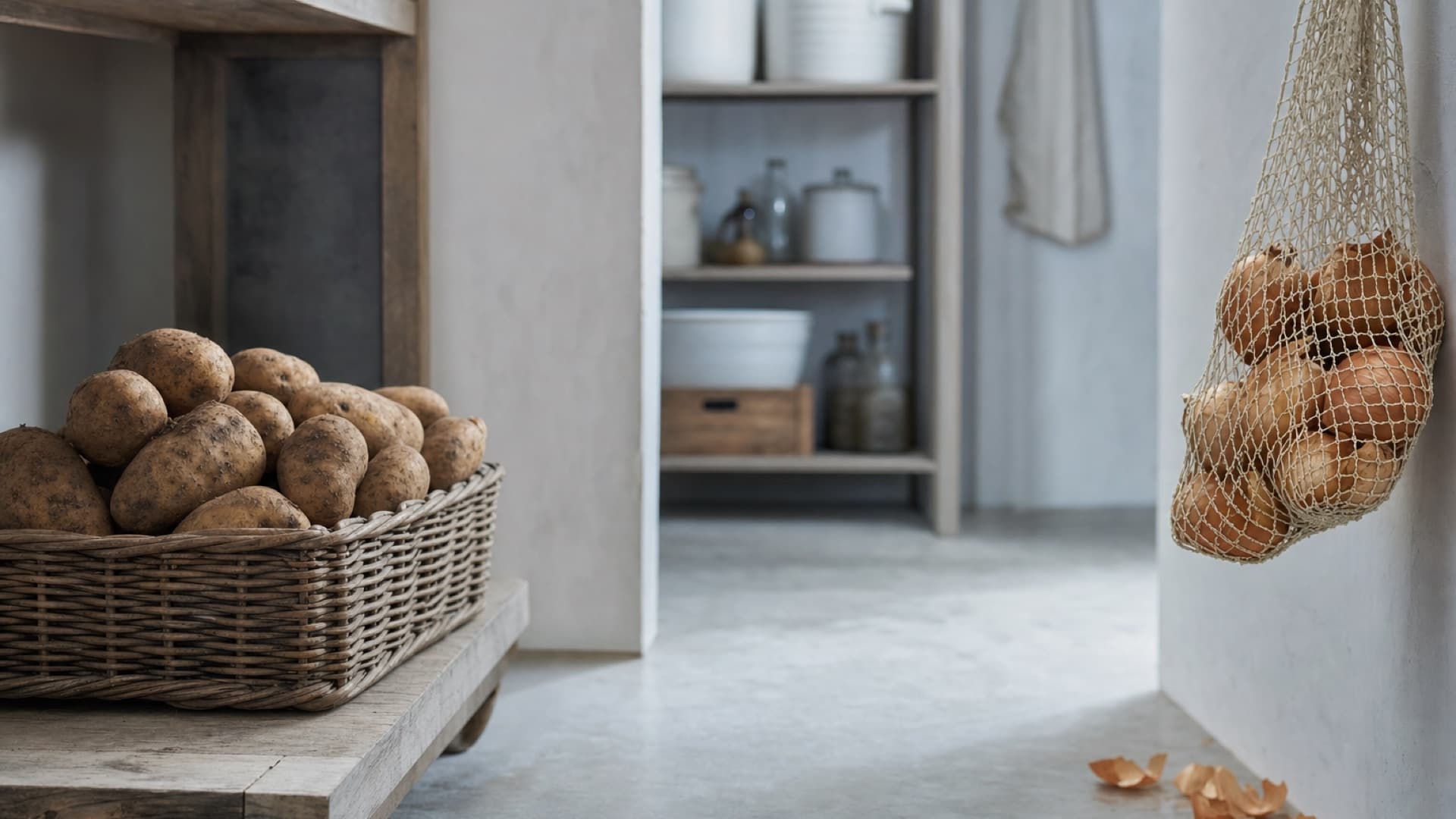
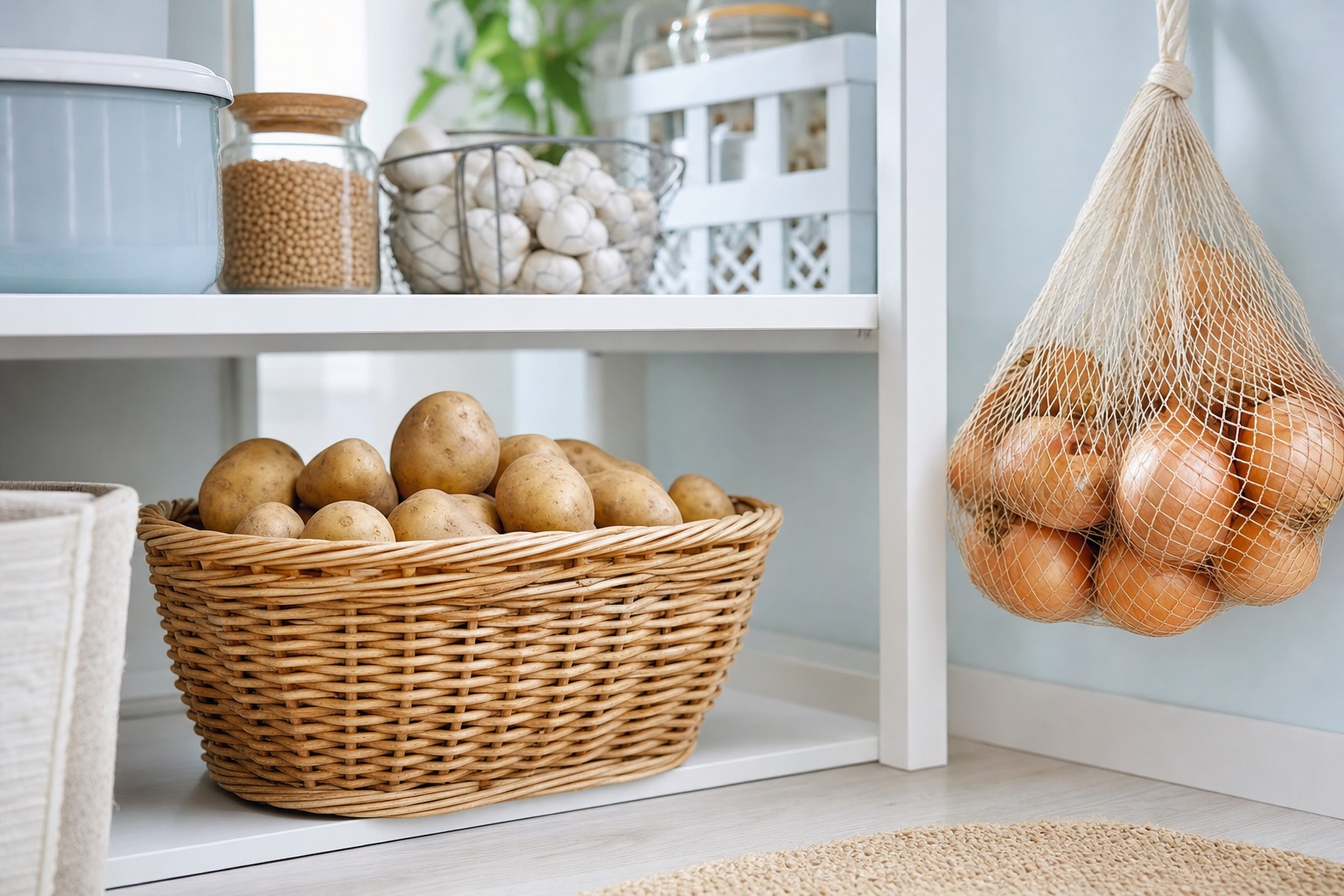
To store potatoes, keep them unwashed in a cool, dark, well-ventilated spot such as a pantry or cellar, not in the refrigerator, and they will keep for 1 to 2 months. Store whole onions in a separate cool, dry, airy place, away from the potatoes, because each one shortens the life of the other.
That is the short version. The details below explain why each rule matters, how long each vegetable lasts in each spot, and what to do when you find sprouts, soft spots or green skin.
How to Store Potatoes
Potatoes are living tubers. After harvest they keep breathing, and three things push them toward spoiling: warmth (sprouting), light (greening) and moisture (rot and mold). Good potato storage controls all three.
The ideal spot
- Cool, but not cold. University extension specialists, such as those at the University of Idaho, recommend roughly 45 to 50°F (7 to 10°C) for long storage. A basement, an unheated mudroom or the coolest corner of the pantry is closer to that than a kitchen cabinet next to the oven.
- Dark. Light turns potato skin green. Keep them in a closed cabinet, a lidded bin or a paper bag with the top folded loosely.
- Ventilated. Potatoes release moisture. A basket, a cardboard box with holes or a paper bag lets it escape. A sealed plastic bag traps it and invites rot.
Don't wash them first
Wash potatoes right before cooking, not before storing. Damp skins rot faster, and scrubbing removes the protective layer of soil that helps them keep.
Why not the refrigerator?
The FDA advises storing potatoes outside the refrigerator, preferably in a dark, cool place such as a closet or pantry. Cold temperatures convert some of the starch into sugar, which gives raw potatoes a sweet taste and can increase acrylamide formation when they are fried, roasted or baked at high heat. Refrigerated potatoes also tend to darken when cooked.
Note that the UK Food Standards Agency has since said fridge storage does not substantially increase acrylamide, so this is an area where agencies differ. Since this site follows US guidance, we stick with the FDA recommendation: pantry, not fridge, for whole raw potatoes.
Pro tip: Buy potatoes in the quantity you will use in a month. A 10 lb bag is cheaper per pound only if you finish it before it sprouts.
How to Store Onions
Whole dry onions (yellow, red and white bulbs with papery skins) need the opposite humidity from potatoes. They want cool, dry air with plenty of circulation.
- Keep them dry. Moisture makes onions sprout or grow mold under the skin.
- Give them air. Mesh bags, wire baskets or an open bowl work. Never seal whole onions in plastic.
- Keep them away from potatoes. More on that below.
- Watch for soft spots. One rotting onion spreads quickly to the rest of the bag, so check the bag every week or two.
Cut, peeled and green onions
Once an onion is peeled or cut, the rules change: it belongs in the refrigerator in a sealed container. Refrigerate it within 2 hours of cutting, the same window that applies to all cut produce, and use it within a few days for the best flavor. Green onions (scallions) and leeks are fresh vegetables, not cured bulbs, so they go straight into the fridge.
Can You Store Potatoes and Onions Together?
No. Store potatoes and onions at least a few feet apart, ideally in different cabinets or bins. Extension services agree on this for two reasons:
- Gases. Onions release gases that can encourage potatoes to sprout early. Potatoes in turn give off moisture that makes onions soften and spoil.
- Opposite humidity needs. Potatoes like some humidity; onions want dry air. A shared bin suits neither.
The same goes for apples and bananas: keep them away from both, because ripening fruit releases ethylene gas that speeds sprouting.
How Long Do Potatoes and Onions Last?
The table below is based on the storage times in the FoodKeeper guide, developed with Cornell University and USDA. Where sources give different numbers, we list the shorter one.
| Item | Cool, dark storage | Warm kitchen | Refrigerator, 40°F (4°C) | Freezer, 0°F (-18°C) |
|---|---|---|---|---|
| Whole raw potatoes | 1 to 2 months | 1 to 2 weeks | Not recommended | Don't freeze raw |
| Cooked or mashed potatoes | 2 hours max | 2 hours max | 3 to 4 days | Freeze cooked, see below |
| Whole dry onions | 2 to 3 weeks | Shorter, check weekly | Up to 2 months | Freeze chopped |
| Cut onions | Not recommended | Not recommended | A few days, sealed | Best within a few months |
| Green onions | Not recommended | Not recommended | 1 to 2 weeks | Freeze chopped |
A few notes on these numbers:
- Pantry times assume the spot is genuinely cool. In a warm kitchen at 70°F (21°C) or more, expect potatoes to sprout in a couple of weeks.
- Freezer storage is about quality. According to the USDA, food kept continuously at 0°F (-18°C) stays safe indefinitely; it simply loses flavor and texture over time. The NCHFP suggests using frozen diced onions within a few months for best quality.
- Raw potatoes don't freeze well because their high water content turns them grainy and dark. Cook or blanch them first. If you have extra mashed potatoes, see our guide on whether you can freeze mashed potatoes.
Sprouts, Green Spots and Soft Potatoes
Old potatoes are not automatically bad. Here is how to judge them.
Sprouted potatoes
Small sprouts on a firm potato are fine: cut them out along with the "eye" around them, and cook the potato soon. If the potato is shriveled, soft or has long sprouts, its quality is gone and it is better used for planting or the compost.
Green potatoes
Green skin is chlorophyll, which is harmless, but it signals that the potato has also built up solanine, a naturally bitter compound that can cause stomach upset in larger amounts. Peel away all green areas generously before cooking. If the green goes deep into the flesh or the potato tastes bitter, throw it out.
Soft, wrinkled or moldy
A slightly wrinkled potato is losing moisture and is usually fine to cook. A mushy potato, one that leaks liquid, or one with mold or a sour smell should go in the trash, and you should check its neighbors in the bag.
Onions that have gone bad
Discard onions that are soft, slimy, dark under the skin or moldy. A green shoot from the top means the onion is sprouting; it is still edible, but the bulb gets softer and milder as the shoot grows. Use it soon.
Pro tip: Sort your potatoes and onions when you get home from the store. Pull out any bruised or damaged ones and use them first. One bad potato can spoil a whole bag.
Freezing Potatoes and Onions
When you have more than you can use before they spoil, the freezer is the backup plan.
- Onions: the National Center for Home Food Preservation (NCHFP) recommends dicing onions into about 1/4-inch pieces and freezing them without blanching, either packed in freezer bags or spread on a tray first so the pieces stay loose. They lose their crunch, so use them in cooked dishes.
- Potatoes: cook them first. Mashed potatoes, roasted cubes and twice-baked potatoes freeze much better than raw.
Label every bag with the contents and date. Our guide on how to freeze vegetables at home covers blanching and packaging in detail, and the freezing guide lists times for other produce.
Storage Ideas for Small Kitchens
No cellar? You can still get close to ideal conditions.
- Use two separate containers: a vented bin or basket for potatoes in a low cabinet, and a hanging mesh bag or wire basket for onions on the opposite side of the kitchen.
- Choose the cabinet farthest from the oven, dishwasher and refrigerator exhaust.
- An unheated garage or porch can work in cool months, as long as temperatures stay above freezing. Frozen potatoes turn mushy.
- If the pantry is crowded, our pantry organization ideas help you set up zones so produce doesn't get buried behind cans.
FAQ
Should potatoes be stored in the fridge?
US guidance says no. The FDA recommends a dark, cool place outside the refrigerator, because cold converts starch to sugar and can raise acrylamide when the potatoes are cooked at high heat. Cooked potatoes, on the other hand, belong in the fridge and keep 3 to 4 days.
How do you store onions so they last longer?
Keep whole onions in a cool, dry, well-ventilated place, in a mesh bag or open basket, away from potatoes and fruit. Store cut onions in a sealed container in the refrigerator.
Can you store potatoes and onions together?
No. Onions can make potatoes sprout faster, and moisture from potatoes makes onions spoil. Keep them in separate containers, ideally a few feet apart.
Is it safe to eat a potato with sprouts?
If the potato is still firm, remove the sprouts and eyes and peel off any green skin, then cook it. If it is soft, shriveled or very green, discard it.
How long do potatoes last in the pantry?
About 1 to 2 months in a cool, dark, ventilated spot, according to FoodKeeper storage times. At ordinary room temperature, the guideline drops to 1 to 2 weeks.
Keep Track of What Is in the Bin
Potatoes and onions rarely spoil because people stored them wrong. They spoil because the bag got pushed to the back and forgotten. Writing down when you bought them, or logging them as pantry items in Freezer Inventory Tracker with a reminder a few weeks out, turns "I think we still have potatoes" into a plan for dinner. For a wider system that covers the fridge and freezer too, read how to reduce food waste at home.