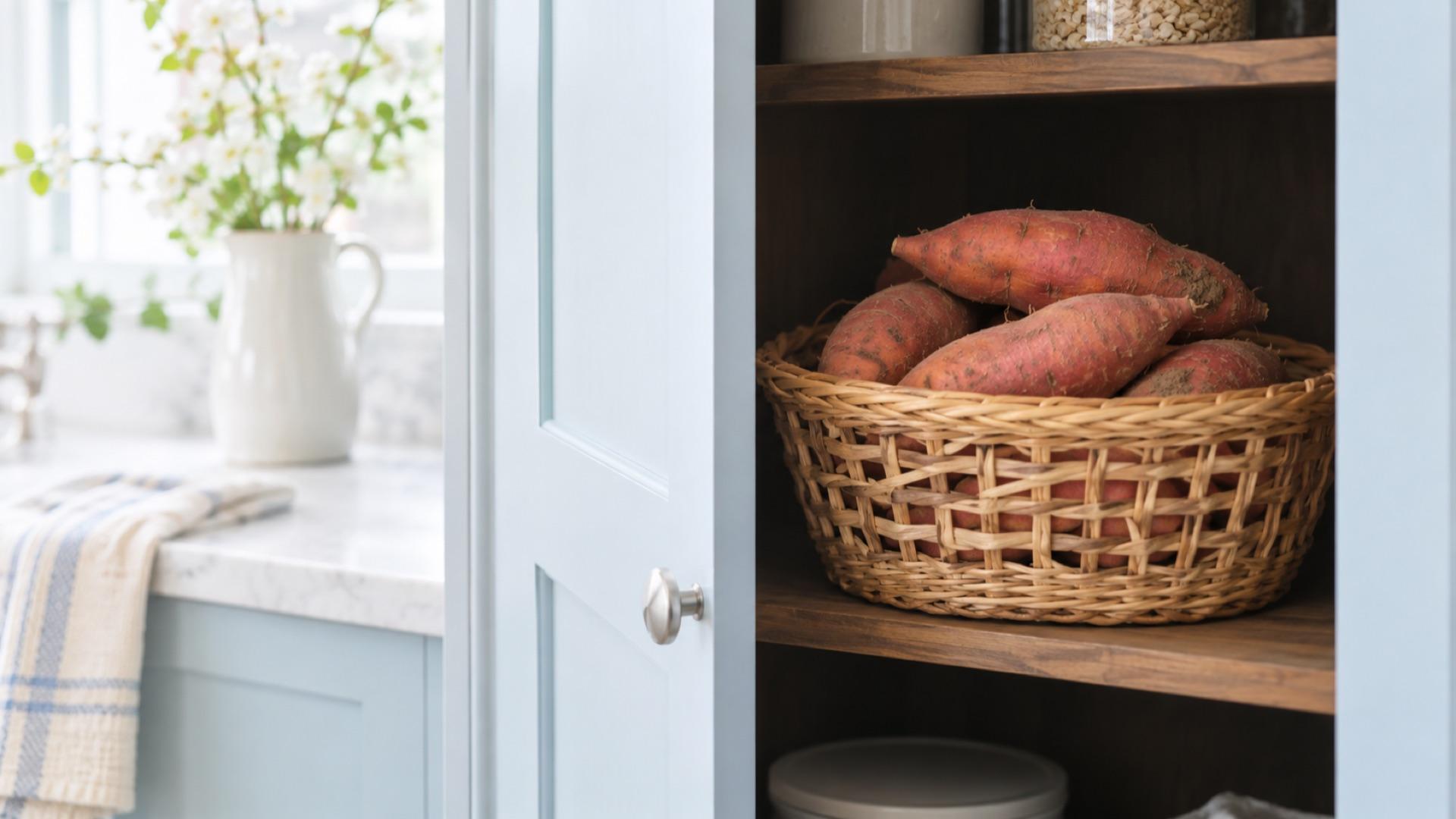
Store raw sweet potatoes in a cool, dark, dry, well-ventilated spot, ideally around 55 to 60°F (13 to 16°C), and never in the refrigerator. In an ordinary kitchen pantry they keep 2 to 3 weeks, according to the USDA FoodKeeper; once cooked, they go in the fridge for 3 to 4 days or the freezer for up to a year.
Sweet potatoes look like regular potatoes, but they are a different plant with different needs. They hate cold even more than white potatoes do. Here is how to store them raw, cooked and frozen, and how to tell when one is past saving.
How Long Sweet Potatoes Last
| Sweet potatoes | Where | How long | Source |
|---|---|---|---|
| Whole, raw | Pantry or cool cabinet | 2 to 3 weeks | USDA FoodKeeper |
| Whole, raw | Cool, dark spot at 55 to 60°F (13 to 16°C) | Often a month or more | University extension guidance |
| Whole, raw | Refrigerator | Not recommended | Penn State, UMass, Purdue Extension |
| Cut or peeled, raw | Refrigerator, covered in water | Up to 1 day | Our recommendation |
| Cooked (baked, boiled, mashed) | Refrigerator, 40°F (4°C) | 3 to 4 days | USDA FoodKeeper (cooked vegetable leftovers) |
| Cooked | Freezer, 0°F (-18°C) | 10 to 12 months | USDA FoodKeeper; Michigan State University Extension says within a year |
The FoodKeeper pantry time assumes a typical kitchen, which is usually warmer than ideal. In a properly cool spot, extension services such as Penn State note that cured sweet potatoes can be stored for months, which is how growers keep them available year-round. At home, check them weekly and use the oldest first.
Why Sweet Potatoes Don't Belong in the Fridge
Sweet potatoes are a tropical crop, and cold damages them. Penn State Extension and UMass Extension both describe chilling injury below about 55°F (13°C), and Purdue's horticulture team advises keeping them out of the refrigerator for exactly that reason.
Chilling injury is sneaky because the raw root often looks fine. The damage shows up after cooking: a hard, woody center that never softens, an off flavor and sometimes dark spots inside. A few days in a 40°F (4°C) fridge is enough to cause it. The same root can also start to rot faster once it comes back to room temperature.
At the other extreme, warmth above about 60°F (16°C), especially with humidity, encourages sprouting and makes the flesh pithy, according to Alabama Cooperative Extension.
So the sweet spot is cooler than your kitchen but warmer than your fridge: a basement, an unheated pantry, a closet on an outside wall or a cabinet away from the stove and dishwasher.
How to Store Raw Sweet Potatoes
- Don't wash them before storing. Moisture on the skin invites mold. Brush off loose dirt and wash right before cooking.
- Pick out damaged ones. Use any with cuts, bruises or soft spots first; they spoil fastest and can spread rot to the rest.
- Choose a breathable container. A basket, a wooden crate, a paper bag with the top loosely folded or an open cardboard box works. Avoid sealed plastic bags, which trap moisture.
- Keep them dark. Light encourages sprouting.
- Keep them separate from apples and bananas. Ripening fruit gives off ethylene gas, which speeds sprouting in stored roots.
- Check weekly. Remove anything soft, moldy or shriveled.
Pro tip: If your only cool spot is a garage or basement, keep sweet potatoes off the concrete floor on a shelf or in a crate. Floors can drop below 55°F (13°C) in winter, which is cold enough to cause chilling injury.
Can you store sweet potatoes with regular potatoes?
They can share a dark cabinet, but their ideal temperatures differ: Iowa State Extension recommends 45 to 50°F (7 to 10°C) for white potatoes, while sweet potatoes want 55 to 60°F (13 to 16°C). If you have two spots, give the cooler one to white potatoes. Both should stay away from onions; our guide on how to store potatoes and onions explains why. The same cool, dark, dry rules apply to garlic.
Cut sweet potatoes
Cut or peeled raw sweet potatoes darken when exposed to air. If you prep them ahead, submerge the pieces in cold water in a covered container in the fridge and cook them within a day. FDA guidance on produce says cut fruits and vegetables should be refrigerated within 2 hours of cutting.
Can You Freeze Sweet Potatoes?
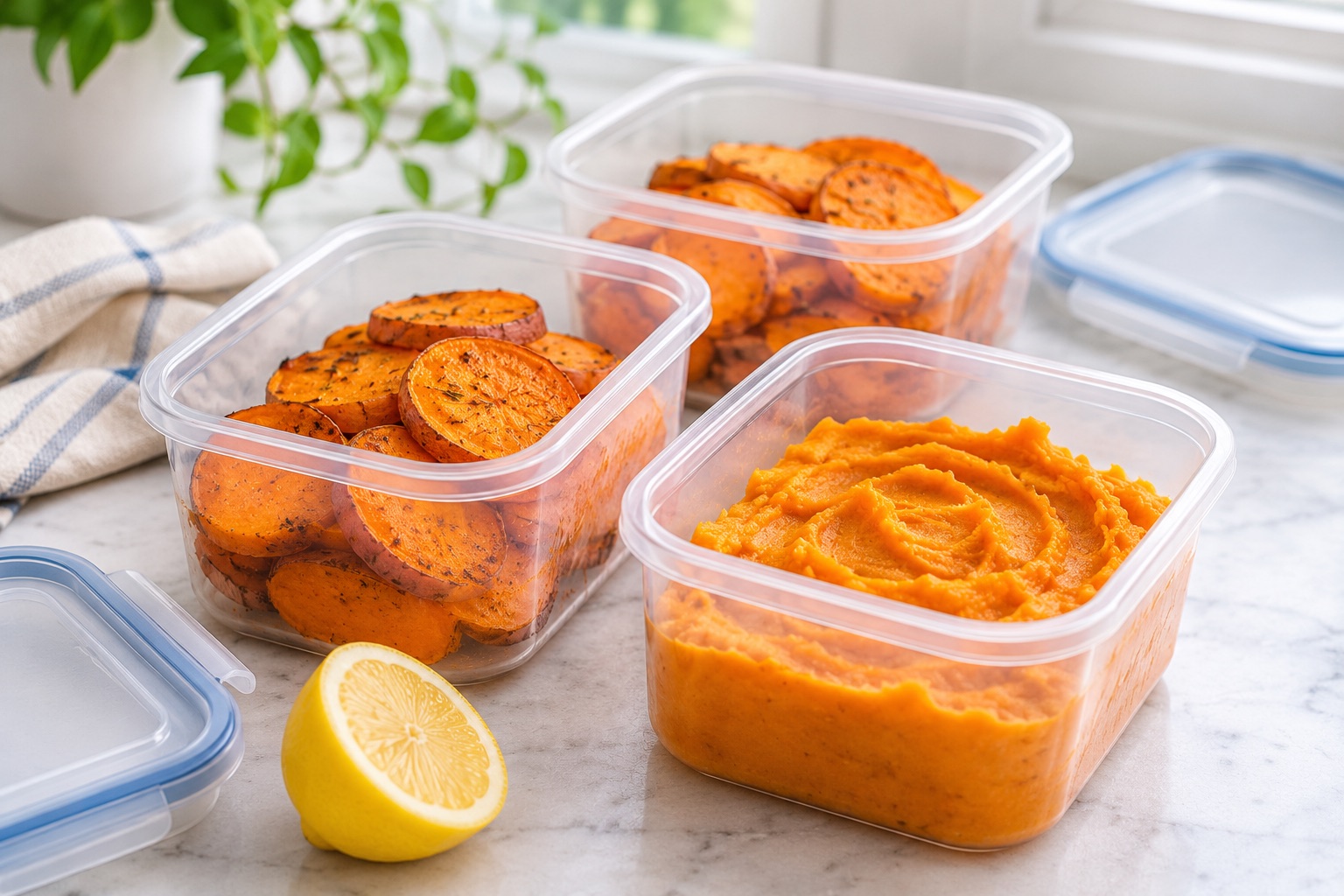
Yes, but cook them first. The National Center for Home Food Preservation (NCHFP), based at the University of Georgia, gives freezing instructions only for cooked sweet potatoes. Raw sweet potatoes turn watery, grainy and discolored when frozen and thawed.
How to freeze cooked sweet potatoes (NCHFP method)
- Cook until almost tender. Boil, steam, pressure cook or bake whole, unpeeled sweet potatoes.
- Cool them. Spread them out so they cool quickly, and refrigerate or freeze them within 2 hours of cooking, per the USDA's 2-hour rule.
- Peel and cut. Halve, slice or mash them.
- Prevent darkening. NCHFP recommends dipping whole or sliced sweet potatoes for 5 seconds in a solution of 1/2 cup lemon juice per 1 quart of water. For mashed sweet potatoes, mix in 2 tablespoons of orange or lemon juice per quart.
- Pack and seal. Use freezer containers or bags, leaving 1/2 inch of headspace.
- Label with the date and freeze at 0°F (-18°C).
Freezing baked sweet potatoes
NCHFP also describes a method for baked sweet potatoes: bake them unpeeled at 350°F (177°C) until slightly soft, cool, peel, wrap each one in foil and freeze in freezer bags. To serve, finish baking them at 350°F (177°C) in the foil.
Freezing casseroles and pies
Cooked sweet potato casseroles freeze well before the topping is added. Freeze the base, then add marshmallows or a pecan topping when you bake it. For general guidance on make-ahead dishes, see how to freeze casseroles.
Thawing and using frozen sweet potatoes
Thaw in the refrigerator overnight, or reheat slices and mash straight from frozen in a covered dish in the oven or microwave, stirring once. Frozen mashed sweet potato is ideal for soups, casseroles, muffins and pies. If you have white potatoes to freeze too, our guides to freezing potatoes and freezing mashed potatoes cover the differences.
Signs a Sweet Potato Has Gone Bad
Throw out sweet potatoes that are:
- Soft or mushy, especially at the ends, where rot usually starts
- Wet, oozing or moldy on the skin
- Dark and sunken in patches, or black inside when cut
- Smelling sour or rotten
A few small surface blemishes can be cut away from an otherwise firm root. Wrinkled skin means the sweet potato is drying out; it is still usable if firm, but the texture will be drier.
Sprouted sweet potatoes
Sweet potatoes belong to the morning glory family, not the nightshade family of white potatoes, tomatoes and eggplants, so the solanine concerns tied to green or sprouted white potatoes do not carry over in the same way. Still, sprouting means the root is using up its stored energy. If the sweet potato is firm, cut off the sprouts and any soft spots and cook it soon. If it is shriveled, soft or moldy, discard it. For white potatoes, the rules are stricter: sprouts and green skin should be removed generously, as our potato storage guide explains.
FAQ
Should sweet potatoes be refrigerated?
Not when raw. Temperatures below about 55°F (13°C) cause chilling injury, which leads to a hard center and off flavor after cooking. Refrigerate sweet potatoes only after they are cooked.
How long do sweet potatoes last in the pantry?
About 2 to 3 weeks in a typical pantry, according to the USDA FoodKeeper. In a cooler spot around 55 to 60°F (13 to 16°C), they often last a month or longer.
Can you freeze a raw sweet potato?
It is not recommended. NCHFP gives freezing instructions only for cooked sweet potatoes, because raw ones turn watery and discolored after thawing.
Can you freeze cooked sweet potatoes?
Yes. Cooked sweet potatoes keep their best quality for 10 to 12 months at 0°F (-18°C). Add lemon or orange juice before freezing to prevent darkening.
How long do cooked sweet potatoes last in the fridge?
3 to 4 days in a covered container at 40°F (4°C) or colder, the USDA FoodKeeper window for cooked vegetable leftovers.
Keep Sweet Potatoes on Your Radar
Sweet potato storage comes down to three rules: keep raw ones cool, dark and out of the fridge, refrigerate them only once cooked, and freeze cooked ones with a little lemon juice. The hard part is remembering the bag in the back of the pantry. Freezer Inventory Tracker tracks your pantry, fridge and freezer in one place and reminds you before a sweet potato sprouts or a container of frozen mash passes its best.