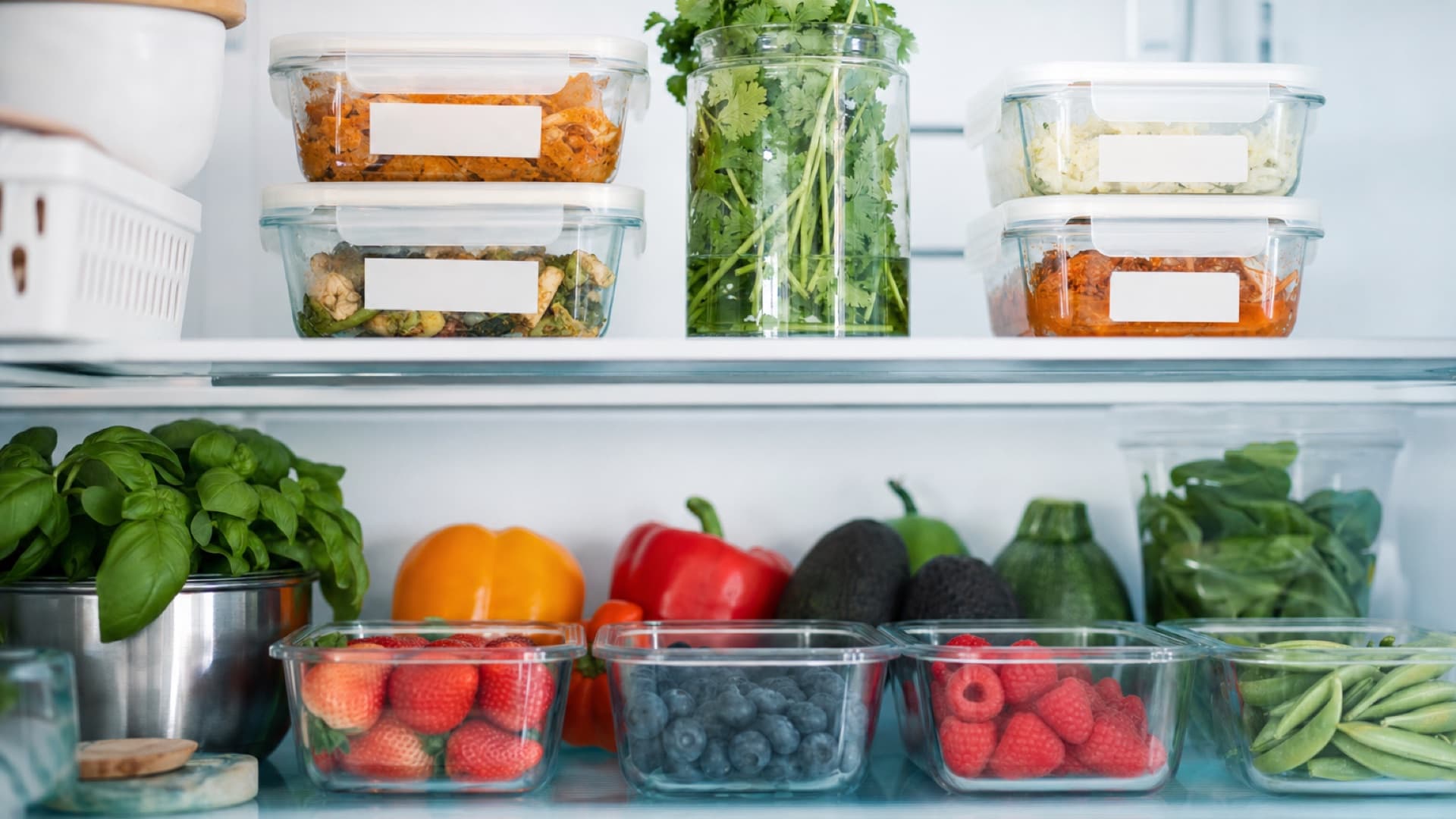
To reduce food waste at home, you need a simple system: know what food you have, buy only what you will use, store it so it lasts as long as possible, eat the oldest food first, and freeze anything you cannot finish in time. Most household food waste comes from food that was forgotten, bought in excess or misjudged by its date label, and each step below targets one of those causes.
The scale is large. The USDA estimates that 30 to 40 percent of the US food supply is wasted, and its Economic Research Service found that in 2010 about 21 percent of the available food supply was lost at the consumer level alone. This guide turns that problem into a routine you can run every week.
Why Food Gets Wasted at Home
Before fixing the problem, it helps to know where it comes from. The USDA Economic Research Service estimated that 31 percent of the food available at the retail and consumer levels went uneaten in 2010: 133 billion pounds worth about $161.6 billion at retail prices. Consumers accounted for 90 billion pounds of that.
In a typical kitchen, waste usually comes from a few repeat causes:
- Forgotten food. Leftovers pushed to the back of the fridge, a bag of spinach under the yogurt, a roast buried in the freezer.
- Overbuying. Bulk deals and impulse buys that exceed what the household can eat before it spoils.
- Date label confusion. The FDA estimates that confusion over date labels accounts for about 20 percent of consumer food waste.
- Poor storage. Fridges that run too warm, produce stored in the wrong place, and freezer food without wrapping.
- Cooking too much. Large batches with no plan for the leftovers.
The system below addresses each of these, in the order you will meet them: before you shop, when you store, and when you cook.
Step 1: Know What You Already Have
You cannot use food you do not know about. A quick inventory is the foundation of every other step.
- Check before you shop. Look in the fridge, freezer and pantry before writing your list. Five minutes prevents buying a third jar of mustard.
- Keep a running list. A whiteboard on the freezer, a notebook or an app all work. The point is that the list lives outside your memory.
- Track expiration and freeze dates. Write dates on leftovers and freezer bags so you can tell old from new at a glance.
Our guide on how to track freezer inventory covers the different methods, from paper logs to apps.
Step 2: Shop With a Plan
- Plan meals around what needs using first. Build two or three dinners each week around ingredients already in your fridge.
- Write a list and stick to it. Lists reduce impulse purchases, which are the items most likely to go unused.
- Buy perishables in smaller amounts, more often. Fresh herbs, berries and salad greens spoil fast; buy them for the next few days, not the next two weeks.
- Buy in bulk only what you can freeze or store. Bulk meat is a good deal only if you portion and freeze it the day you bring it home. Our article on saving money on groceries with your freezer explains which bulk buys pay off.
Pro tip: Keep a "use it up" list on the fridge door with the three or four items that will expire first. Plan the next two dinners around them before anything new gets opened.
Step 3: Store Food So It Lasts
Correct storage can double or triple how long food stays good.
Get the Temperatures Right
The FDA recommends keeping the refrigerator at 40°F (4°C) or below and the freezer at 0°F (-18°C). Many fridges run warmer than their dial suggests, so an inexpensive appliance thermometer is worth having. Our guide to what temperature a freezer should be covers both appliances.
Store Each Food in the Right Place
| Food | Where to store it | Typical life (USDA FoodKeeper) |
|---|---|---|
| Fresh eggs in shell | Fridge, main shelf, in the carton | 3 to 5 weeks |
| Milk | Fridge, back of a shelf (not the door) | 1 week |
| Yogurt | Fridge shelf | 1 to 2 weeks |
| Raw ground meat | Fridge, bottom shelf | 1 to 2 days |
| Cooked leftovers | Fridge, at eye level | 3 to 4 days |
| Fresh mushrooms | Fridge shelf, paper bag | 3 to 7 days |
| Bread | Pantry; freeze for longer storage | 3 to 5 months frozen |
Refrigerator and freezer times are from the USDA FoodKeeper and FDA storage chart. For more on eggs, see how long eggs last in the fridge.
A few storage habits help across the board:
- Use clear containers for leftovers so you can see them.
- Keep raw meat on the bottom shelf to prevent drips onto other food.
- Store pantry staples in airtight containers to keep out moisture and pests. Our post on pantry organization ideas has layouts that make older items easy to see.
Step 4: Use First In, First Out
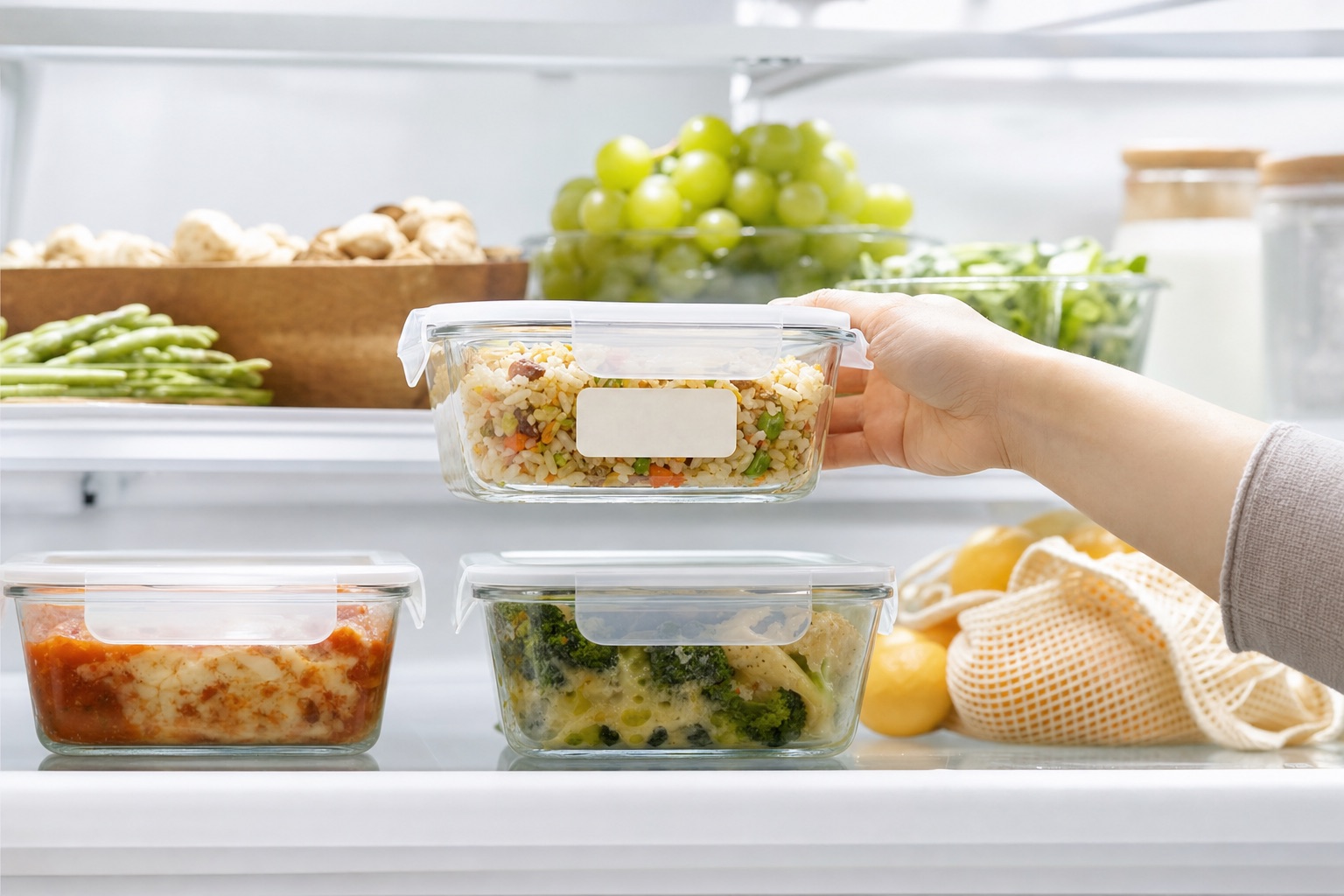
First in, first out (FIFO) is the rule restaurants use to rotate stock, and it works at home:
- When you unpack groceries, move older items to the front and put new ones behind them.
- Create an "eat first" zone on one fridge shelf for leftovers and items close to their date.
- Apply the same rule in the freezer. Keep the oldest bags on top or in front. Our guide on how to organize a chest freezer shows how to do this in a deep freezer.
Step 5: Freeze Before It Goes Bad
The FDA puts it simply: eat or freeze items before you need to throw them away. The freezer is the most powerful food waste tool in the house, because food held at 0°F (-18°C) stays safe indefinitely. The quality clock slows almost to a stop.
Foods that are easy to rescue in the freezer:
- Bread that will not be finished in a few days
- Ripe bananas and berries for smoothies and baking
- Leftover cooked meat, soups and chili, within their 3 to 4 day fridge window
- Cheese, butter and milk before their dates
- Fresh herbs in oil or water cubes
Freezing works best when food is well wrapped, so it does not get freezer burn. See what freezer burn is and how to prevent it, and check our freezing guide for how long each food lasts frozen.
Pro tip: Freeze leftovers on day two, not day four. The sooner they go in, the better they taste when they come out.
Step 6: Read Date Labels Correctly
Date labels are one of the biggest sources of avoidable waste, because most of them describe quality, not safety.
- "Best if Used By" is the phrase the FDA supports for indicating peak quality. Food past this date is not automatically unsafe; check it for changes in color, consistency or texture.
- "Sell By" tells the store how long to display the product. Many foods remain good for days after it, as long as they have been stored properly.
- "Use By" is the last date recommended for peak quality, according to the USDA. Follow it more closely for perishable items.
- Infant formula is the exception: it is the only product for which federal law requires a date label, and it should not be used after its use-by date.
Date labels are not a substitute for food safety rules. Raw meat, cooked leftovers and opened perishables follow storage times, not just package dates, and anything with mold, an off smell or a slimy texture should be thrown out.
Step 7: Cook and Serve Smarter
- Cook to a plan. If a recipe makes eight servings and you need four, decide on day one whether the rest is tomorrow's lunch or a freezer meal.
- Serve smaller portions and let people go back for seconds.
- Use the whole ingredient. Broccoli stems in stir-fries, vegetable scraps in stock, stale bread in croutons or breadcrumbs.
- Have a weekly "use it up" dinner, such as soup, fried rice, frittata or tacos, built from whatever is left.
Step 8: Compost What You Cannot Eat
Some waste is unavoidable: peels, coffee grounds, eggshells. The EPA ranks composting above landfill disposal, so a backyard bin or a curbside collection program, if your town has one, keeps those scraps out of the trash.
FAQ
What are the best tips to reduce food waste at home?
Check what you have before shopping, shop with a list, keep your fridge at 40°F (4°C) or below, use first in, first out, freeze food before it spoils, and learn what date labels really mean.
How much food does the average household waste?
The USDA Economic Research Service estimated that about 21 percent of the available US food supply, roughly 90 billion pounds, went uneaten at the consumer level in 2010. Overall, the USDA estimates 30 to 40 percent of the food supply is wasted.
Is food safe to eat after the "best by" date?
Often yes. "Best if Used By" dates refer to quality, not safety, according to the FDA. Check the food for changes in smell, color or texture. Infant formula is the exception and should not be used after its date.
Does freezing food really reduce waste?
Yes. Food kept at 0°F (-18°C) stays safe indefinitely, so freezing leftovers, bread, meat and ripe produce before they spoil is one of the simplest ways to cut waste. Label each item with the date so you use it while quality is still good.
What is the national goal for reducing food waste?
The US has a goal of cutting food loss and waste by 50 percent by 2030, a target shared by the USDA, EPA and FDA.
The Bottom Line
Reducing food waste at home is less about willpower and more about a system: know what you have, buy what you need, store it right, eat the oldest first, freeze what you cannot finish, and read dates correctly. Each habit takes minutes, and together they cut waste week after week.
The step most people struggle with is the first one, keeping track. Freezer Inventory Tracker combines your freezer, fridge and pantry in one list, adds groceries by scanning receipts or barcodes, shares the inventory with your family, and sends reminders before food expires, so less of it ends up in the trash.