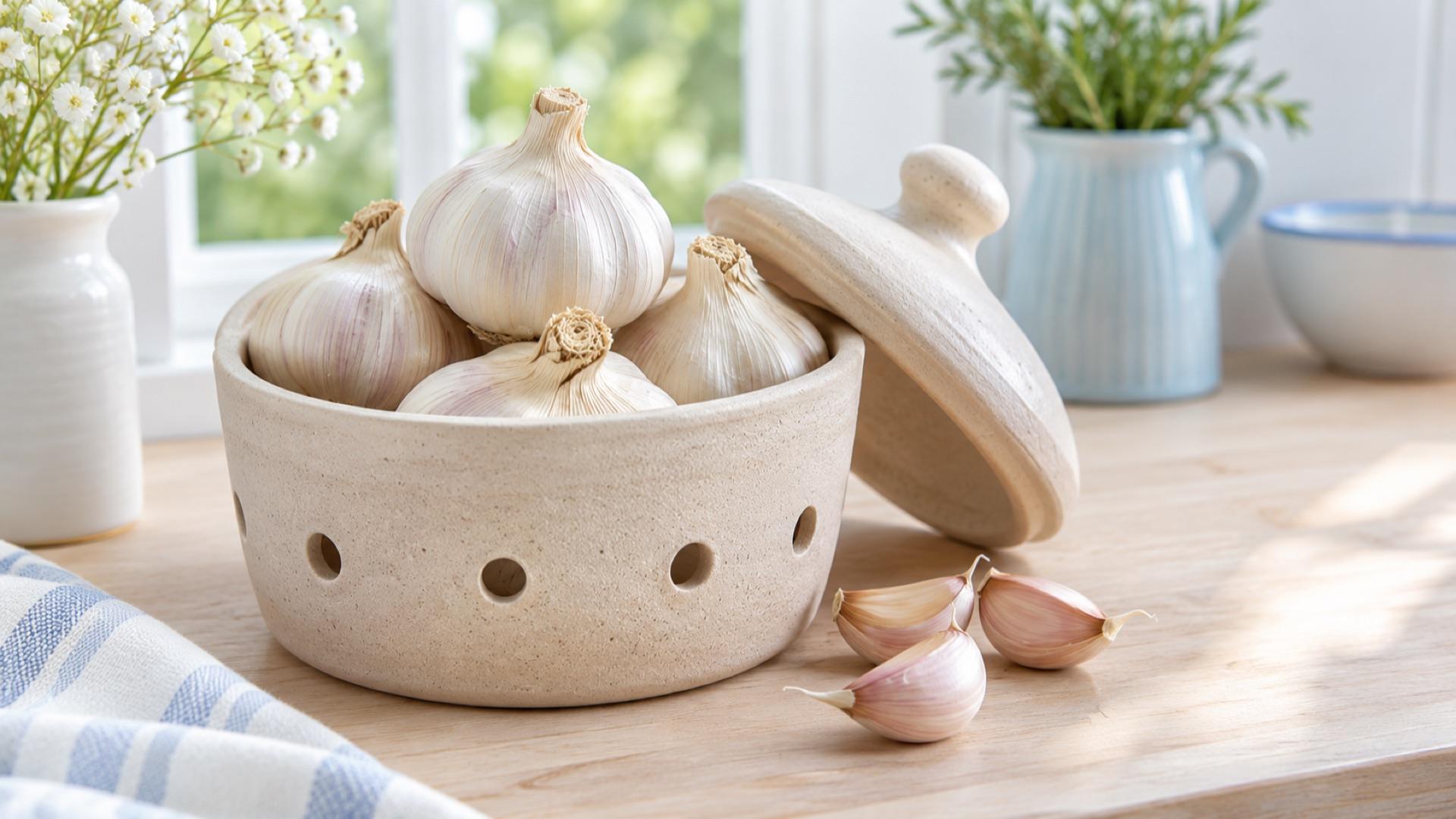
Store whole garlic bulbs in a cool, dry, dark place with good airflow, not in the refrigerator, and use them within about a month, the USDA FoodKeeper pantry window for unbroken bulbs. Once you break cloves off the bulb, move the loose cloves to the fridge and use them within 3 to 14 days; for longer storage, garlic can be frozen chopped, whole, or pureed with oil.
The one rule that is about safety rather than flavor: homemade garlic in oil must never sit at room temperature. This guide covers every storage option, how long each lasts, how to freeze garlic properly, and what to do with cloves that have started to sprout.
Garlic Storage Times at a Glance
Here is how long garlic keeps in each place. Pantry, fridge and freezer times come from the USDA FoodKeeper unless noted.
| Form of garlic | Pantry | Refrigerator, 40°F (4°C) | Freezer, 0°F (-18°C) |
|---|---|---|---|
| Whole, unbroken bulb | 1 month | Not recommended (encourages sprouting) | 1 month for best quality |
| Loose cloves, peeled or unpeeled | Not recommended | 3 to 14 days | 1 month for best quality |
| Homemade garlic in oil | Never | 4 days maximum (NCHFP) | Up to several months (NCHFP) |
| Chopped garlic, commercial jar, unopened | 8 to 12 months | Follow label after opening | Not needed |
| Garlic powder | 3 to 4 years | Not needed | Not needed |
Freezer times are about quality. Food kept at a steady 0°F (-18°C) stays safe indefinitely, according to USDA, but frozen garlic loses some of its punch and turns soft, so plan to use it within a few months at most.
How to Store Whole Garlic Bulbs
A whole bulb with its papery skin intact is garlic in its most stable form. The skin protects the cloves from moisture and air, so the goal is to keep the bulb dry and let it breathe.
- Pick a cool, dark, dry spot. A pantry shelf or a cabinet away from the stove, dishwasher and sunny windows works well.
- Give it airflow. A wire basket, a mesh bag, a paper bag or a ventilated ceramic garlic keeper all work. Sealed plastic bags and airtight containers trap moisture and invite mold.
- Keep it whole until you need it. Every clove you break off shortens the life of the rest, because the bulb starts to dry out.
The FoodKeeper gives whole bulbs about 1 month in the pantry, which matches typical kitchen conditions. Oregon State University Extension notes that garlic can store much longer, up to 6 months for hardneck and 9 months for softneck varieties, but only under near-commercial conditions: 32°F to 38°F (0°C to 3°C) with humidity under 70%. Most home kitchens are warmer than that, so the one-month window is the realistic one.
Why Not the Refrigerator?
Oregon State Extension explains that garlic sprouts fastest between 40°F and 60°F (4°C and 16°C), which overlaps with fridge temperatures, and the fridge is also humid. A whole bulb kept in the crisper drawer often sprouts or turns rubbery within a few weeks. The pantry is the better home for unbroken bulbs. The same logic applies to onions, which is why our guide on how to store potatoes and onions also keeps them out of the fridge.
Pro tip: Do not store garlic in the same closed bin as potatoes. Potatoes release moisture, and damp garlic molds faster. A separate basket on the same shelf is fine.
How to Store Garlic Cloves
Once a clove leaves the bulb, it dries out and spoils faster. The FoodKeeper recommends keeping individual cloves in the refrigerator and using them within 3 to 14 days.
- Unpeeled cloves sit at the long end of that range. Keep them in a small paper bag or an open container in the fridge.
- Peeled cloves sit at the short end. Store them in a covered container lined with a dry paper towel so they do not get slimy.
- Minced or chopped fresh garlic is best used the same day. If you prep a batch, freeze what you will not use within a day or two rather than leaving it in the fridge.
Commercial jars of chopped garlic are a different product. They are processed to be shelf stable, and the FoodKeeper gives them 8 to 12 months in the pantry unopened. After opening, follow the label, which almost always says to refrigerate.
Garlic in Oil: The Botulism Rule
Garlic is a low-acid vegetable that can carry spores of Clostridium botulinum from the soil. Submerging it in oil removes oxygen, and at room temperature those spores can produce botulism toxin without any change in smell or appearance. This is why food safety agencies treat homemade garlic in oil as a high-risk food.
The National Center for Home Food Preservation (NCHFP), the USDA-funded home preservation center at the University of Georgia, is direct about it: garlic in oil should be made fresh, kept in the refrigerator at 40°F (4°C) or lower, and used within 4 days. For longer storage, it can be frozen for up to several months. Oregon State Extension gives the same 4-day limit and warns that longer refrigeration could allow botulinum growth.
The FDA has a history with this exact food. After a botulism outbreak linked to a garlic-in-oil product in 1989, the FDA moved to remove such products from the market, as documented in the journal Food Protection Trends. Commercial garlic-in-oil sold today is acidified, which is why a store-bought jar can sit on the shelf before opening. Homemade versions are not acidified, so the rules are:
- Never leave homemade garlic in oil at room temperature, not even on the table for a dinner party that runs long.
- Refrigerate it right away and use it within 4 days.
- Freeze anything you will not finish in that time.
- Apply the same rule to roasted garlic covered in oil and garlic confit. Cooking does not destroy botulinum spores, so these also need the fridge and the 4-day limit, or the freezer.
If you vacuum seal garlic or herbs, the same concern applies, which we also flag in our guide to the best containers for freezer storage.
Can You Freeze Garlic?
Yes, you can freeze garlic, and it is the best way to save cloves you cannot use in time. Frozen garlic softens, so it is meant for cooking, not for raw dishes like aioli or bruschetta where you want a crisp bite. Oregon State Extension describes three methods.
Freezing Whole Unpeeled Cloves or Bulbs
The lowest-effort option. Put whole bulbs or unpeeled cloves in a freezer bag, press out the air and freeze. Pull out cloves as needed; they peel easily while still partly frozen and can be chopped right away.
Freezing Chopped or Minced Garlic
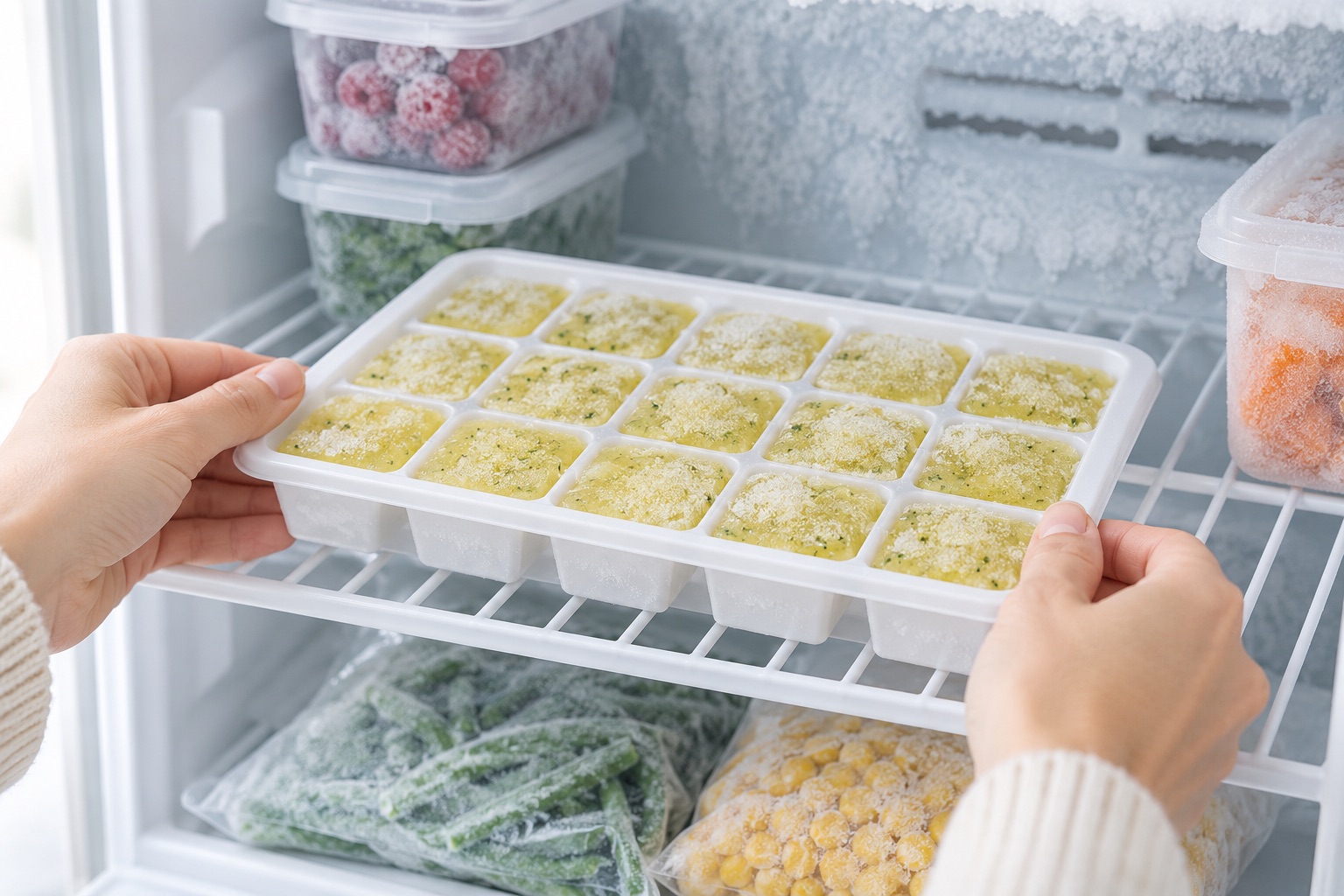
Peel and chop or mince the cloves, then wrap them tightly in plastic wrap or spread them thin in a freezer bag. A flat bag lets you snap off just the amount a recipe needs. You can also freeze teaspoon-sized mounds on a lined tray, then bag them once solid.
Freezing Garlic Pureed with Oil
Oregon State recommends blending peeled cloves with oil at a ratio of 2 parts oil to 1 part garlic, then freezing the mixture immediately. The oil keeps the puree soft enough to scrape out with a spoon, so it goes straight into a hot pan. An ice cube tray or a small freezer container with ½ inch of headspace works well. Do not let the mixture sit in the fridge first; the freezer is what keeps it safe.
Pro tip: Wrap frozen garlic twice or use a rigid container. Garlic odor travels, and butter, ice cream and other fatty foods in the same freezer will pick it up.
Label every package with the date. The FoodKeeper suggests about 1 month for best quality for plain frozen garlic, and NCHFP allows up to several months for garlic in oil. The same freezing approach works for ginger, which we cover in how to store fresh ginger, and for herbs in oil, explained in how to freeze fresh herbs.
Is It Safe to Eat Sprouted Garlic?
Yes. A green shoot in the center of a clove is the garlic starting to grow, not a sign of spoilage. Sprouted garlic is safe to eat as long as the clove is still firm. The sprout itself tastes sharper and more bitter, so slice the clove in half and pull out the green core before cooking, especially for dishes where garlic is the main flavor.
Sprouting is a signal to use the rest of the bulb soon. You can also chop and freeze the remaining cloves before they sprout further.
How to Tell If Garlic Has Gone Bad
Throw garlic out if you notice any of these:
- Cloves that are soft, mushy or hollow when squeezed
- Brown or yellow spots, or cloves that have shriveled to a dry husk
- Visible mold, often blue-green or black, on the skin or the clove
- A sour or off smell instead of the usual sharp garlic aroma
For homemade garlic in oil, do not rely on your senses at all. Botulism toxin has no smell or taste, so any batch that sat at room temperature or stayed in the fridge longer than 4 days should be discarded. Tracking dates on small items like this is one of the easiest ways to reduce food waste at home.
FAQ
How do you store garlic cloves after peeling?
Keep peeled cloves in a covered container lined with a dry paper towel in the refrigerator and use them within a few days. The USDA FoodKeeper gives loose cloves 3 to 14 days in the fridge, with peeled cloves at the shorter end. Freeze any you will not use within that time.
Can you freeze garlic cloves whole?
Yes. Freeze whole unpeeled cloves or entire bulbs in a freezer bag with the air pressed out. Take out cloves as you need them; they peel easily while partly frozen. Use them in cooked dishes, since freezing softens the texture.
Can you freeze garlic in olive oil?
Yes, and freezing is the safe way to keep it longer than a few days. Puree 2 parts oil with 1 part garlic, freeze it immediately in small portions, and use it within several months, following NCHFP and Oregon State Extension guidance. Never store homemade garlic in oil at room temperature.
Should garlic be refrigerated?
Whole bulbs should not; the cool, humid fridge makes them sprout. Loose cloves, peeled cloves and any homemade garlic in oil should be refrigerated.
Is it safe to eat sprouted garlic?
Yes, if the clove is still firm and free of mold. Remove the green sprout if you want a milder flavor, since it can taste bitter.
The Bottom Line
Keep whole garlic bulbs in a dry, ventilated spot in the pantry, move loose cloves to the fridge, and freeze anything you will not use in time. Treat homemade garlic in oil as a 4-day fridge food or a freezer food, never a counter food. Small items like a half bulb of garlic are easy to forget, so if you log them in Freezer Inventory Tracker with the pantry or fridge as their location, an expiry reminder tells you when it is time to use them or freeze them.