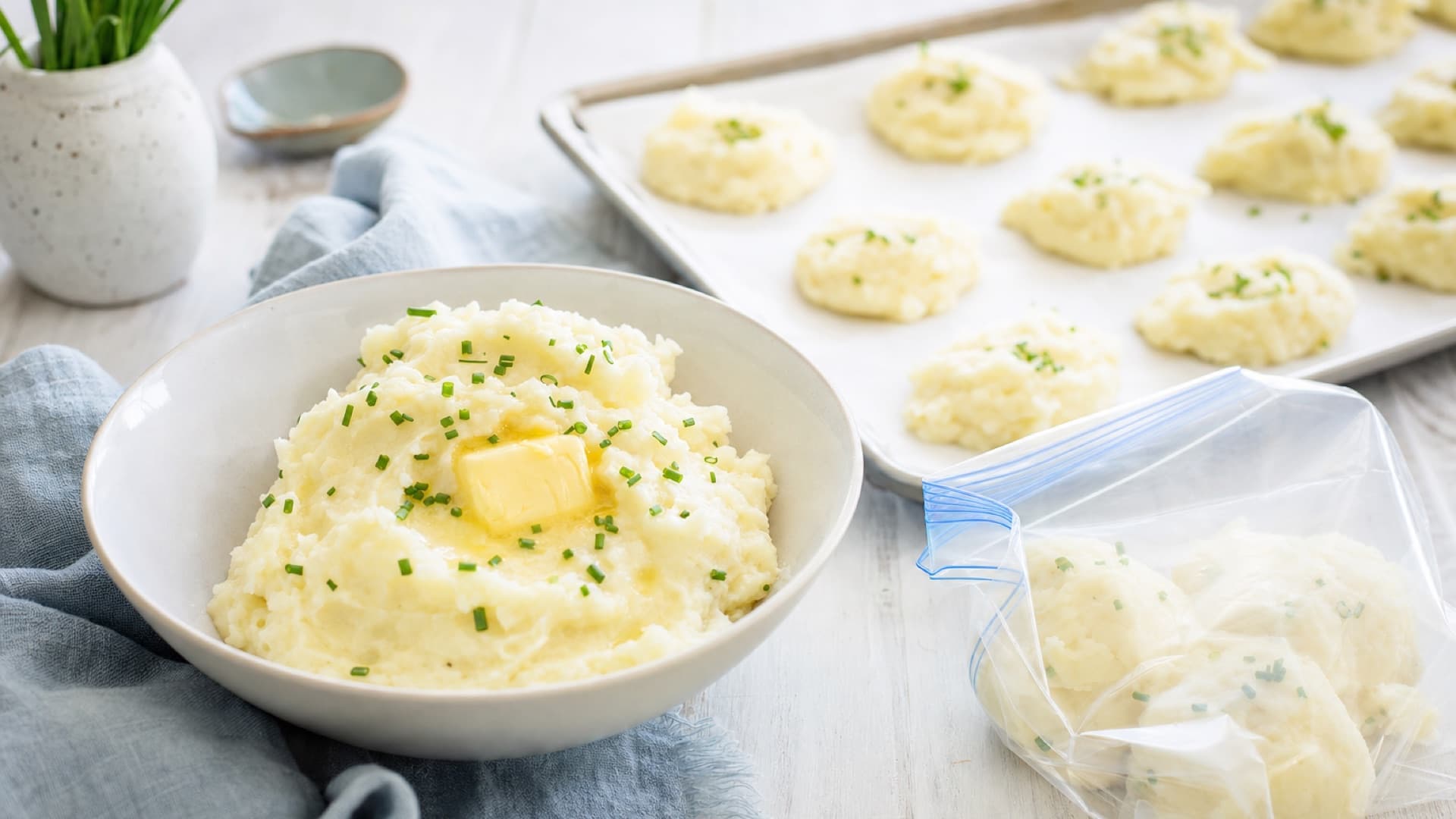
Yes, you can freeze mashed potatoes, and they reheat well if you freeze them the right way. Cool them quickly, freeze them flat in a bag or as individual scoops, and use them within 2 to 4 weeks for the best texture, as Penn State Extension recommends.
Mashed potatoes are one of the few potato dishes that freeze well. Raw potatoes and chunks of cooked potato turn watery and grainy in the freezer, but mashing changes the structure enough that a well-made batch comes back creamy. Here is how to freeze, store, thaw, and reheat them.
Why Mashed Potatoes Freeze Well
When potatoes freeze, the water inside them forms ice crystals that break the cell walls. In a whole or cubed potato, that damage shows up as a spongy, watery texture after thawing. Penn State Extension specifically lists raw potatoes and chunks of cooked potatoes among the foods not to freeze, while noting that mashed potatoes freeze well.
Mashing has already broken those cells down, and the butter, milk, or cream in the recipe coats the starch. When you reheat and stir, the fat and liquid bring the texture back together.
A few things help:
- More fat freezes better. Recipes made with plenty of butter, cream, sour cream, or cream cheese hold up better than lean versions made with water or skim milk.
- Smooth beats chunky. Mash thoroughly or use a ricer. Lumps are where the grainy texture shows up.
- Freeze them fresh. Freeze leftovers as soon as they are cool, not on day 3 in the fridge.
How to Freeze Mashed Potatoes
Start with mashed potatoes that have cooled quickly. Spread a big batch in a shallow dish so it chills fast in the refrigerator, and get it there within 2 hours of cooking, as the USDA recommends for all cooked food. Then choose a method.
Method 1: Flat in Freezer Bags
Best for family-size portions.
- Spoon chilled mashed potatoes into a freezer bag.
- Press the bag flat to push out the air, then seal it.
- Lay it on a tray and freeze until solid.
- Once frozen, stand the bags upright or stack them like files.
Flat bags freeze and thaw quickly and take up very little room. A straight-sided freezer container works too.
Method 2: Individual Scoops
Best for quick sides for one or two people.
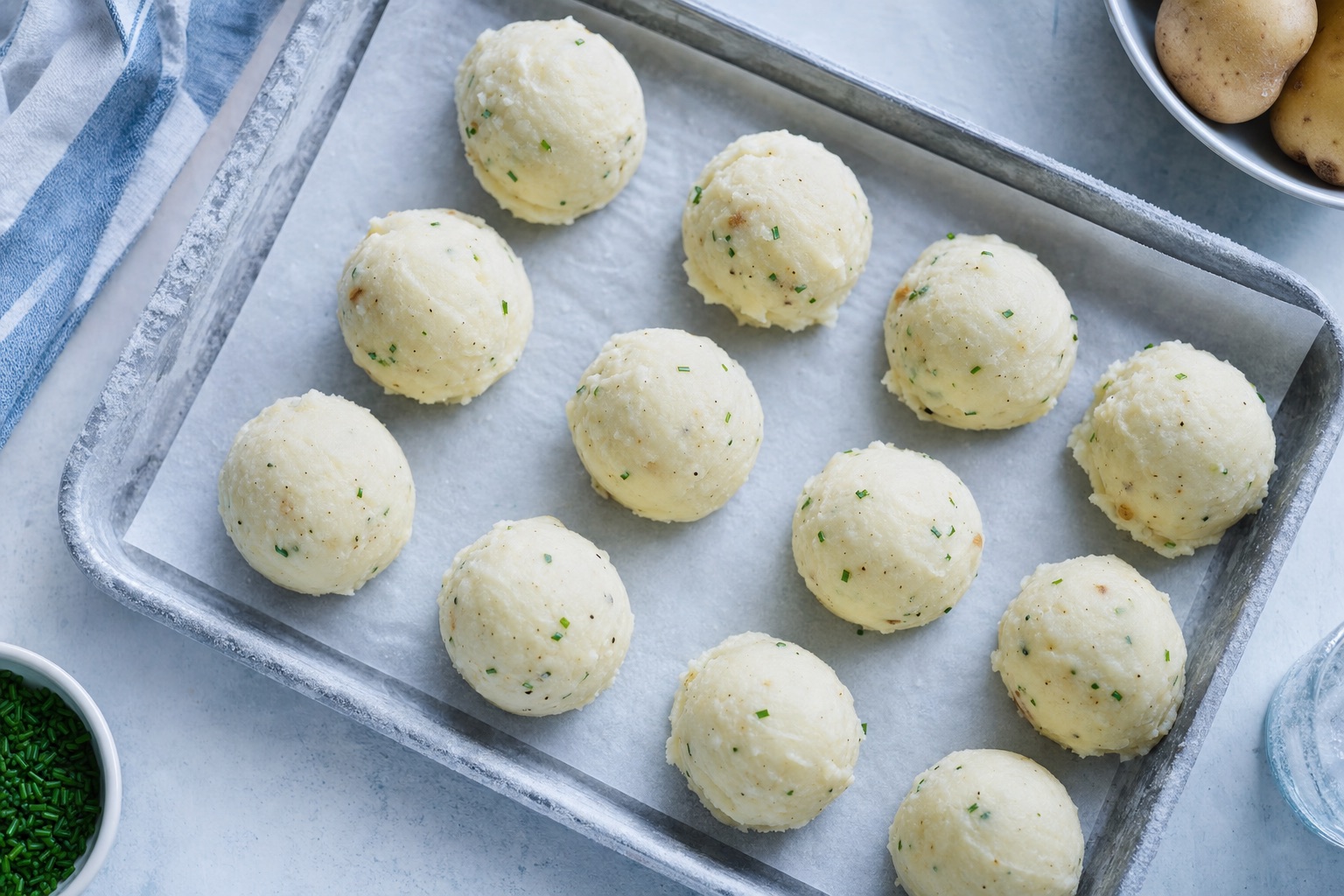
- Line a baking sheet with parchment paper.
- Use an ice cream scoop to place mounds of chilled mashed potatoes on the sheet.
- Freeze until solid, then transfer the scoops to a freezer bag.
The scoops do not stick together, so you can take out two for dinner or a dozen for a casserole topping.
Method 3: Patties
Penn State Extension suggests shaping mashed potatoes into patties about ½ inch (1.3 cm) thick, freezing them on a cookie sheet, then packing them with freezer paper or plastic wrap between each one. Later, you can fry them in butter until browned for crispy potato cakes.
Pro tip: Label every bag with the date and the portion size. "4 cups, Nov 27" is far more useful than a mystery bag of something white at the bottom of the freezer.
For sealed containers that stack well, see our guide to the best containers for freezer storage.
How Long Mashed Potatoes Last
| Where | How long |
|---|---|
| Room temperature | No more than 2 hours (1 hour above 90°F (32°C)) |
| Refrigerator, 40°F (4°C) or below | 3 to 4 days |
| Freezer, 0°F (-18°C) | Best within 2 to 4 weeks |
The refrigerator time comes from the USDA guidance for cooked vegetables. The freezer time is about quality, not safety. The USDA says food kept constantly at 0°F (-18°C) stays safe indefinitely, but frozen mashed potatoes slowly dry out and pick up ice crystals. Penn State Extension recommends using them within 2 to 4 weeks for the best texture. Older batches are still safe; they may just need extra butter and milk to taste good. Wrapping them tightly also protects against freezer burn.
How to Thaw and Reheat Frozen Mashed Potatoes
You can thaw mashed potatoes overnight in the refrigerator or reheat them straight from frozen. Either way, reheat them to 165°F (74°C), the USDA's standard for leftovers.
| Method | How to do it | Best for |
|---|---|---|
| Stovetop | Thaw enough to slide into a saucepan or double boiler, heat over low to medium heat, stir often, and add a splash of milk or cream. | Best texture, large batches |
| Microwave | Heat in a covered microwave-safe dish in short bursts (Penn State suggests 30 seconds to 1½ minutes), stirring between each. | Single portions, scoops |
| Oven | Spread in a buttered baking dish, cover with foil, and bake at 350°F (175°C), stirring once, until hot all the way through. | Holiday sides, casserole toppings |
| Skillet | Fry thawed or frozen patties in butter until browned on both sides. | Potato cakes |
Fixing Watery or Grainy Potatoes
It is normal for thawed mashed potatoes to look a little wet or separated at first. Stir them well as they heat. If they are still loose, keep cooking a few minutes to evaporate the extra liquid. If they are stiff or grainy, beat in a tablespoon of butter and a splash of warm milk or cream until smooth.
Ways to Use Frozen Mashed Potatoes
A stash of frozen mashed potatoes is more versatile than it looks:
- Shepherd's pie or cottage pie topping, straight from the freezer. See our guide to freezing casseroles.
- Potato pancakes, from the frozen patties.
- Thickener for soups and chowders. Stir in a scoop or two.
- Quick weeknight sides next to roast chicken or meatloaf.
Making mashed potatoes ahead for Thanksgiving is one of the easiest ways to free up the stove on the day. Freeze them up to a couple of weeks before, thaw in the fridge the day before, and reheat in a slow oven or on the stovetop. For the rest of the meal, our guide to how long Thanksgiving leftovers are good for covers every dish on the table.
FAQ
Can you freeze cooked mashed potatoes from leftovers?
Yes. Leftover mashed potatoes freeze just as well as a fresh batch, as long as they were refrigerated within 2 hours of cooking. Freeze them within 3 to 4 days at the latest; sooner is better.
How do you reheat frozen mashed potatoes?
On the stovetop over low heat or in the microwave in short bursts, stirring often and adding a little milk or butter. Heat until they reach 165°F (74°C).
Do you need to thaw mashed potatoes before reheating?
No. You can reheat them from frozen, it just takes longer. Thawing overnight in the refrigerator gives the most even results for large batches.
Can you freeze instant mashed potatoes or ones made with cream cheese?
Prepared mashed potatoes made with cream cheese or sour cream freeze especially well because of the extra fat. Prepared instant mashed potatoes can be frozen too, though the texture may be softer.
Can you freeze potatoes that are not mashed?
Raw potatoes and chunks of cooked potato do not freeze well, according to Penn State Extension. They turn watery and spongy. Mashing them first is the reliable way to freeze cooked potatoes.
Make Extra on Purpose
Since mashed potatoes freeze so well, it pays to make a double batch and freeze half in portions. Just keep an eye on the dates, because this is a food that tastes best within a few weeks. Logging each bag in Freezer Inventory Tracker with its freeze date makes it easy to see which batch to use first. For more freezer basics, see our freezing guide.