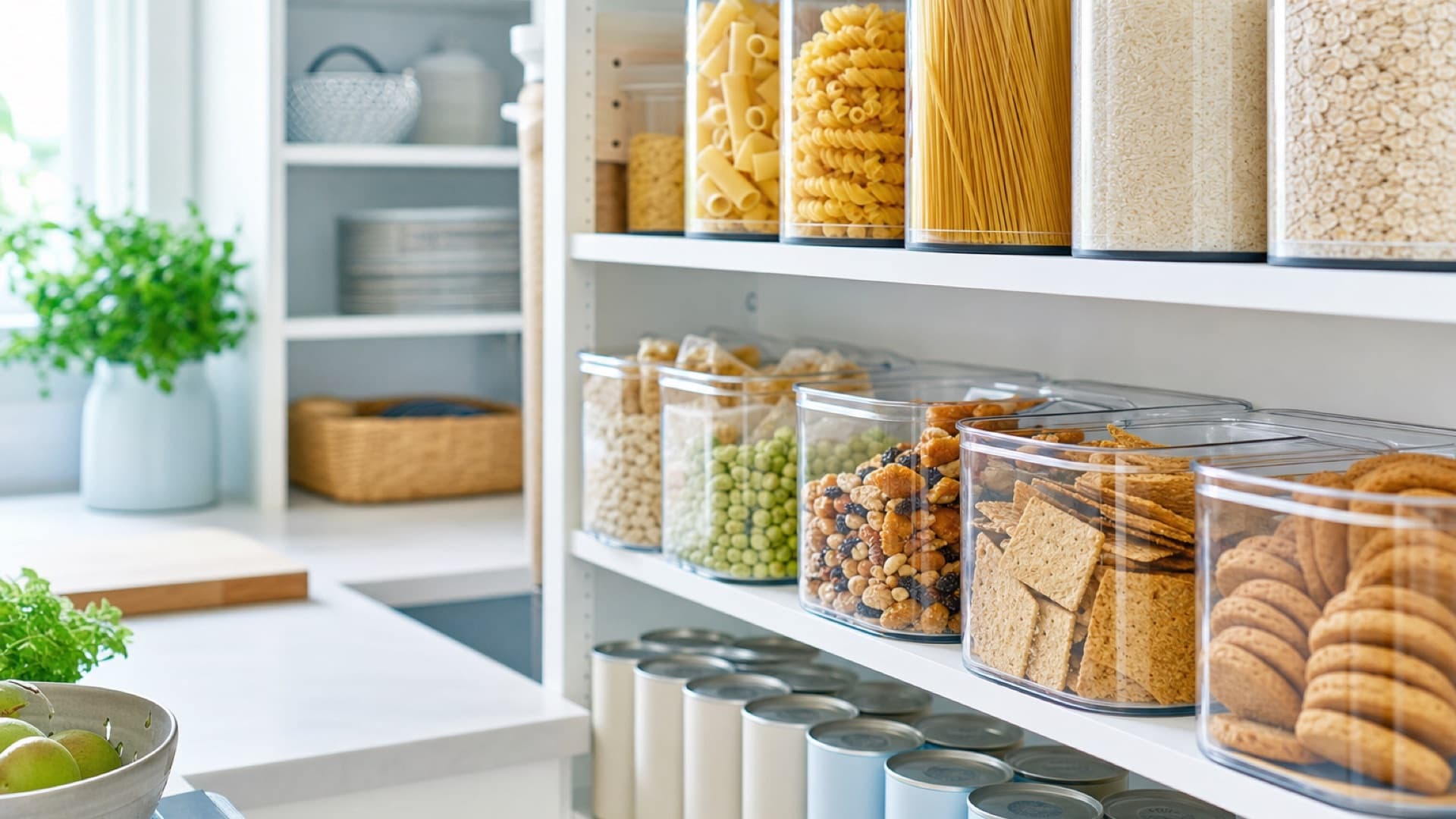
Good pantry organization comes down to four habits: group food into zones, keep everything visible, put the oldest items in front, and store food in a cool, dry place. Pretty containers help, but a pantry stays organized only when the system is easy to keep up after every grocery trip.
Most pantry makeovers fall apart within a month because they focus on looks instead of how a household actually shops and cooks. The ideas below are built to survive real life, whether you have a walk-in pantry or two cabinets next to the stove.
Start With a Full Reset
Organizing on top of clutter does not work. Set aside an hour and do this once:
- Empty every shelf. Put everything on the counter or table.
- Check dates and condition. Toss anything stale, opened packages that have gone soft or rancid, and any can that is bulging, leaking, rusted or deeply dented. The USDA Food Safety and Inspection Service (FSIS) advises discarding cans in that condition.
- Look for pests. Webbing, small holes in packages or tiny moths are signs of pantry pests. Discard affected food and vacuum the shelves.
- Wipe the shelves and let them dry fully before restocking.
- Group what is left into categories before anything goes back.
This is also the moment to notice patterns. Three open bags of the same pasta, or five cans of chickpeas, show where your shopping list needs work.
Organize by Zones, Not by Size
Zones are the single most useful pantry organization idea. Each shelf or bin holds one type of food, so everyone in the house knows where things go back.
Common zones:
- Baking: flour, sugar, baking soda, baking powder, chocolate chips
- Grains and pasta: rice, pasta, oats, quinoa
- Canned goods: vegetables, beans, tomatoes, soups, fish
- Breakfast: cereal, oatmeal, pancake mix, nut butter
- Snacks: crackers, chips, bars, dried fruit
- Sauces and condiments: pasta sauce, oils, vinegars, unopened condiments
- Backstock: extra unopened items waiting to move to the main shelves
Place zones by how often you use them. Everyday items belong at eye level. Heavy items such as canned goods and bulk bags go low. Rarely used baking supplies and holiday items go up high.
Pro tip: Give kids a low "snack zone" bin they can reach themselves. It keeps them from pulling everything off the other shelves, and you can see at a glance when snacks are running low.
Make Everything Visible
Food you cannot see gets forgotten, bought again, and eventually thrown out.
Clear canisters for flour, sugar, rice, pasta and cereal let you see quantities instantly. Airtight lids also keep food fresher and help keep pantry pests out. Cut the cooking instructions off the original bag and tape them to the back of the container if you need them.
Pantry organization bins corral small or oddly shaped items: seasoning packets, snack bags, baking decorations. Open-front bins work best on high shelves, because you can see inside without lifting them down.
Risers and tiered shelves lift the back row of cans and jars so labels are visible.
Turntables (lazy Susans) work well in deep corners for oils, vinegars and sauces.
Labels on shelves and bins, not only on containers, tell everyone where things go back. That is what keeps a system working after the first week.
Use First In, First Out
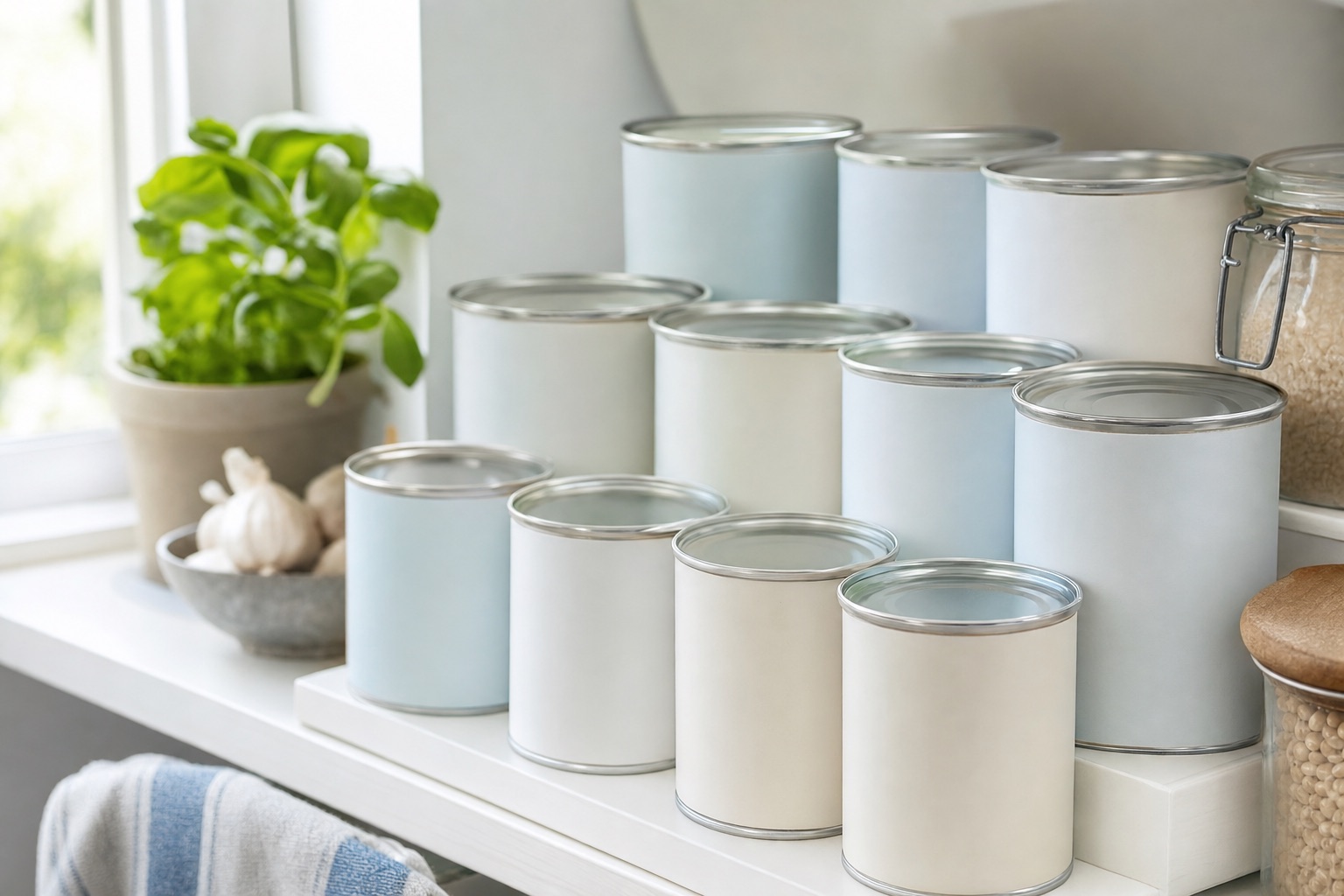
First in, first out (FIFO) is the rule grocery stores use, and it works just as well at home. When you unpack groceries, put new items behind the ones you already have. The oldest food is always in front and gets used first.
FIFO matters even for shelf-stable food. According to USDA FSIS, high-acid canned foods such as tomatoes, fruit and pickled products keep their best quality for 12 to 18 months, while low-acid canned foods such as meat, fish, soups and most vegetables keep their best quality for 2 to 5 years. Canned foods in good condition stored properly remain safe longer, but quality declines over time.
| Pantry item | Best quality (unopened) | Storage note |
|---|---|---|
| High-acid canned foods (tomatoes, fruit, pickles) | 12 to 18 months | Cool, dry place |
| Low-acid canned foods (meat, fish, soups, most vegetables) | 2 to 5 years | Cool, dry place |
| Damaged cans (bulging, leaking, rusted, deeply dented) | Discard | Do not taste or open |
Source: USDA FSIS shelf-stable food safety guidance.
Once a can is opened, it is no longer shelf-stable. Move leftovers to a covered container in the refrigerator.
Store Food in the Right Spot
Organization also means putting food where it keeps best. USDA FSIS recommends storing canned and shelf-stable foods in a cool, dry place. Avoid:
- Above or beside the stove, oven or dishwasher, where heat builds up
- Under the sink, where pipes can leak and humidity is higher
- Damp basements and uninsulated garages, where temperatures swing and cans can rust
Some foods do not belong in the pantry long-term. Whole-grain flours and nuts contain oils that go rancid faster at room temperature, so many cooks store them in the refrigerator or freezer. Our list of the best foods to buy in bulk and freeze covers what moves well from the pantry to the freezer.
Small Pantry Organization Ideas
A small pantry needs every inch to work:
- Use the door. An over-the-door rack holds spices, small jars and snack packs.
- Add shelf height. Stackable shelves or under-shelf baskets double the usable space on tall shelves.
- Go vertical with canisters. Square containers waste less space than round ones and stack neatly.
- Store backstock elsewhere. Keep only what you use regularly in the pantry, and put extra paper towels or bulk packs in a closet or garage shelf that stays cool and dry.
- Skip duplicates. A small pantry fills up fast with repeat purchases. Knowing what you have before you shop is the best space-saving tool.
Keep It Organized After Every Grocery Trip
A system only lasts if it fits into your routine:
- Unpack by zone. Everything goes straight to its shelf or bin, new items behind old.
- Do a 5-minute weekly check before writing the grocery list. Note what is running low and what needs to be used soon.
- Keep a running inventory. A list on the pantry door, a shared note or an inventory app saves you from buying what you already have. Our guide to tracking your freezer inventory uses the same approach, and it works just as well for the pantry.
- Reset each season. Every few months, do a quick version of the full reset.
The same zone-and-visibility approach works in the freezer too. See our guide on how to organize a chest freezer, and our tips on saving money on groceries with your freezer.
FAQ
What is the best way to organize a pantry?
Group food into zones by type, keep everyday items at eye level, use clear containers and labeled bins, and put new items behind older ones so the oldest food is used first.
Are pantry organization bins worth it?
Yes, when they group small or loose items such as packets, snack bags and baking extras. Choose clear or open-front bins so you can see what is inside, and label the shelf as well as the bin.
How do you organize a small pantry?
Use the door with an over-the-door rack, add stackable shelves or under-shelf baskets, use square canisters, and keep backstock in another cool, dry spot.
How long do canned goods last in the pantry?
According to USDA FSIS, high-acid canned foods keep their best quality for 12 to 18 months and low-acid canned foods for 2 to 5 years. Discard any can that is bulging, leaking, rusted or deeply dented.
Where should you not store food in the kitchen?
Avoid storing food above the stove, near the dishwasher, under the sink, or in damp or very hot spaces such as uninsulated garages, according to USDA guidance on shelf-stable food.
A Pantry You Can See From Anywhere
An organized pantry is one where you can find things, see what is running low and use the oldest food first. Zones, clear containers and first in, first out get you there, and a running inventory keeps it that way. Freezer Inventory Tracker covers the pantry as well as the fridge and freezer, so you can check what is on the shelves from the grocery store and stop buying duplicates.