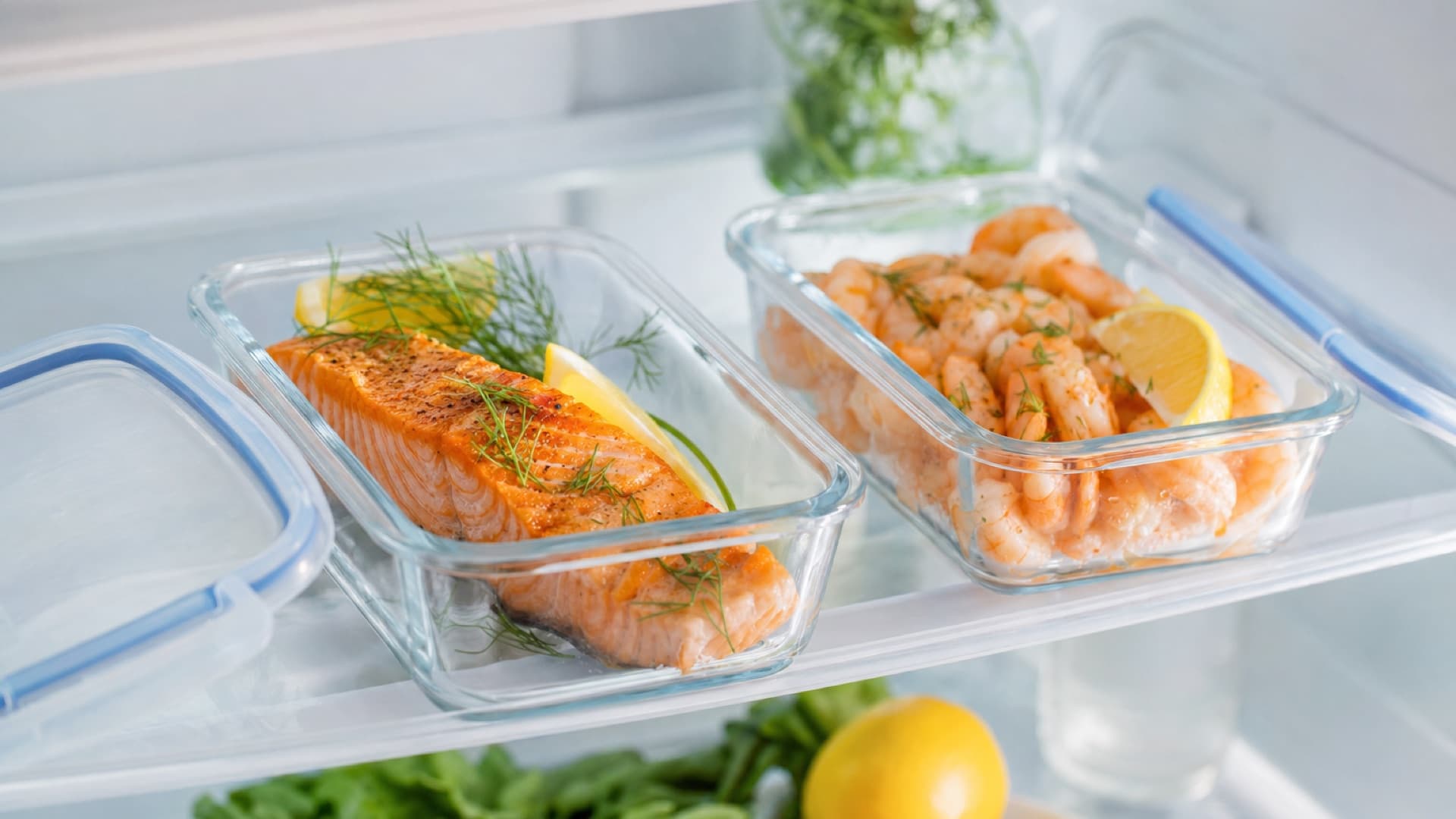
Cooked salmon lasts 3 to 4 days in the refrigerator at 40°F (4°C) or below, according to the USDA FoodKeeper. Cooked shrimp and other cooked shellfish have the same 3 to 4 day window, while raw salmon and raw shrimp should be cooked or frozen within 1 to 2 days.
That short window catches a lot of people out, because a beautiful leftover fillet looks the same on day five as on day two. This guide covers storage times for cooked and raw salmon and shrimp, how to store them, how to tell when they have spoiled and how to reheat them safely.
Seafood Fridge Storage Times
All times assume a refrigerator at 40°F (4°C) or below.
| Seafood | Refrigerator | Freezer, 0°F (-18°C) |
|---|---|---|
| Cooked salmon and other cooked fish | 3 to 4 days | 1 to 2 months |
| Cooked shrimp and other cooked shellfish | 3 to 4 days | 1 to 3 months |
| Raw salmon (fatty fish) | 1 to 2 days | 2 to 3 months |
| Raw shrimp | 1 to 2 days | 6 to 18 months |
| Seafood salads (salmon, shrimp, tuna) | 3 to 4 days | Not recommended |
Sources: USDA FoodKeeper and the FoodSafety.gov Cold Food Storage Chart. For raw seafood the official ranges vary (the chart allows 1 to 3 days for fatty fish and 3 to 5 days for shrimp, the FoodKeeper 1 to 3 days for shrimp), so we list the conservative 1 to 2 days, which matches the FDA's advice to use fresh seafood within 2 days or freeze it.
How Long Can Cooked Salmon Stay in the Fridge?
Three to four days. The clock starts when the salmon is cooked, not when you remember to put it away. That applies whether it was baked, grilled, poached, pan-seared or bought already cooked from a restaurant.
Why so short? Cooking kills most bacteria present at the time, but leftovers pick up new ones from air, hands, utensils and containers. Some bacteria, such as Listeria, can grow slowly even at refrigerator temperatures. The 3 to 4 day guideline, which the USDA uses for leftovers in general, keeps that growth well below risky levels.
Smoked salmon is different
Hot-smoked and cold-smoked salmon (lox) are processed products with their own dates and storage instructions. Follow the package, and once opened, treat it as a short-lived food. The times in this article are for salmon you cook yourself.
How Long Can Cooked Shrimp Stay in the Fridge?
Also 3 to 4 days, according to the FoodKeeper's entry for cooked shellfish. That includes shrimp you boiled or sautéed at home, and the ready-to-eat cooked shrimp rings sold in grocery stores once they are opened. For unopened store-bought cooked shrimp, follow the package date.
Shrimp cocktail left out on a party table is the classic risk. Cold seafood that has been sitting above 40°F (4°C) for more than 2 hours, or more than 1 hour when it is above 90°F (32°C), should be thrown out, per FDA and USDA guidance. Serve it over ice and refill from the fridge instead of putting the whole batch out at once.
Pro tip: If you know you will not eat leftover salmon or shrimp within a day or two, freeze it right away instead of waiting until day four. It will taste better, and you will not have to make a decision about borderline fish.
How to Store Cooked Seafood
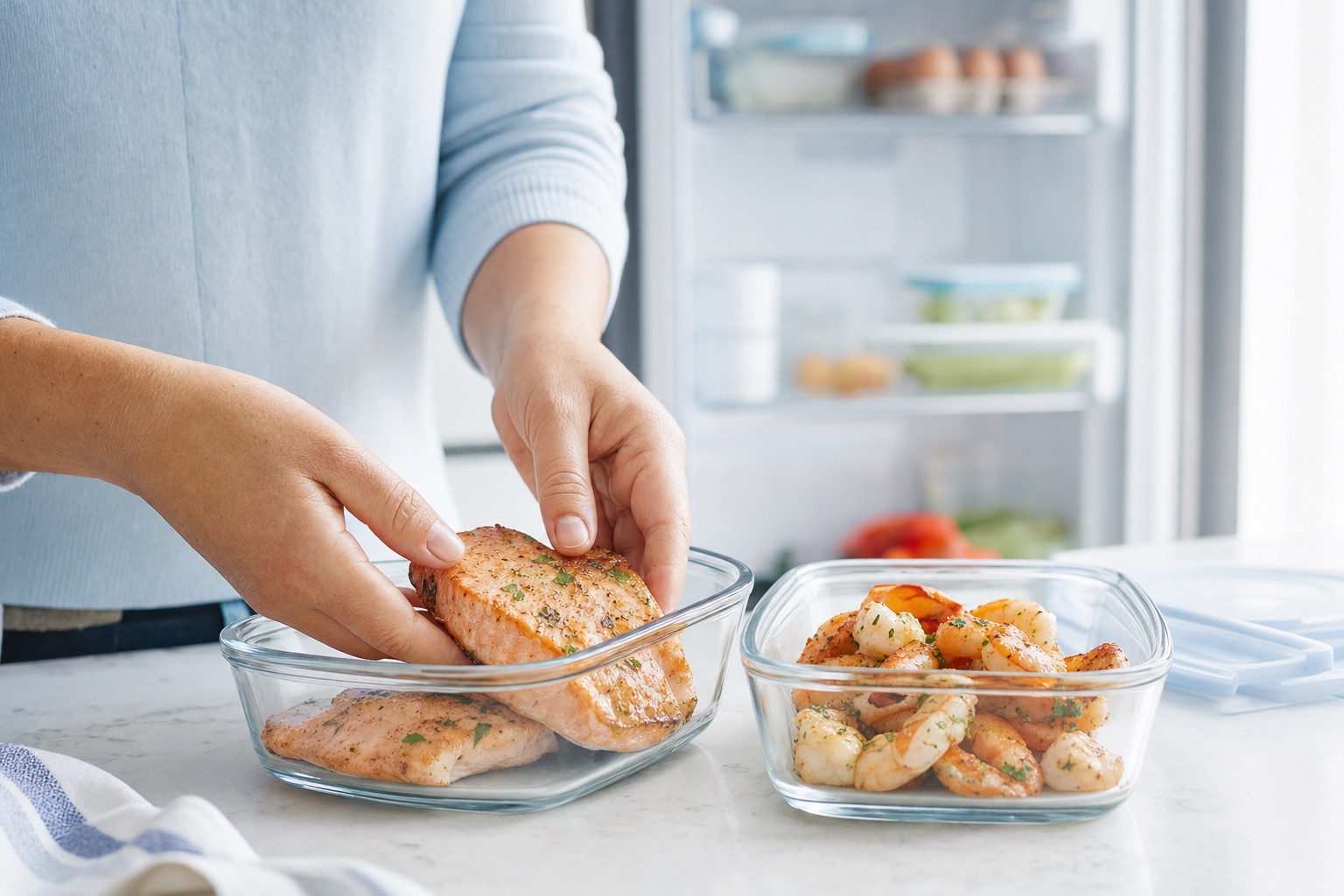
- Refrigerate within 2 hours of cooking (1 hour on a hot day).
- Use shallow, airtight containers so the seafood cools quickly and does not perfume the whole fridge.
- Store on an interior shelf, not the door. The back of the middle or bottom shelf is usually coldest.
- Label the container with the date it was cooked.
- Keep raw and cooked seafood apart. Raw seafood goes on the bottom shelf in a container or on a plate so juices cannot drip onto ready-to-eat food.
How to Tell If Salmon or Shrimp Has Gone Bad
The FDA's seafood guidance lists the odors to watch for: spoiled seafood can smell sour, rancid, fishy or like ammonia, and those smells get stronger after cooking. Discard seafood with any of these odors.
Other warning signs:
- Slimy or sticky surface on cooked salmon or shrimp
- Dull, gray or discolored flesh compared to when it was cooked
- Mold of any kind
- Past day 4, even if it looks and smells fine
Do not rely on the smell test alone. Many bacteria that cause foodborne illness do not change how food smells or looks. If you cannot remember when it was cooked, the USDA's advice applies: when in doubt, throw it out.
Raw Salmon and Shrimp in the Fridge
Fresh, raw salmon and shrimp have an even shorter life than cooked. The FoodKeeper gives raw fatty fish such as salmon 1 to 2 days, and the FDA recommends using fresh seafood within 2 days or freezing it.
- Buy fish last on your shopping trip and get it into the fridge quickly.
- Keep it in its packaging, or on a plate covered with plastic wrap, on the coldest shelf.
- If plans change, freeze it the same day. See how to freeze fish and seafood for wrapping tips.
If you thawed frozen salmon or shrimp in the refrigerator, the USDA says seafood thawed this way stays good for an additional day or two before cooking. Seafood thawed in cold water or in the microwave should be cooked right away. Our guide on how to thaw shrimp and salmon covers each method.
Reheating Leftover Salmon and Shrimp
The USDA recommends reheating leftovers to an internal temperature of 165°F (74°C). Salmon and shrimp dry out easily, so:
- Oven: cover with foil, add a splash of water or broth, and warm at about 275°F (135°C) until heated through.
- Skillet: low heat with a little oil or butter and a lid.
- Microwave: cover, use medium power, and stir or flip halfway so there are no cold spots.
Or skip reheating. Cold cooked salmon is excellent flaked into salads, grain bowls or salmon cakes, and cold cooked shrimp works in pasta salad or tacos, as long as it is still within its 3 to 4 days.
Freezing Cooked Salmon and Shrimp
If day three arrives and there is still salmon left, freeze it. The FoodKeeper gives cooked fish 1 to 2 months and cooked shellfish 1 to 3 months in the freezer for best quality. Wrap tightly, press out the air, and label with the date. Thaw in the refrigerator overnight and use within a day or two.
For comparison with other leftovers, see how long cooked chicken is good in the fridge, which follows the same 3 to 4 day rule.
FAQ
How long can cooked salmon stay in the fridge?
3 to 4 days at 40°F (4°C) or below, according to the USDA FoodKeeper. Freeze it if you will not eat it in that time.
How long can cooked shrimp stay in the fridge?
3 to 4 days, the same as other cooked shellfish. Throw out shrimp that sat out at room temperature for more than 2 hours.
How long is raw salmon good in the fridge?
1 to 2 days. The FDA advises using fresh seafood within 2 days or freezing it.
Can you eat cooked salmon after 5 days?
It is not recommended. The USDA guideline for cooked fish is 3 to 4 days, and harmful bacteria do not always change the smell or appearance of food.
Can you eat leftover salmon cold?
Yes, as long as it was refrigerated promptly and is still within 3 to 4 days. Cold salmon is great in salads and sandwiches.
Keep Track of Seafood Leftovers
The hardest part of the 3 to 4 day rule is remembering which day it is. A marker and masking tape on the container works. So does logging leftovers in Freezer Inventory Tracker, which tracks your fridge along with your freezer and sends a reminder before the salmon passes its window. Make sure your fridge is actually cold enough too: our guide on what temperature a freezer and fridge should be explains how to check.