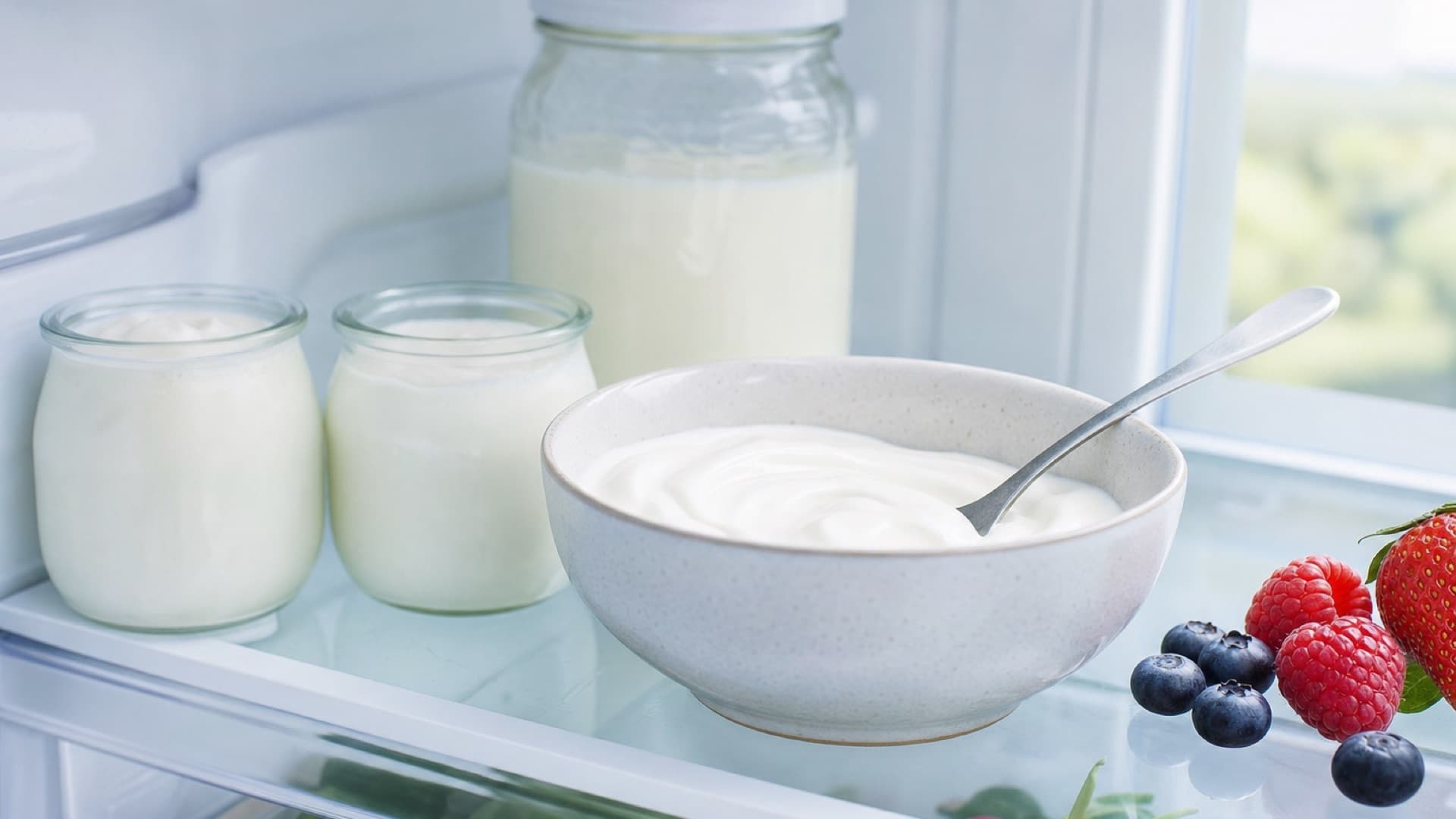
Unopened yogurt that has been kept at 40°F (4°C) or below is often still fine for a short time after the date on the cup, because that date is about quality, not safety. Once opened, the USDA FoodKeeper gives yogurt about 1 to 2 weeks in the refrigerator, and any mold, off smell or unusual texture means it goes in the trash regardless of the date.
There is no single official "yogurt is good X days past the date" number, so anyone quoting one is guessing. What does exist is clear federal guidance on what date labels mean, official storage times, and a reliable set of spoilage signs. That is what this guide covers.
What the Date on Yogurt Actually Means
Yogurt cups usually carry a "Best by," "Use by" or "Sell by" date. According to the USDA, these dates are set by the manufacturer to indicate peak quality:
- Best if Used By/Before: when the product will be at its best flavor and quality. Not a purchase or safety date.
- Sell By: tells the store how long to display the product. Not a safety date.
- Use By: the last date recommended for use at peak quality. Not a safety date (infant formula is the exception).
The USDA says that if the date passes during home storage, a product should still be safe and wholesome if handled properly, until spoilage is evident. The FDA, which regulates dairy products like yogurt, makes the same point: date labels on packaged foods are about quality, and products stored properly do not necessarily need to be thrown out after the date. Both agencies also stress the other half: if food shows signs of spoilage, discard it.
The key words are "handled properly." Yogurt that sat in a hot car or on the counter for an afternoon is not covered by any of this.
Yogurt Storage Times Table
| Yogurt situation | How long | Source |
|---|---|---|
| In the refrigerator at 40°F (4°C) | 1 to 2 weeks | USDA FoodKeeper |
| In the freezer at 0°F (-18°C) | 1 to 2 months (quality) | USDA FoodKeeper |
| At room temperature above 40°F (4°C) | Max 2 hours (1 hour above 90°F / 32°C) | USDA |
| Fridge without power | Discard after 4 hours without power | FoodSafety.gov |
The FoodKeeper's 1 to 2 week refrigerator time is counted from when you buy it. In practice, an unopened, sealed cup that was cold the whole time usually holds up better than an opened tub that has had a few spoons in it. Use the opened time as your firm limit.
Pro tip: When you open a large tub of yogurt, write the date on the lid. The printed date stops being useful the moment the seal comes off.
Unopened vs. Opened Yogurt
Unopened yogurt is sealed and was packaged under controlled conditions. If your fridge holds 40°F (4°C) or colder, it may well be fine for a short while past the printed date. Check it carefully when you open it (see the next section), and do not stretch it more than you would be comfortable with.
Opened yogurt is exposed to air and every utensil that goes into it. Mold spores land on the surface, and bacteria ride in on spoons. Use opened tubs within about 1 to 2 weeks, and sooner if you have been eating straight from the container.
Greek yogurt falls under the same single yogurt entry in the FoodKeeper, so the same times apply. It is thicker and lower in whey, but it is still a perishable, high-moisture dairy product.
Drinkable yogurt and kefir should be treated the same way: check the date, keep them cold, and use opened bottles quickly.
How to Tell If Yogurt Has Gone Bad
Yogurt is supposed to be tangy, so taste alone is not a reliable test, and you should not taste something you already suspect is spoiled. Look and smell first.
Discard the yogurt if you see:
- Any mold. Fuzzy spots, pink, green, black or orange patches. The USDA's guidance on molds says to discard yogurt and sour cream with mold, because high-moisture foods can be contaminated below the surface and bacteria can grow alongside the mold. Do not scoop it off.
- A swollen or bulging lid on a sealed cup. That suggests gas-producing microbes.
- A sharp, yeasty, alcoholic or rotten smell rather than a clean sour tang.
- Curdled, lumpy or slimy texture that does not stir smooth.
These are normal:
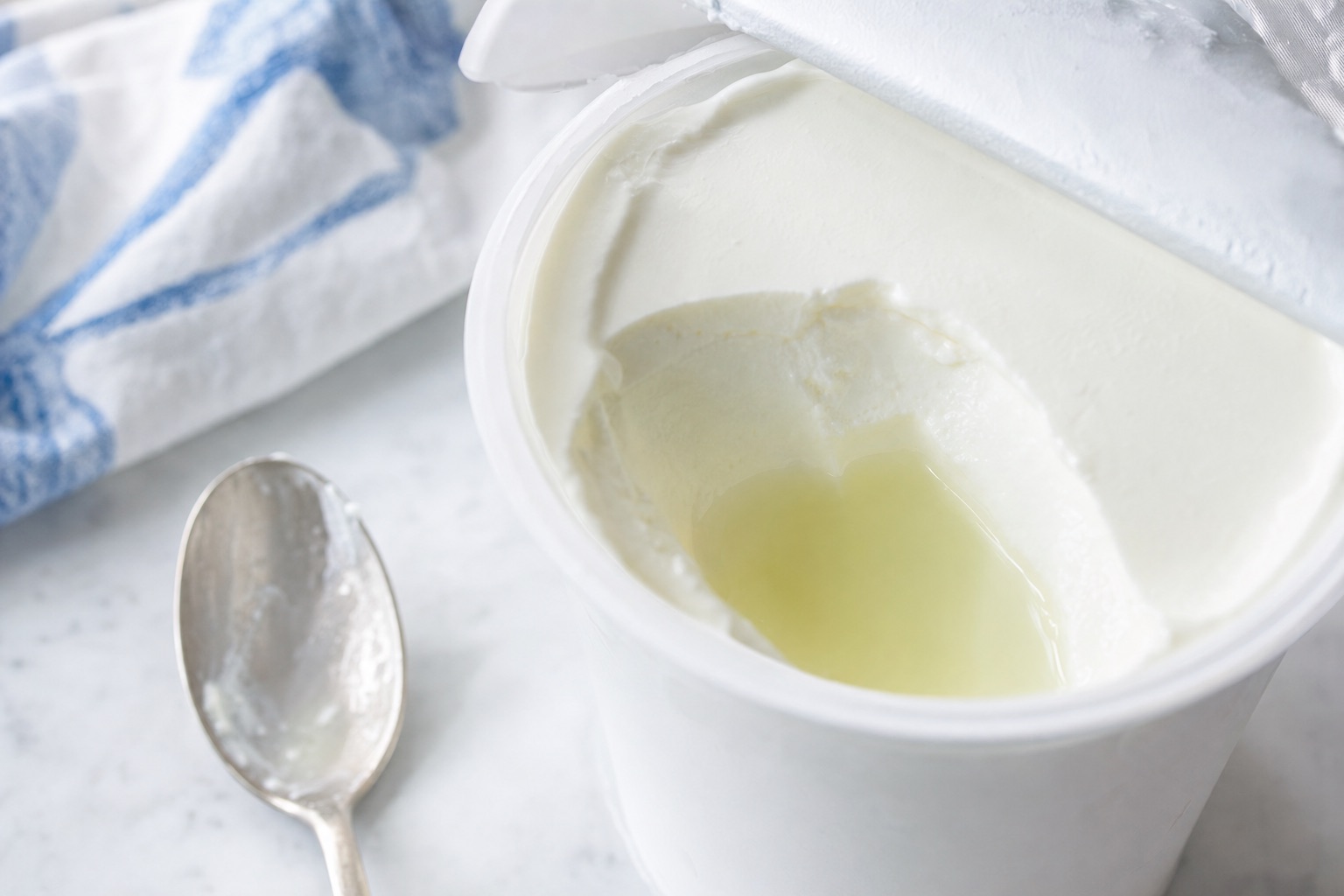
- Clear liquid on top. That is whey, a natural part of yogurt. Stir it back in or pour it off.
- A slightly tangier taste as it gets older. Live cultures keep producing acid slowly in the fridge.
Can You Eat Yogurt After the Expiration Date?
If it is unopened, has been refrigerated the whole time, and passes the look and smell check, eating it shortly after the printed date is consistent with USDA and FDA guidance that these dates are about quality. The flavor may be more sour and the texture slightly looser.
Do not eat it if:
- It has been open longer than about 2 weeks.
- It was left out of the refrigerator for more than 2 hours (1 hour above 90°F / 32°C).
- The fridge lost power for more than 4 hours. FoodSafety.gov lists yogurt among the refrigerated dairy foods to discard in that case.
- It shows any of the spoilage signs above.
When in doubt, throw it out. A cup of yogurt is cheap compared to a foodborne illness.
Freezing Yogurt Before It Expires
If you can see that you will not finish yogurt before its date, freeze it. The USDA FoodKeeper gives frozen yogurt 1 to 2 months for best quality. Thawed yogurt separates and gets a bit grainy, so it works best in smoothies, baking, marinades and overnight oats rather than eaten plain. Thaw it in the refrigerator, stir well, and use within a few days.
We cover which kinds freeze best (Greek, regular and tubes) and how to make frozen yogurt bark in can you freeze yogurt.
Store Yogurt So It Lasts Longer
- Keep it on an interior shelf, not the door, where temperatures swing each time the fridge opens.
- Use a clean spoon every time, and do not eat directly from a large tub you plan to keep.
- Close the lid tightly, or press plastic wrap on the surface of a tub with a torn foil seal.
- Check your fridge temperature. The USDA recommends 40°F (4°C) or below. See what temperature your fridge and freezer should be.
- Put it back quickly. Do not leave the tub on the breakfast table for an hour.
The same rules apply to sour cream and cream cheese; our guide on how long dairy is good after opening has the full table, and how long milk is good after the expiration date covers milk.
FAQ
How long is yogurt good for after the expiration date?
There is no official number of days. Unopened yogurt kept at 40°F (4°C) or below is often fine a short time past the date because the date reflects quality, not safety, according to the USDA and FDA. Check for mold, bulging lids and off smells before eating.
Can you eat yogurt after the expiration date if it is unopened?
Usually yes, if it was refrigerated the whole time and looks and smells normal. Expect it to be tangier. Discard it if the lid is swollen or there is any mold.
How long does yogurt last once opened?
About 1 to 2 weeks in the refrigerator, based on the USDA FoodKeeper. Use it sooner if you have been eating from the container.
Is the liquid on top of yogurt a sign it has gone bad?
No. Clear liquid is whey, which separates naturally. Stir it back in. Mold, discoloration or a yeasty smell are the real warning signs.
Can you freeze yogurt to make it last longer?
Yes. Frozen yogurt keeps 1 to 2 months for best quality, per the FoodKeeper. Thawed yogurt is best used in smoothies and baking.
Waste Less Yogurt
Confusion over date labels is one of the most common reasons good food gets thrown out; the FDA estimates it accounts for about 20 percent of consumer food waste. Knowing that "best by" means quality, and checking the yogurt itself, saves plenty of cups. The other half is simply remembering what is in the fridge. Freezer Inventory Tracker can track your fridge alongside the freezer and pantry and remind you when the yogurt date is close. For more ideas, see how to reduce food waste at home.