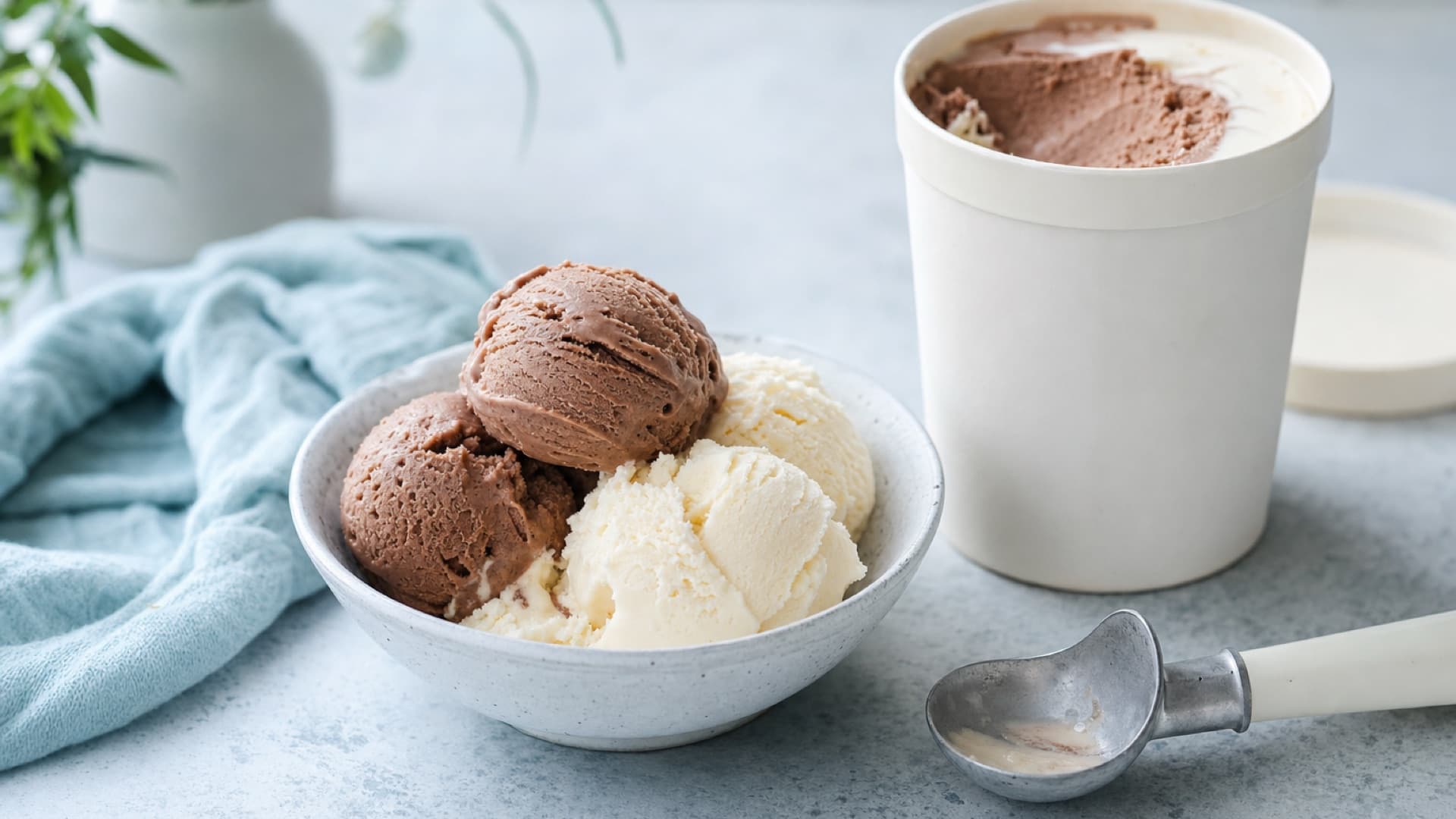
Ice cream keeps its best quality for up to about 6 months in a freezer at 0°F (-18°C), according to the USDA FoodKeeper. Once a container is opened and has been scooped from a few times, it develops ice crystals and freezer burn much faster, so plan to finish opened tubs sooner.
Ice cream rarely becomes dangerous while it stays frozen, but it can go bad in quality, and it can become unsafe if it melts and sits. This guide covers how long ice cream lasts, why it turns icy, how to tell when it is past saving and how to store it so every scoop stays creamy.
Ice Cream Storage Times Table
| Frozen dessert | Freezer, 0°F (-18°C) | Source |
|---|---|---|
| Ice cream | Up to 6 months | USDA FoodKeeper |
| Sherbet, sorbet | Up to 9 months | USDA FoodKeeper |
| Yogurt (frozen at home) | 1 to 2 months | USDA FoodKeeper |
| Ice cream that thawed in a power outage | Discard | FoodSafety.gov |
The FoodKeeper counts these times from the date of purchase and assumes the container stays sealed and the freezer stays at 0°F (-18°C) or colder. An opened pint that goes in and out of the freezer every night does not get the full 6 months of quality. Think of the FoodKeeper number as the ceiling, not the target.
Remember that freezer times are for quality. The USDA says food stored constantly at 0°F (-18°C) remains safe indefinitely. The safety concern with ice cream is melting, not age.
Can Ice Cream Go Bad?
Yes, in two different ways.
Quality loss (common). Over time, ice cream develops large ice crystals, a gummy or sandy texture, freezer burn on the surface and stale "freezer" flavors absorbed from other foods. It is unpleasant but not dangerous.
Safety problems (less common, more serious). Ice cream is made from milk and cream. If it melts and stays warm, bacteria in it, or introduced by spoons, can multiply. Refreezing does not kill bacteria; the USDA notes that freezing only makes microbes dormant, and they become active again once the food thaws. That is why FoodSafety.gov advises throwing out ice cream and frozen yogurt after a power outage, even if they still contain ice crystals.
Practical safety rules:
- Do not refreeze ice cream that fully melted or sat out for a long time.
- Do not eat straight from a tub you plan to put back. Spoons that have been in someone's mouth introduce bacteria into the whole container.
- Keep the scoop clean. Rinse it between flavors and dry it before going back in.
Signs Your Ice Cream Has Gone Bad
Throw it out, or at least do not expect to enjoy it, if you see:
- A thick layer of ice crystals on the surface or under the lid
- Gummy, sticky or grainy texture instead of smooth and creamy
- Shrunken ice cream pulling away from the sides of the container, a sign of moisture loss
- Off or sour smell, or flavors absorbed from the freezer, like onion or fish
- Discoloration, especially yellowing in vanilla
- Signs that it melted and refroze, such as a dense, hard, icy block or a sticky residue on the outside of the carton
If it melted and refroze or you are unsure how long it sat out, discard it.
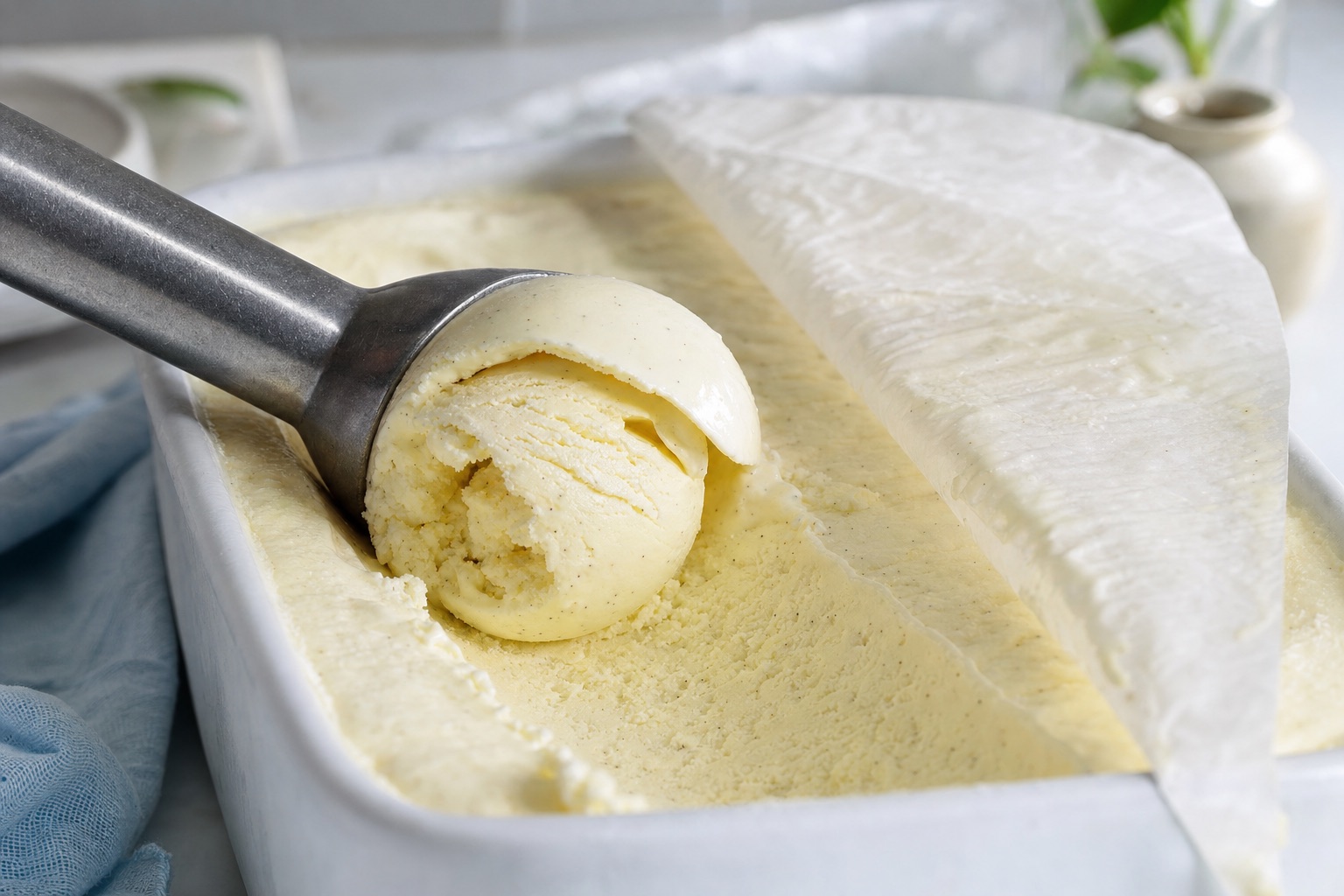
Pro tip: Press a piece of plastic wrap or parchment directly onto the surface of the ice cream before replacing the lid. It blocks air from the exposed surface, which is where ice crystals and freezer burn start.
What Causes Ice Crystals and Freezer Burn?
Ice cream is a careful balance of tiny ice crystals, fat, sugar and air. When it is made, it is frozen fast and churned so the crystals stay very small, which is what makes it feel smooth.
Two things ruin that:
- Temperature swings. Each time the freezer door opens or the pint sits on the counter, the outer layer softens slightly. When it refreezes, the water does not go back into the same tiny crystals; it joins larger ones. Repeat this enough times and the texture turns crunchy and coarse.
- Air exposure. In a half-empty container, moisture leaves the ice cream surface and settles as frost on the lid and the sides. This is freezer burn: the USDA describes it as dry spots caused by air coming in contact with the surface of the food. Freezer burn is not unsafe, but it tastes stale.
Our guide to what freezer burn is and how to prevent it covers the science in more depth.
How to Store Ice Cream So It Stays Creamy
- Keep the freezer at 0°F (-18°C) or colder. Use an appliance thermometer to check. Our guide on what temperature a freezer should be explains how.
- Store it in the back of the main compartment, not the door. The door is the warmest and least stable part of the freezer.
- Get it home fast. Make ice cream the last thing you pick up at the store and the first thing you put away. An insulated bag helps on hot days.
- Cover the surface with plastic wrap or parchment, then close the lid tightly.
- Scoop and return quickly. Do not leave the tub on the counter while you eat. Scoop what you need and put it straight back.
- Store upside down (lid tightly closed) if you like. Some people find melted drips settle against the lid instead of the ice cream surface. It is optional and only works with lids that seal well.
- Downsize the container when a big tub is mostly empty. Transfer the rest to a smaller airtight container so there is less air inside.
- Keep it away from strong-smelling foods. Fat absorbs odors. Wrap fish, onions and garlic tightly in the same freezer.
Homemade Ice Cream
Homemade ice cream has no stabilizers and is usually frozen more slowly than commercial ice cream, so it gets icy faster. Enjoy it within a short time of making it, press wrap onto the surface, and store it in a shallow, airtight container so it freezes quickly and evenly. Use pasteurized eggs or a cooked custard base if your recipe includes eggs, since raw eggs carry a risk of Salmonella.
What About a Power Outage?
If the power goes out, keep the freezer door closed. The USDA says a full freezer holds its temperature for about 48 hours (24 hours if half full) with the door shut. When power returns, check each item. For most foods, if they still have ice crystals or are at 40°F (4°C) or below, they can be refrozen. Ice cream and frozen yogurt are the exception: FoodSafety.gov advises discarding them after an outage. More in our power outage freezer food safety guide.
Organizing Frozen Desserts
Pints get buried. A dedicated bin or shelf for frozen desserts keeps them visible, stops them getting crushed and reminds you to finish the opened one before cracking a new one. Our freezer organization ideas show how to set up zones in upright, drawer and side-by-side freezers.
FAQ
How long does ice cream last in the freezer?
Up to about 6 months for best quality at 0°F (-18°C), according to the USDA FoodKeeper. Opened containers develop ice crystals faster, so finish them sooner.
Can ice cream go bad?
Yes. Over time it gets icy, gummy and absorbs freezer odors. If it melts and is refrozen, or sits out for a long time, bacteria can multiply, and it should be discarded.
Is freezer-burned ice cream safe to eat?
Yes. The USDA says freezer burn does not make food unsafe, only dry in spots. Scrape off the icy top layer; if the whole tub tastes stale, it is not worth eating.
Can you refreeze melted ice cream?
It is not recommended. Melted ice cream loses its texture when refrozen, and if it was warm for a while bacteria may have grown. FoodSafety.gov advises discarding ice cream after a power outage.
Why does my ice cream have ice crystals on top?
Temperature swings and air in the container. Keep the freezer at 0°F (-18°C), store the tub in the back, return it quickly after scooping, and press plastic wrap onto the surface.
Never Lose a Pint Again
Most ice cream gets thrown away for a simple reason: someone found a half-eaten tub from months ago at the back of the freezer. Know what you have and how long it has been there, and that stops happening. Freezer Inventory Tracker keeps a list of everything in your freezer, including desserts, with the date each one went in. If you want another freezable dairy treat, see can you freeze yogurt.