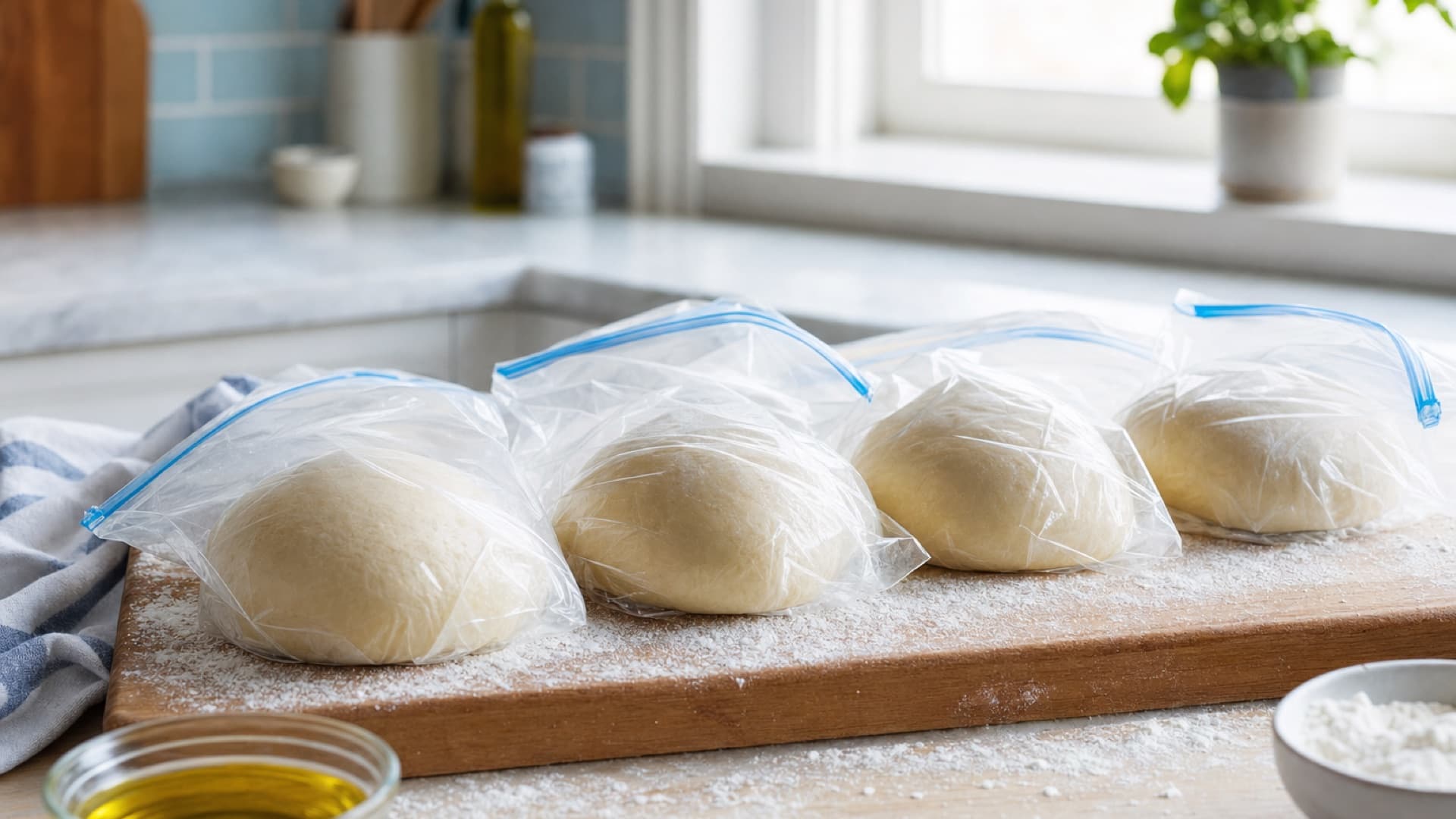
Yes, you can freeze pizza dough, and it is one of the easiest freezer staples to make. Freeze homemade dough after its first rise, divided into single-pizza balls lightly coated in oil and sealed in airtight bags, then thaw it overnight in the refrigerator before shaping.
Done right, frozen dough bakes up almost indistinguishable from fresh. This guide covers how to freeze it, how long it keeps, how to thaw pizza dough quickly when you forgot to plan ahead, and which store-bought doughs should not be frozen.
Why Pizza Dough Freezes So Well
A basic pizza dough is flour, water, yeast, salt and usually a little oil. Freezing pauses the yeast without killing most of it, so when the dough warms up again it picks up where it left off. There is no dairy or egg to separate and no delicate texture to protect.
Even USDA guidance treats bread dough as forgiving. The FoodSafety.gov power outage chart lists homemade bread dough as a food that can be refrozen even after it thaws, with some quality loss. That is a statement about quality, not an invitation to refreeze dough over and over, but it shows how stable dough is compared with meat or dairy.
How Long Does Frozen Pizza Dough Last?
There is no official USDA storage time for homemade pizza dough. The closest reference is the USDA FoodKeeper's entry for commercial frozen bread dough, which lists 12 months in the freezer.
Homemade dough is a different case: it is not packaged for long storage, and the yeast slowly loses strength in the freezer. For the best rise and flavor, most bakers aim to use homemade dough within about 3 months. Older dough is still safe if it stayed frozen at 0°F (-18°C), but it may rise less and bake up denser.
| Pizza dough | Where | How long |
|---|---|---|
| Homemade dough, after first rise | Refrigerator | Use within a few days (it keeps fermenting) |
| Homemade dough | Freezer, 0°F (-18°C) | Best within about 3 months |
| Commercial frozen bread dough | Freezer, 0°F (-18°C) | Up to 12 months (USDA FoodKeeper), or the package date |
| Refrigerated dough in tube cans | Refrigerator | Package use-by date; freezing not recommended (USDA FoodKeeper) |
| Thawed dough | Refrigerator | Bake within 1 to 2 days |
How to Freeze Homemade Pizza Dough
- Make the dough and let it rise once. Freezing after the first rise (bulk fermentation) gives the best flavor. You can freeze right after kneading, but expect a longer rise after thawing.
- Divide into portions. One ball per pizza. Typical home pizzas use roughly 8 to 10 ounces (about 225 to 280 g) of dough for a 12-inch pie.
- Shape into tight balls and coat each one lightly with olive oil. The oil prevents a dry skin from forming and stops the dough from sticking to the bag.
- Wrap each ball. Put it in its own zip-top freezer bag, press out the air, and leave a little room for slight expansion. For extra protection, wrap in plastic first.
- Freeze flat. Lay the bags on a tray in a single layer until solid, then stack them.
- Label with the date and the type of dough (thin crust, whole wheat, and so on).
Pro tip: Make a double batch whenever you make pizza. Bake half tonight and freeze the rest, and you have homemade pizza ready for next week with no extra cleanup.
Can you freeze pizza crust instead?
Yes. Some people prefer to par-bake: shape the dough, bake the plain crust for a few minutes until just set, cool, wrap and freeze. You can top and bake it straight from frozen. This takes more freezer space but skips thawing entirely. Unbaked, topped pizzas can also be frozen, though watery toppings like fresh tomatoes and mushrooms can make the crust soggy.
How to Thaw Pizza Dough
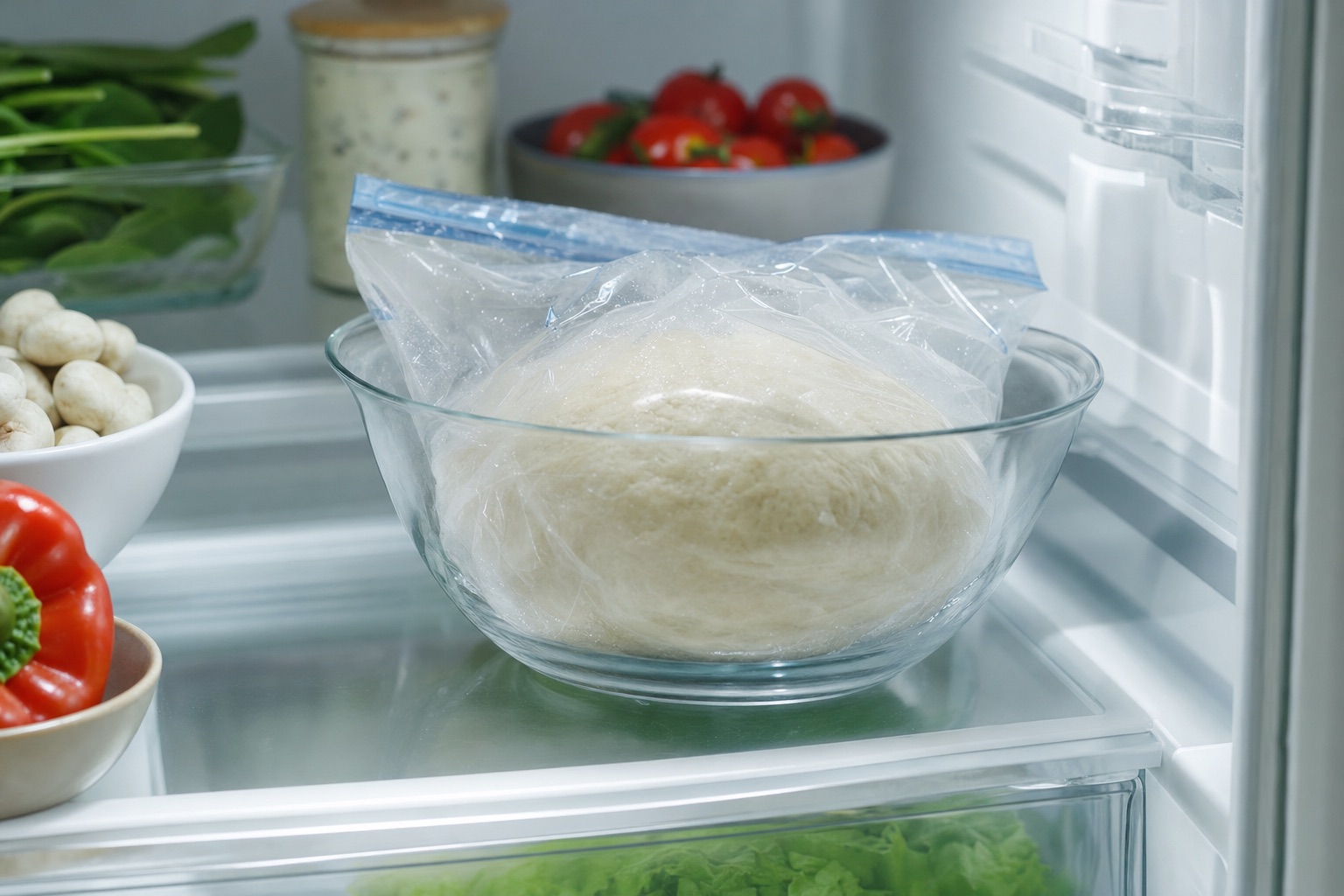
Overnight in the refrigerator (best)
Move the bag from the freezer to the fridge the night before, or in the morning for dinner. A single dough ball usually needs about 8 to 12 hours. Put it in a bowl in case the bag leaks. Thawed dough keeps for a day or two in the fridge.
About 1 to 2 hours before baking, take it out, place it on a floured or oiled surface, cover it, and let it come to room temperature. Cold dough springs back and tears when you try to stretch it. Room-temperature dough stretches easily.
How to thaw pizza dough quickly
If it is 4 p.m. and the dough is still frozen:
- Counter thaw in the bag. Plain pizza dough (flour, water, yeast, salt, oil) is normally left at room temperature to rise anyway, so many bakers thaw it on the counter in its sealed bag. A dough ball usually softens in about 2 to 3 hours depending on size and kitchen temperature. Once it is soft, transfer it to an oiled bowl, cover it and let it finish rising.
- Cold water bath. Keep the dough in a sealed bag and submerge it in a bowl of cool water. Water transfers heat much faster than air, so this is quicker than the counter. Change the water if it gets very cold.
- Microwave. Use the defrost setting in short bursts, turning the dough between each, and stop as soon as it is pliable. This is the riskiest for texture because edges can start to cook.
If your dough contains milk, eggs or cheese, thaw it in the refrigerator rather than on the counter, as you would any perishable food.
Using Store-Bought Dough
- Frozen dough from the freezer aisle: follow the package date and thawing directions.
- Refrigerated fresh dough balls from a bakery or pizzeria: they freeze well using the method above if you freeze them before their date.
- Refrigerated dough in pop-open tube cans: the USDA FoodKeeper does not recommend freezing these. Use them by the package date.
Don't Taste Raw Dough
It is tempting to pinch off a piece, but the FDA warns that flour is a raw ingredient. It is not treated to kill germs, and it has been linked to outbreaks of illness from E. coli. Freezing does not kill these bacteria. Baking does, so enjoy the dough once it is a pizza. Wash your hands, counters and utensils after handling raw dough, as the FDA recommends.
Troubleshooting Frozen Dough
| Problem | Likely cause | Fix |
|---|---|---|
| Dough will not rise after thawing | Old dough or yeast weakened in the freezer | Give it more time in a warm spot; use dough within 3 months next time |
| Dry, crusty patches | Air in the bag (freezer burn) | Oil the ball and press out all air; see what freezer burn is |
| Sticky, slack dough | Condensation while thawing | Dust with flour and let it rest 15 minutes before stretching |
| Dough tears when stretched | Still too cold | Let it sit covered at room temperature another 30 to 60 minutes |
| Sour or alcoholic smell | Over-fermented before freezing or after thawing | Usually still usable; freeze sooner after the first rise |
Other Doughs You Can Freeze
The same approach works for bread dough, focaccia, dinner rolls and calzones. For baked loaves, see our guide on how to freeze bread. If you are building a stash of ready-to-go meals, dough balls fit right into a freezer meal prep routine, and sturdy, flat freezer bags are the right container for the job.
FAQ
Can you freeze pizza dough?
Yes. Freeze it after the first rise, divided into oiled single-pizza balls in airtight freezer bags. Thaw it in the refrigerator overnight before baking.
How long can pizza dough stay in the freezer?
There is no official USDA time for homemade dough. For the best rise, use it within about 3 months. Commercial frozen bread dough is listed at up to 12 months in the USDA FoodKeeper.
How do you thaw pizza dough quickly?
Leave the sealed bag on the counter for a couple of hours, or submerge it in a bowl of cool water, which is faster. Microwave defrosting is quickest but can partly cook the edges.
Can you refreeze pizza dough?
It is possible, but each freeze weakens the yeast and the gluten, so the second batch will rise less. It is better to freeze in single portions so you never have to.
Can you freeze store-bought pizza dough?
Fresh dough balls from a bakery or grocery store freeze well. Dough in pop-open tube cans should not be frozen, according to the USDA FoodKeeper.
Keep Pizza Night on the Calendar
A few dough balls in the freezer turn "what's for dinner?" into a 20-minute answer. The trick is knowing how many you have and how old they are, especially if several people dip into the same freezer. Freezer Inventory Tracker keeps a shared list your whole household can see, with the freeze date on each batch, so the oldest dough gets used first.