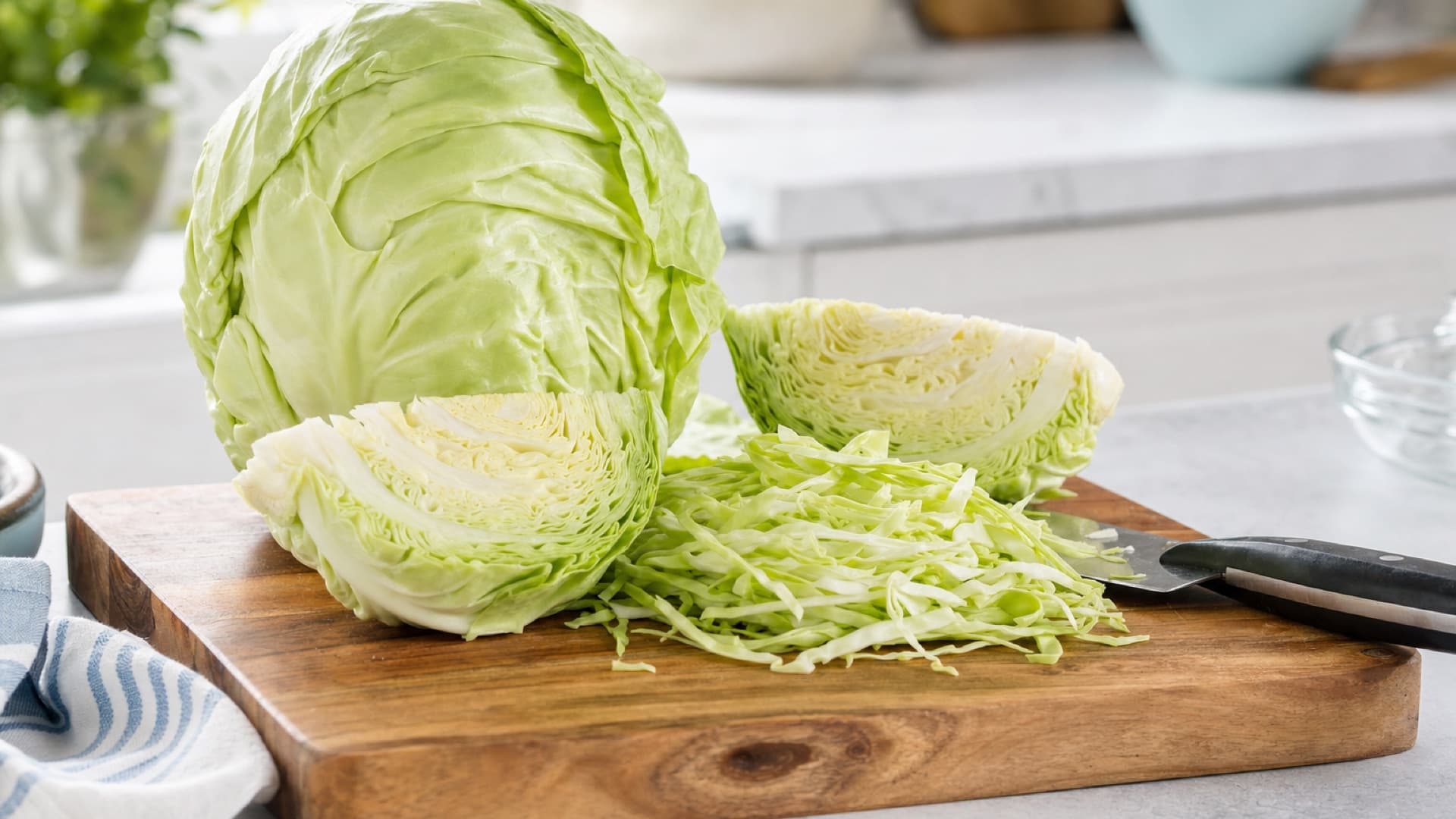
Yes, you can freeze cabbage. For the best quality, cut it into shreds, wedges or separated leaves, blanch it in boiling water for 1 1/2 minutes, cool it quickly and pack it in freezer bags, as the National Center for Home Food Preservation (NCHFP) recommends. Frozen cabbage turns limp when thawed, so it is meant for cooked dishes such as soups, stir-fries, casseroles and cabbage rolls, not for coleslaw.
Below are the step-by-step methods for blanched, raw and cooked cabbage, plus the trick that makes cabbage roll leaves easy to fold.
What Happens to Cabbage in the Freezer
Cabbage is more than 90 percent water. When it freezes, ice crystals break its cell walls, and the crisp crunch is gone once it thaws. That is why the NCHFP says frozen cabbage is suitable only as a cooked vegetable.
The flavor, on the other hand, keeps well, especially if you blanch first. In a soup, a braise or a skillet of sausage and cabbage, you won't notice the difference.
Why blanch cabbage?
Blanching means heating vegetables briefly in boiling water or steam. According to the NCHFP, it slows the enzymes that otherwise keep working in the freezer and cause loss of flavor, color and texture. It also helps vegetables keep their vitamins and cleans the surface.
Unblanched cabbage is safe to freeze, but its quality declines faster: it can develop off-flavors and a dull color over the following months.
How to Freeze Blanched Cabbage (Recommended)
This is the NCHFP method for green, red, savoy and Chinese cabbage.
- Choose solid, fresh heads. Freezing preserves quality; it doesn't improve it.
- Trim. Remove the coarse outer leaves and rinse the head.
- Cut. Slice into medium to coarse shreds or thin wedges, or separate the head into individual leaves. Remove the hard core.
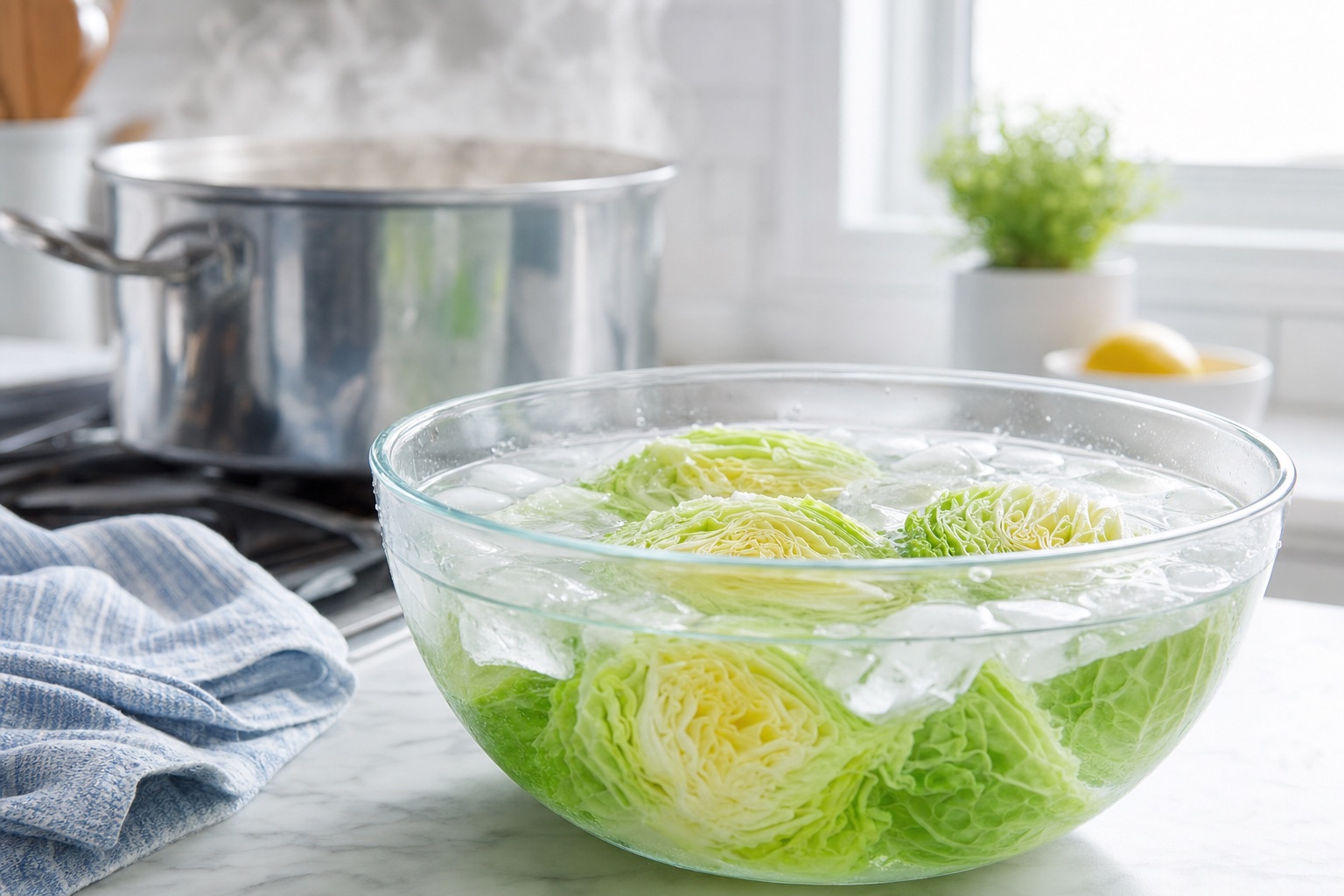
- Blanch. Bring a large pot of water to a rolling boil, using about 1 gallon of water per pound of cabbage. Add the cabbage and blanch for 1 1/2 minutes, timing from when the water returns to a boil.
- Cool fast. Move the cabbage straight into a bowl of ice water for about the same time it was blanched.
- Drain well. Spin in a salad spinner or pat dry with towels. Excess water becomes ice crystals.
- Pack. Fill freezer bags or containers, leaving 1/2 inch of headspace in rigid containers. Press the air out of bags.
- Label and freeze. Write the contents, form (shredded, wedges, leaves) and date.
Pro tip: Freeze shredded cabbage flat in quart bags. Flat bags freeze faster, stack neatly and break apart easily, so you can snap off a handful for soup.
Can You Freeze Cabbage Raw?
Yes. Freezing raw cabbage without blanching is quicker, and some cooks prefer it for dishes where the cabbage cooks for a long time anyway.
- Trim, core and shred or chop the cabbage.
- Dry it thoroughly.
- Flash freeze on a tray for 1 to 2 hours if you want loose shreds, or pack directly into freezer bags.
- Remove the air, seal, label and freeze.
The trade-off: without blanching, enzymes keep slowly working, so raw frozen cabbage loses flavor and color sooner. Use it before blanched cabbage, ideally within a few months.
Frozen Cabbage for Cabbage Rolls
Here is the best reason to freeze a whole head of cabbage: it makes cabbage roll leaves soft and flexible without boiling.
- Core the cabbage and freeze the whole head in a freezer bag for at least overnight.
- Thaw it in the refrigerator for a day, or in a bowl on the counter for a few hours.
- The leaves come off easily and are already pliable, ready to fill and roll.
This works because the same ice crystals that ruin cabbage for coleslaw soften the leaves exactly the way blanching would. Thawed leaves are wetter than blanched ones, so pat them dry before filling.
Assembled cabbage rolls freeze well too. Freeze them unbaked or baked in a freezer-safe dish, wrapped tightly. For more tips on make-ahead dishes, see how to freeze casseroles.
Can You Freeze Cooked Cabbage?
Yes. Cooked cabbage dishes, such as braised cabbage, cabbage soup, stuffed cabbage and stir-fries, freeze well.
- Cool the dish quickly and refrigerate or freeze within 2 hours of cooking.
- Pack in airtight containers in meal-sized portions.
- Reheat to 165°F (74°C), the USDA's recommended temperature for leftovers.
Soups are some of the easiest cabbage dishes to freeze. Our guide on how to freeze soup covers containers and headspace.
What doesn't freeze well
Coleslaw and other raw cabbage salads dressed with mayonnaise. The cabbage goes limp, and the USDA lists mayonnaise among the foods that don't freeze well because it separates. Make coleslaw fresh. For a full list, read what not to freeze.
How Long Does Cabbage Last?
| Cabbage | Refrigerator, 40°F (4°C) | Freezer, 0°F (-18°C) |
|---|---|---|
| Whole head, raw | 1 to 2 weeks | Freeze for cabbage rolls |
| Cut or shredded, raw | A few days, wrapped | Use within a few months (unblanched) |
| Blanched shreds, wedges or leaves | Not applicable | 8 to 12 months |
| Cooked cabbage dishes and soups | 3 to 4 days | 2 to 3 months |
Sources: whole-head refrigerator time from the FoodKeeper guide developed with Cornell University and USDA; blanched freezer time from the NCHFP guideline for frozen vegetables; cooked dishes from the USDA and FoodSafety.gov cold storage chart for soups, stews and leftovers.
Freezer times are for best quality. According to the USDA, food kept continuously at 0°F (-18°C) is safe indefinitely, but it slowly loses flavor and texture, and the NCHFP recommends the shorter end of each range.
How to Cook With Frozen Cabbage
You don't need to thaw frozen cabbage for most dishes. The NCHFP notes that most frozen vegetables should be cooked without thawing first.
- Soups and stews: add the frozen shreds directly to the pot for the last 10 to 15 minutes.
- Stir-fries and sautés: add frozen cabbage to a hot pan; cook off the extra moisture before adding sauce.
- Casseroles and bakes: thaw and squeeze out the water first, so the dish doesn't get soggy.
- Cabbage rolls: thaw whole frozen leaves in the fridge.
FAQ
Can you freeze cabbage raw without blanching?
Yes. Raw cabbage is safe to freeze without blanching, but it loses flavor and color faster. Blanching for 1 1/2 minutes is recommended for anything you plan to keep longer than a few months.
How long do you blanch cabbage before freezing?
The NCHFP recommends 1 1/2 minutes in boiling water for shreds, thin wedges or separated leaves, followed by quick cooling in ice water.
Can you freeze cabbage for cabbage rolls?
Yes. Freezing a cored whole head and thawing it softens the leaves so they peel off and roll easily, without boiling.
Can you freeze coleslaw?
Not well. Mayonnaise-based dressing separates in the freezer and the cabbage loses its crunch. Freeze plain cabbage instead and make slaw fresh.
Does frozen cabbage get mushy?
It turns soft and limp when thawed, which is why it works best in cooked dishes. Drain and dry it well before freezing to limit ice crystals.
Keep Your Vegetables Moving
A head of cabbage can sit in the crisper drawer for weeks, which is exactly why it gets forgotten. Freezing what you won't use in time, and logging each bag with its date in Freezer Inventory Tracker, keeps both the fridge and the freezer under control. For other vegetables, start with our guide on how to freeze vegetables at home or the freezing guide.