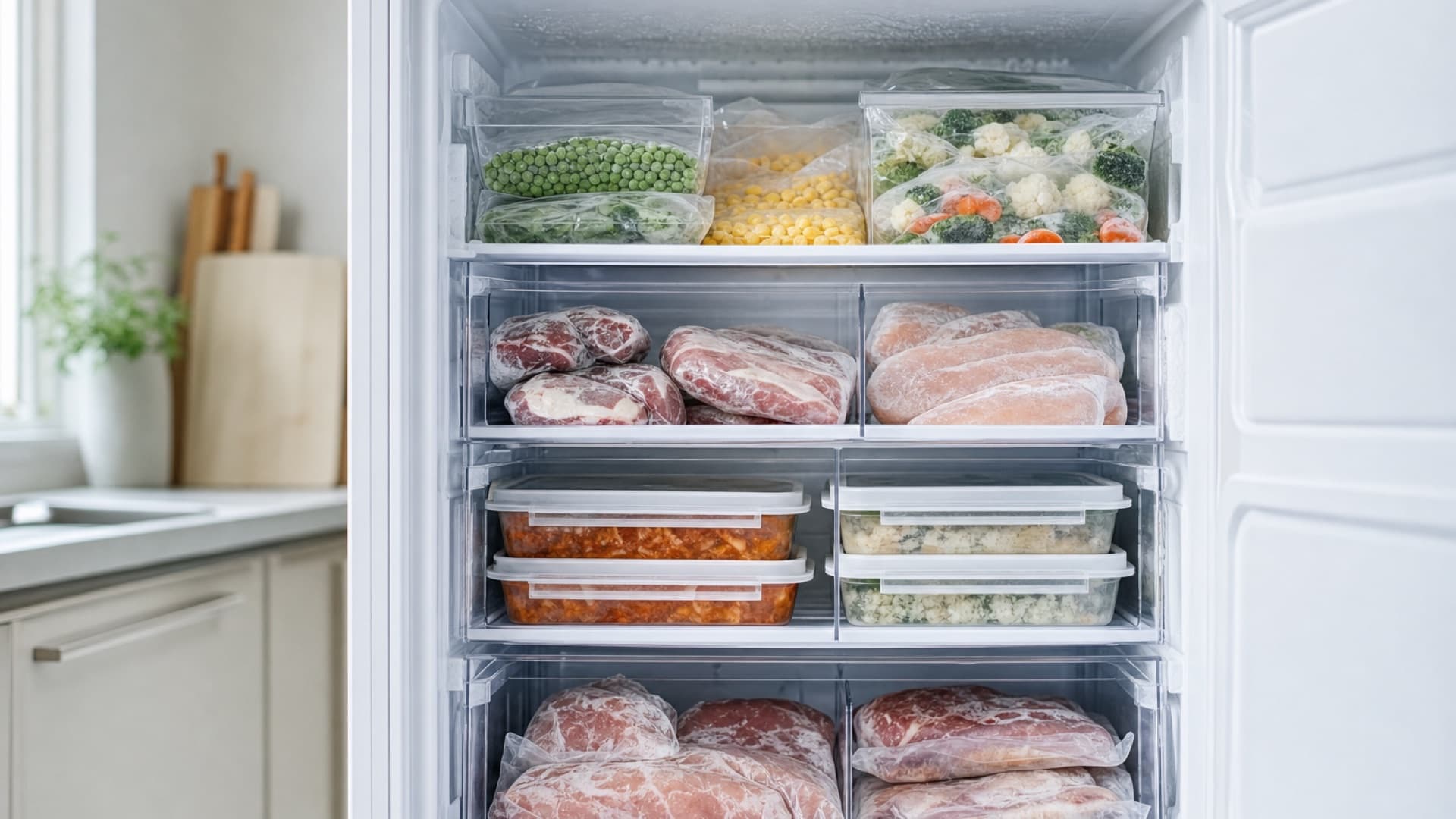
Good freezer organization comes down to four things: group food into zones, store it in bins or upright "files" so nothing gets buried, label every package with its contents and date, and keep the oldest food in front. The layout changes with the type of freezer, so below are specific ideas for upright freezers, bottom-drawer freezers and side-by-side or top-freezer refrigerators.
Keep a list of what is inside, too. As the National Center for Home Food Preservation (NCHFP) puts it, a current list of foods and freezing dates tells you exactly what you have and helps prevent forgotten food.
Start With a Clean Slate
Every organization project starts the same way, whatever freezer you have.
- Empty it. Put everything in coolers or a sink full of ice while you work.
- Sort. Group items by type and check dates. Discard anything with severe freezer burn, unknown contents or signs it has thawed and refrozen.
- Wipe it down. Clean shelves and drawers with warm water and a little baking soda. If ice is building up, see how to defrost a freezer without turning it off.
- Check the temperature. The FDA recommends 0°F (-18°C) and suggests using an inexpensive appliance thermometer, because built-in dials aren't always accurate. Our guide to freezer and fridge temperatures explains where to place it.
- Make a list as you put food back. This becomes your inventory.
Freezer Organization Basics That Work Everywhere
Create zones
Assign each category a permanent spot so everyone in the house knows where to look and where to put things back. Typical zones:
| Zone | What goes there | Best spot |
|---|---|---|
| Meat, poultry and fish | Raw proteins, sealed and bagged | Bottom shelf or bottom drawer, below ready-to-eat food |
| Ready meals | Casseroles, soups, leftovers | Eye level, easy to reach |
| Vegetables and fruit | Bagged produce, smoothie packs | Middle shelf or bins |
| Bread and baked goods | Loaves, tortillas, muffins | Top shelf, where nothing heavy crushes them |
| Quick items | Ice cream, frozen snacks, ice packs | Door or top drawer |
| "Use first" | Items nearing the end of their quality window | Front and center |
Keeping raw meat on the lowest level is a good habit borrowed from refrigerator food safety: if a package leaks while thawing or during a power outage, it can't drip onto ready-to-eat food.
Use bins as drawers
Freezer organization bins turn a deep shelf into pull-out drawers. Choose:
- Clear plastic bins so you can see contents without pulling them out.
- Bins with handles that are easy to grab with cold hands.
- Sizes that fit the shelf depth, measured before you buy.
- Freezer-rated plastic, because ordinary plastic can crack at low temperatures.
Label the front of each bin with its zone.
Freeze flat, store upright
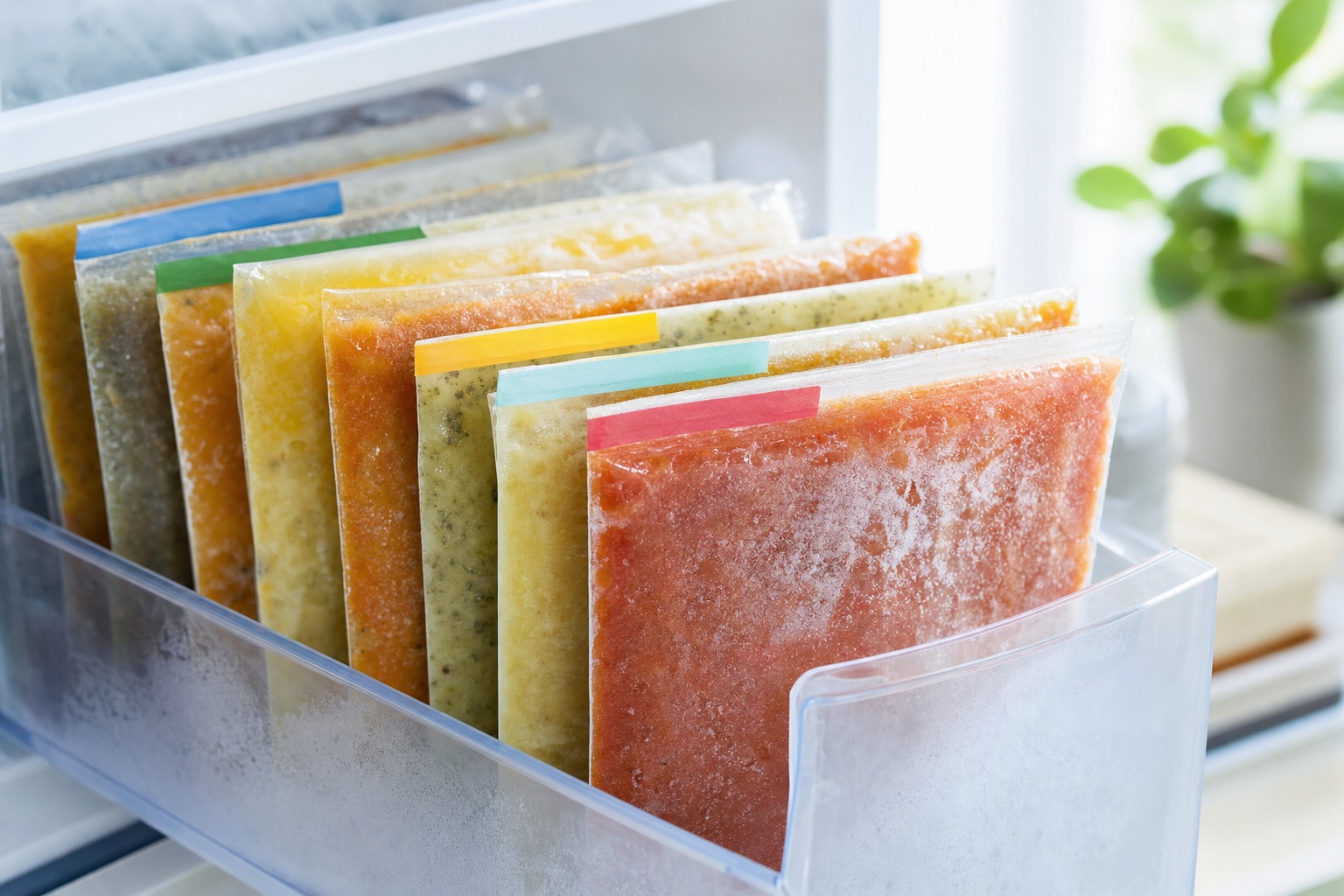
Freeze soups, sauces, ground meat and shredded chicken flat in freezer bags on a tray. Once solid, stand them up like files in a bin or magazine holder. You can flip through them like folders instead of digging through a pile.
Pro tip: Use a different color of marker or tape for each category (red for meat, green for vegetables, blue for meals). You can spot the right bag in seconds, even in a crowded bin.
Label everything
Every package needs three things: what it is, how much, and the date it was frozen. The NCHFP also recommends noting any added ingredients. Masking tape and a permanent marker are enough. Our article on the best containers for freezer storage covers which bags and boxes hold labels best in the cold.
Upright Freezer Organization
Upright freezers work like a pantry: shelves you can see at a glance, plus door storage.
- One zone per shelf. It is the easiest system to keep up.
- Bins on deep shelves. Food pushed to the back of an upright shelf is out of sight; pull-out bins solve that.
- Use the door for small, quick items. The door warms up slightly each time it opens, so keep it for things you use quickly, such as frozen vegetables, butter, nuts or ice packs, rather than items you plan to store for months.
- Don't block the vents. The FDA advises against packing a refrigerator or freezer so tightly that air can't circulate. Leave a little space around the vents, usually at the back.
- Wire shelves: lay a flat plastic cutting mat or shelf liner over the wires so small bags don't tip through.
Freezer Drawer Organization
Bottom-drawer freezers (also called French-door or bottom-mount) have one big pull-out drawer plus one or two shallow sliding baskets. They are deep and easy to fill, which makes them easy to bury things in.
- Top basket for small items. Keep frozen snacks, bags of vegetables you use often and ice cream on the sliding top tray.
- File, don't stack. In the main drawer, stand bags upright in rows with the labels facing up, so you can read every package from above.
- Divide the drawer. Use two or three narrow bins or adjustable drawer dividers to separate meat, meals and produce.
- Front-to-back rotation. New items go in the back of each row, older ones move forward.
- Mind the drawer height. Tall containers may block the drawer from closing fully, which lets warm air in. Check that it seals after every reload.
Side-by-Side and Top Freezer Organization
Side-by-side freezers are tall and narrow; top freezers are small and shallow. In both, space is the main problem.
- Narrow bins sized to the shelves keep food from falling out every time you open the door.
- Stackable rectangular containers use space better than round tubs.
- Lazy Susan or turntable in a top freezer corner for small items.
- Door racks for bags of frozen vegetables, nuts and quick items you grab often.
- Ice maker area: keep it clear so the ice bin can slide out.
- Consider a second freezer. If you batch-cook or buy in bulk, a small chest or upright freezer adds space. Compare the two in chest freezer vs. upright freezer, and if you choose a chest model, read how to organize a chest freezer.
Keep It Organized: Rotation and Inventory
An organized freezer stays that way only if you have a system for what goes in and comes out.
First in, first out
The NCHFP recommends arranging packages so the ones that have been in the freezer longest are used first. When you add new food, put it behind the older food of the same type.
Keep a running inventory
The NCHFP suggests posting a list near the freezer, listing foods and freezing dates and crossing items off as you use them. A paper list on the door works; a phone app works better if several people use the freezer or you want reminders. Our guide on how to track freezer inventory compares the options.
Know the quality windows
Food kept continuously at 0°F (-18°C) stays safe indefinitely according to the USDA, but quality declines. Use these common guidelines from FoodSafety.gov and the NCHFP to decide what goes in the "use first" zone:
| Food | Best quality in the freezer |
|---|---|
| Ground meat | 3 to 4 months |
| Raw chicken pieces | 9 months |
| Steaks and roasts | 4 to 12 months |
| Soups, stews and casseroles | 2 to 3 months |
| Fruits and vegetables | 8 to 12 months |
A monthly 5-minute reset
Once a month, before a big grocery trip:
- Move anything close to its quality window into the "use first" zone.
- Plan two or three meals around those items.
- Update your list.
- Wipe up spills and frost.
A full freezer is also more energy efficient, according to the NCHFP, so an organized freezer that you keep stocked and rotate works better than one that is half empty.
Pro tip: Leave one bin empty as a "landing zone" for groceries. Unload the new food there, then put it away in the right zones when you have a minute.
FAQ
How do you organize a freezer with no shelves?
Use bins and baskets as removable shelves, and freeze bags flat so you can store them upright like files. Assign each bin a category and label it.
What are the best freezer organization bins?
Clear, freezer-rated plastic bins with handles, measured to fit your shelf depth. Narrow bins work best in side-by-side freezers; low, wide bins work best in bottom drawers.
How do you organize a freezer drawer?
Keep small items in the top sliding basket, stand bags upright in rows in the main drawer with labels facing up, and divide the drawer with narrow bins by category.
How full should a freezer be?
Full, but with room for air to circulate. The NCHFP notes a full freezer is more energy efficient, while the FDA warns against packing it so tightly that air can't move around the food.
How do you keep track of what is in your freezer?
Label every package with contents and date, keep the oldest items in front, and maintain a list of what is inside, either on paper near the freezer or in an inventory app.
Make the System Stick
Bins and labels get your freezer organized for a weekend. An up-to-date inventory keeps it organized for a year. Freezer Inventory Tracker lets you log items in each freezer or storage location, share the list with your household and get reminders before food sits too long, so the next time you wonder whether you have chicken, you can check your phone instead of digging. For more ideas, see our pantry organization ideas.