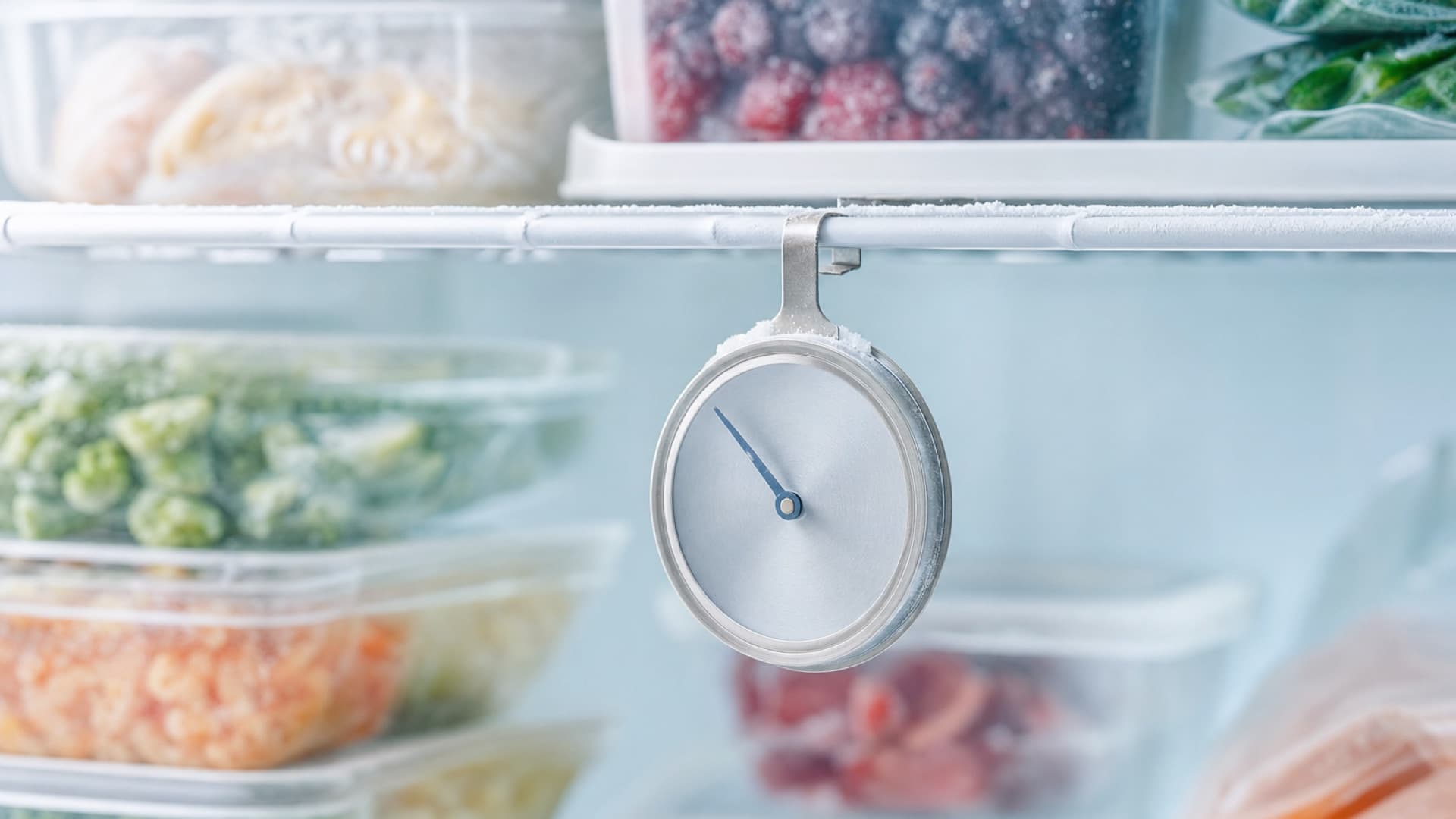
A freezer should be at 0°F (-18°C) or below, and a refrigerator at 40°F (4°C) or below. Those are the targets set by both the FDA and the USDA, and the only reliable way to know you are hitting them is an inexpensive appliance thermometer.
Most people never check. The dial inside the fridge usually shows a number from 1 to 5 or 1 to 9, not a temperature, so it tells you nothing about how cold the food actually is. Here is why these numbers matter, how to measure them, and what to do when they are off.
Recommended Fridge and Freezer Temperatures
| Appliance | Target | Why |
|---|---|---|
| Freezer | 0°F (-18°C) or below | Stops bacterial growth and keeps food safe indefinitely |
| Refrigerator | 40°F (4°C) or below | Slows bacterial growth enough to keep perishables safe for their listed times |
| Danger zone | 40°F to 140°F (4°C to 60°C) | Range where bacteria multiply fastest |
Sources: FDA "Are You Storing Food Safely?" and USDA FSIS food safety basics.
These are maximums. A freezer that runs a few degrees below 0°F is fine. A refrigerator should stay cold without freezing your lettuce and milk, so aim a few degrees under 40°F to give yourself a margin when the door is opened often.
Why 0°F Matters for Your Freezer
According to the USDA, freezing food at 0°F (-18°C) inactivates bacteria, yeasts, and molds. It does not kill them, which is why thawed food spoils at the same rate as fresh food once it warms up, but it stops them from growing.
That is why the USDA says food kept constantly at 0°F stays safe indefinitely. The storage times you see for frozen food, such as a few months for ground beef, are about quality: flavor, texture, and moisture slowly decline the longer food sits in the freezer. Our chart on how long food can stay in the freezer breaks this down by food type.
A freezer that runs warmer than 0°F, even by a few degrees, does not make food unsafe right away, but it speeds up quality loss. Ice cream turns soft and grainy, and freezer burn forms faster as food goes through small thaw and refreeze cycles.
Why 40°F Matters for Your Fridge
Refrigeration does not stop bacteria, it slows them down. Above 40°F (4°C), harmful bacteria can multiply quickly, and that is the point where the storage times on official charts stop being reliable.
Every refrigerator time you see on our blog, like 1 week for hard-boiled eggs or 3 to 4 days for cooked chicken, assumes a fridge at 40°F or below. In a warmer fridge, food can spoil well before those dates.
Pro tip: If your fridge is packed for a holiday or a big grocery run, check the thermometer the next day. A crowded fridge blocks airflow, and the temperature can creep up without you noticing.
How to Check Your Fridge and Freezer Temperature
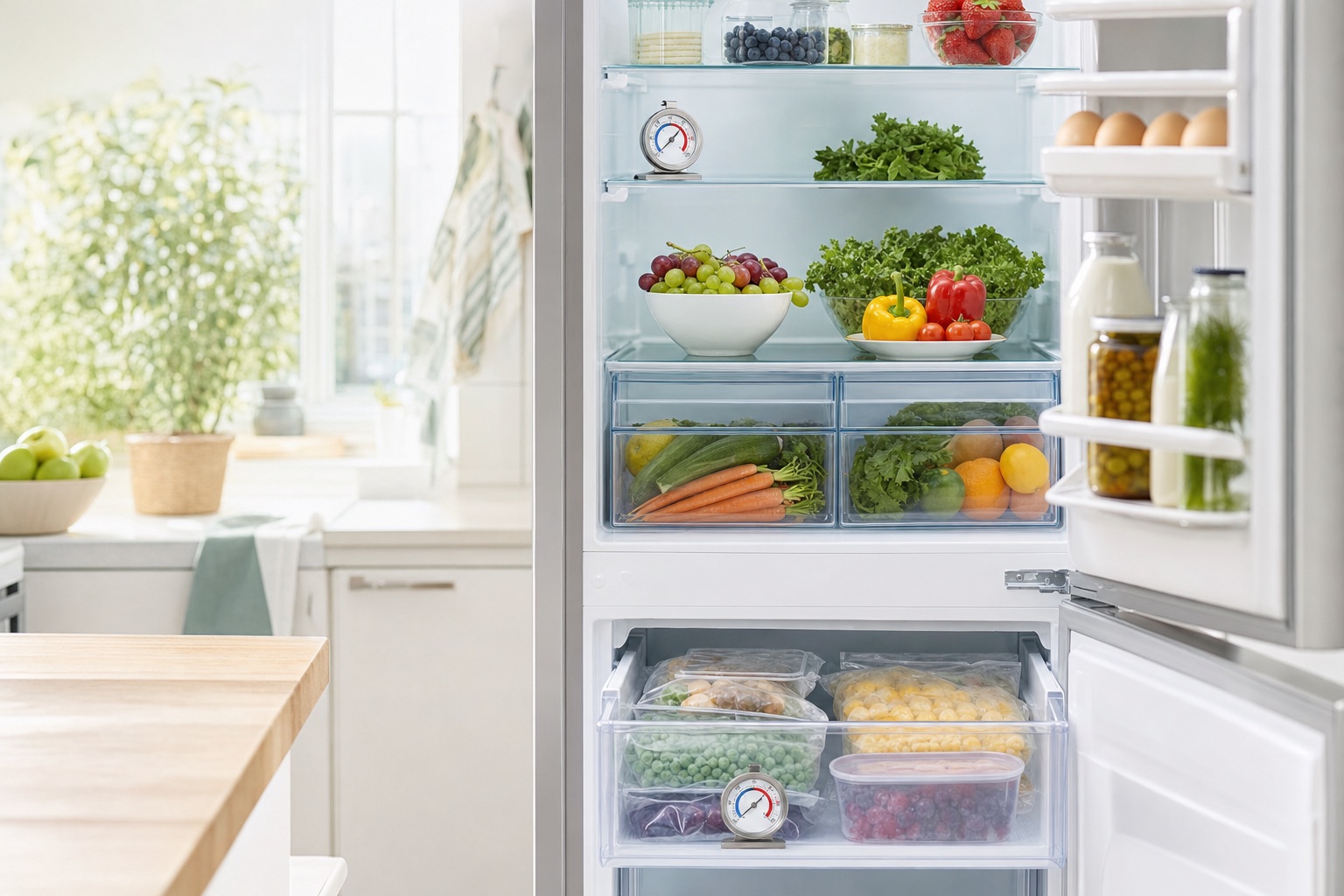
The FDA recommends keeping an appliance thermometer in both the refrigerator and the freezer. They are inexpensive and available at most grocery and hardware stores.
How to use them:
- Place one in each compartment. The FDA suggests the front of each unit, where it is easy to read.
- For the fridge, a middle shelf gives a good average reading.
- For the freezer, set the thermometer between frozen packages or hang it from a shelf.
- Wait before reading. Give it several hours, ideally overnight, so it settles to the true temperature.
- Check regularly. The FDA recommends at least once a week.
Read the thermometer before you open the door for a long time, or after the door has been closed for a while. Right after you have unloaded groceries, the reading will be higher than normal.
Why Not Trust the Built-In Display?
Some refrigerators have a digital display, and those are more useful than a dial. Still, the sensor sits in one spot and may not reflect the temperature where your food is. A separate thermometer is a cheap way to confirm it.
How to Adjust a Fridge or Freezer That Is Too Warm
If the thermometer reads above 0°F in the freezer or above 40°F in the fridge:
- Turn the control one step colder and check again after 24 hours. Small changes take time to show up.
- Check the door seals. Close the door on a sheet of paper. If it slides out easily, the gasket may need cleaning or replacing.
- Do not block the vents. Cold air enters through vents, usually at the back. Keep packages a little away from them.
- Do not overfill the fridge. Air has to circulate to cool food evenly.
- Defrost if needed. Thick frost in a manual-defrost freezer insulates the coils and makes the freezer work harder. See our guide on how to defrost a freezer without turning it off.
- Divide large batches of hot food into shallow containers. They cool faster and put less load on the fridge than one deep pot.
If the temperature still will not come down, the appliance may need service.
Fridge Too Cold?
If milk has ice crystals or vegetables are freezing at the back of the fridge, turn the control one step warmer. Food that freezes in the fridge is safe, but the texture of produce like lettuce and cucumbers suffers.
What to Do After a Power Outage
Temperature matters most when the power goes out. The USDA guidance is:
| Situation | How long food stays safe with the door closed |
|---|---|
| Refrigerator | About 4 hours |
| Full freezer | About 48 hours |
| Half-full freezer | About 24 hours |
Keep the doors closed as much as possible. When the power comes back, check the freezer thermometer: the USDA says food that still has ice crystals or reads 40°F (4°C) or below can be safely refrozen. Perishable food such as meat, poultry, eggs, and leftovers that has been above 40°F for 2 hours or more should be thrown out. Our full guide on freezer food safety during a power outage covers what to keep and what to discard.
Chest Freezers and Garage Freezers
The same 0°F target applies to every freezer. Chest freezers tend to hold their temperature well because cold air does not spill out when the lid opens. If you are choosing between types, our comparison of chest freezer vs. upright freezer covers the trade-offs.
Garage freezers deserve an extra check. Very hot or very cold garages can push some models outside the range they were designed for, so a thermometer inside is worth having. Check the manufacturer's manual for the room temperatures your model is rated for.
FAQ
What is the right temperature in a freezer?
0°F (-18°C) or below, according to the FDA and USDA. At that temperature, bacteria cannot grow and food stays safe indefinitely.
What temperature should a fridge be?
40°F (4°C) or below. Many people aim a few degrees lower so the temperature stays safe even when the door is opened often.
Is 10°F cold enough for a freezer?
No. 10°F (-12°C) is above the recommended 0°F (-18°C). Food will lose quality faster. Turn the control colder and check again after 24 hours.
Where should I put a thermometer in my fridge?
The FDA suggests the front of the fridge, in an easy-to-read spot. A middle shelf gives a representative reading.
How often should I check my freezer temperature?
At least once a week, as the FDA recommends, and always after a power outage or if you notice food softening.
A Cold Freezer Is Only Half the Job
Hitting 0°F keeps food safe. Knowing what is in the freezer, and how long it has been there, keeps it from being wasted. Freezer Inventory Tracker lets you log items in your freezer, fridge and pantry with their dates and sends expiry reminders, so food gets eaten while it is still at its best. For freezing basics by food type, see our freezing guide.