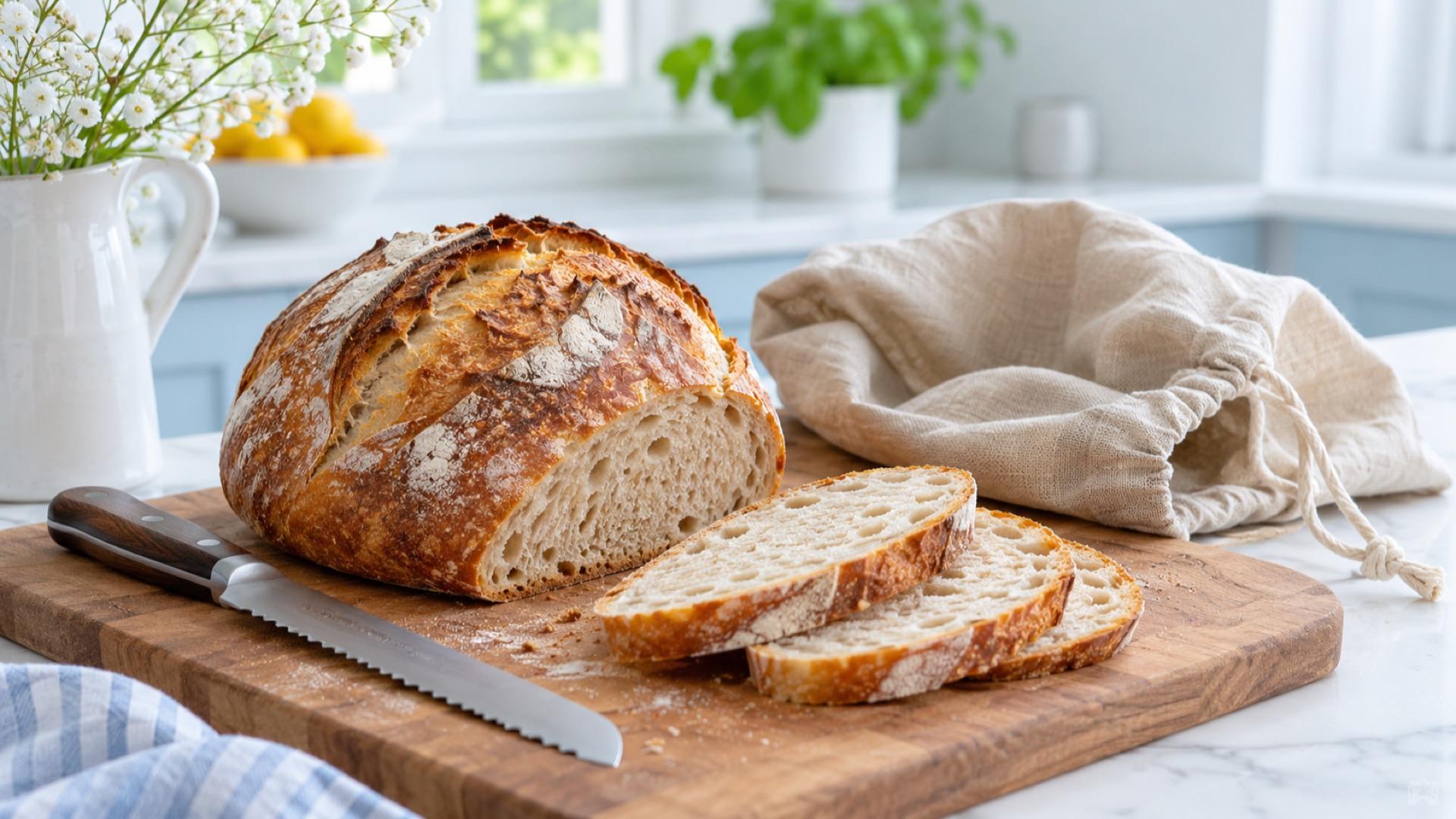
The best way to store sourdough is at room temperature, cut side down on a board or wrapped in a cloth or paper bag, and to eat it within 2 to 3 days. For anything longer, slice it and freeze it: frozen sourdough keeps its quality for up to 3 months, while the refrigerator makes it go stale faster.
That simple rule covers most bakery bread too. Below you will find why the fridge is the wrong place for bread, the best containers for the counter, step-by-step freezing, and a short section on looking after a sourdough starter.
Sourdough Storage Times at a Glance
| Where | Bakery or homemade sourdough | Store-bought sliced bread (with preservatives) |
|---|---|---|
| Counter, room temperature | 2 to 3 days at best quality; up to about 5 days | 14 to 18 days from purchase |
| Refrigerator | Not recommended (stales faster) | Not recommended for quality |
| Freezer at 0°F (-18°C) | Up to 3 months | 3 to 5 months |
The USDA FoodKeeper lists homemade bread at 3 to 5 days in the pantry and notes it "may have shorter shelf life due to lack of preservatives." Commercially baked bread is listed at 14 to 18 days in the pantry and 3 to 5 months in the freezer. Artisan sourdough from a bakery usually contains only flour, water and salt, so treat it like homemade bread. The 2 to 3 day figure is our quality guideline for crust and crumb, not a safety limit.
Why Sourdough Lasts Longer Than Other Bread
A good sourdough loaf stays pleasant to eat a little longer than a plain yeasted loaf from the same bakery. The long fermentation produces acids that give the bread its tang, and a thick, well-baked crust slows moisture loss from the crumb. Many bakers find a sourdough loaf is still good for toast on day 4 or 5, when a soft white loaf without preservatives would already be dry.
That said, sourdough is not immune to staling or mold. Without the preservatives found in packaged sandwich bread, it will eventually go hard and, in a humid kitchen, grow mold. The goal of good storage is to slow both.
How to Store Sourdough on the Counter
Room temperature is the right place for bread you will finish in a few days. The trick is balancing two problems: too much air dries the crumb, too little lets moisture build up and softens the crust or invites mold.
Cut Side Down on a Board
For the first day, the simplest method is the best one. Place the loaf cut side down on a wooden cutting board. The crust protects the top and sides, and the board covers the exposed crumb. This keeps the crust crisp, which is exactly what you want from sourdough.
Cloth or Paper Bag
From day two, wrap the loaf in a clean linen or cotton bread bag, a tea towel, or the paper bag it came in. These let the bread breathe so the crust does not go leathery, while slowing moisture loss. A paper bag inside a bread box works well in dry climates.
Bread Box
A bread box holds a little humidity around the loaf without sealing it in. It is the closest thing to an ideal home for a whole loaf, especially if you bake or buy bread every few days.
What About Plastic Bags?
A sealed plastic bag keeps the crumb soft for longer, but it traps moisture against the crust. The crust turns chewy and the bread is more likely to mold, especially in warm weather. Plastic is fine for sliced sandwich bread. For sourdough and other crusty bakery loaves, save plastic for the freezer.
Pro tip: If a day-old loaf has lost its crunch, run the crust quickly under the tap and put it in a 350°F (175°C) oven for 5 to 10 minutes. The steam revives the crust and softens the crumb. Eat it the same day, because it stales quickly after reheating.
Why You Should Not Refrigerate Sourdough
It feels logical to put bread in the fridge to make it last longer, but for texture it backfires. The USDA FoodKeeper notes that refrigeration is not recommended for bread because it "will quickly dry out and become stale."
The reason is starch retrogradation. After baking, the starch in bread slowly recrystallizes and pushes water out, which makes the crumb firm and dry. This happens fastest at refrigerator temperatures, slower at room temperature, and almost stops in the freezer. A loaf kept in the fridge can taste days older than the same loaf left on the counter.
The one exception is a very hot, humid kitchen where bread molds within a day or two. Even then, the freezer is a better choice than the fridge.
How to Store Bakery Bread
Everything above applies to most bread from a bakery: baguettes, country loaves, ciabatta and rye. A few quick adjustments:
- Baguettes stale within a day. Eat them the day you buy them or freeze them right away.
- Enriched breads such as brioche and challah contain eggs, butter and sugar. Keep them in a sealed bag at room temperature and use them within a few days.
- Sliced sandwich bread with preservatives can stay in its plastic bag on the counter. The FoodKeeper lists commercial bread at 14 to 18 days in the pantry.
For any bread, buy only what you will eat in a couple of days, and freeze the rest the day you bring it home. If you keep bread in the pantry, a spot away from the stove and direct sunlight helps. Our pantry organization ideas cover where to put it.
Can You Freeze Sourdough Bread?
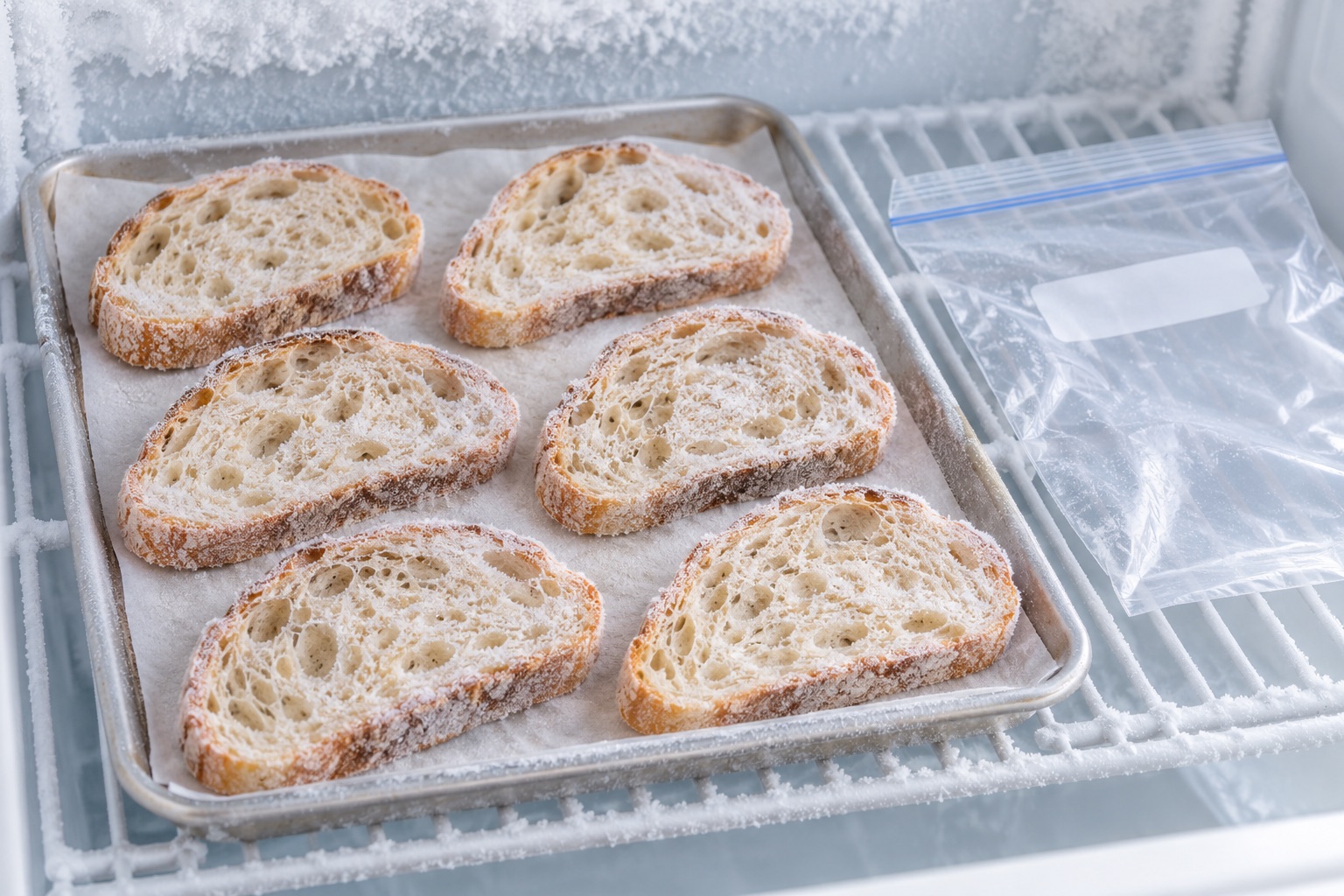
Yes, and it is the best way to store sourdough for more than a couple of days. Freezing stops staling in its tracks, and a properly wrapped loaf comes out tasting almost freshly baked. The FoodKeeper lists homemade bread at up to 3 months in the freezer at 0°F (-18°C). Food kept constantly frozen stays safe indefinitely according to the USDA, but after about 3 months the bread starts to taste flat and dry.
How to Freeze Sourdough Bread
- Freeze it fresh. Freeze the loaf on the day it was baked or bought. Freezing pauses staling but does not reverse it.
- Let homemade bread cool completely. Warm bread creates condensation in the bag, which turns into ice crystals.
- Slice it, or don't. Slicing first lets you take out one or two slices at a time. Freeze a whole or half loaf if you want to serve it at the table.
- Pre-freeze slices. Lay slices on a tray for about an hour until firm, so they do not stick together.
- Wrap tightly. Use a heavy-duty freezer bag with the air pressed out, or wrap a whole loaf in plastic wrap and then foil. Air is what causes freezer burn and off-flavors. Our guide to the best containers for freezer storage compares options.
- Label with the date. A loaf without a date is easy to forget.
How to Thaw Frozen Sourdough
- Slices: toast straight from frozen, or leave them on the counter for 15 to 30 minutes.
- Whole or half loaf: thaw in its wrapping on the counter for 3 to 4 hours, then refresh it in a 350°F (175°C) oven for 10 to 15 minutes to crisp the crust.
- Avoid the fridge for thawing. It is the temperature range where staling is fastest.
For more on baguettes, rolls and other baked goods, see our full guide on how to freeze bread. Unbaked dough follows different rules, covered in can you freeze pizza dough.
Is Moldy Sourdough Safe to Eat?
No. According to the USDA Food Safety and Inspection Service fact sheet on molds, bread and baked goods with mold should be thrown away. Bread is porous, so mold roots can spread below the surface where you cannot see them. Do not cut off the moldy spot and eat the rest, and do not sniff it, since inhaling spores can cause breathing problems for some people.
Stale bread is a different matter. Dry, hard sourdough without mold is safe and makes excellent croutons, bread crumbs, panzanella or French toast. Using it up is one of the easiest ways to reduce food waste at home.
How to Store a Sourdough Starter
If you bake your own bread, your starter needs storage too. A brief overview:
- Baking often: keep it at room temperature in a loosely covered jar and feed it daily.
- Baking weekly or less: keep it in the refrigerator and feed it about once a week. Bring it back to room temperature and feed it once or twice before baking.
- Taking a long break: you can freeze a portion of starter or dry a thin layer and store the flakes. Expect it to need several feedings to become active again.
A layer of grayish liquid on top of a hungry starter is normal and simply means it needs feeding. Pink, orange or fuzzy mold is not normal; in that case, discard it and start over.
FAQ
Should sourdough bread be refrigerated?
No. The USDA FoodKeeper advises against refrigerating bread because it dries out and goes stale quickly. Keep sourdough on the counter for 2 to 3 days and freeze anything you will not eat in that time.
How long does sourdough bread last?
A bakery or homemade loaf without preservatives is at its best for 2 to 3 days at room temperature and lasts up to about 5 days, in line with the FoodKeeper's 3 to 5 days for homemade bread. Frozen, it keeps its quality for up to 3 months.
How do you store bakery bread overnight?
Place the loaf cut side down on a cutting board, or wrap it in a cloth or paper bag. Avoid plastic for crusty loaves, since it softens the crust and can encourage mold.
Can you freeze sourdough bread twice?
It is safe, but each freeze and thaw dries the bread a little more. Slice before freezing so you only take out what you need.
What is the best way to store bread in general?
Keep bread you will finish within a few days at room temperature, freeze the rest the day you buy it, and skip the fridge. Sliced bread with preservatives can stay in its original bag.
Keep the Freezer Loaf in Sight
Freezing sourdough only works if the bread actually gets eaten. A loaf tucked behind frozen vegetables is easy to forget until it is three months old and covered in ice crystals. A quick note of what went in and when, whether on a label or in an app like Freezer Inventory Tracker, means you reach for the oldest bread first and every slice still tastes like the day it was baked.