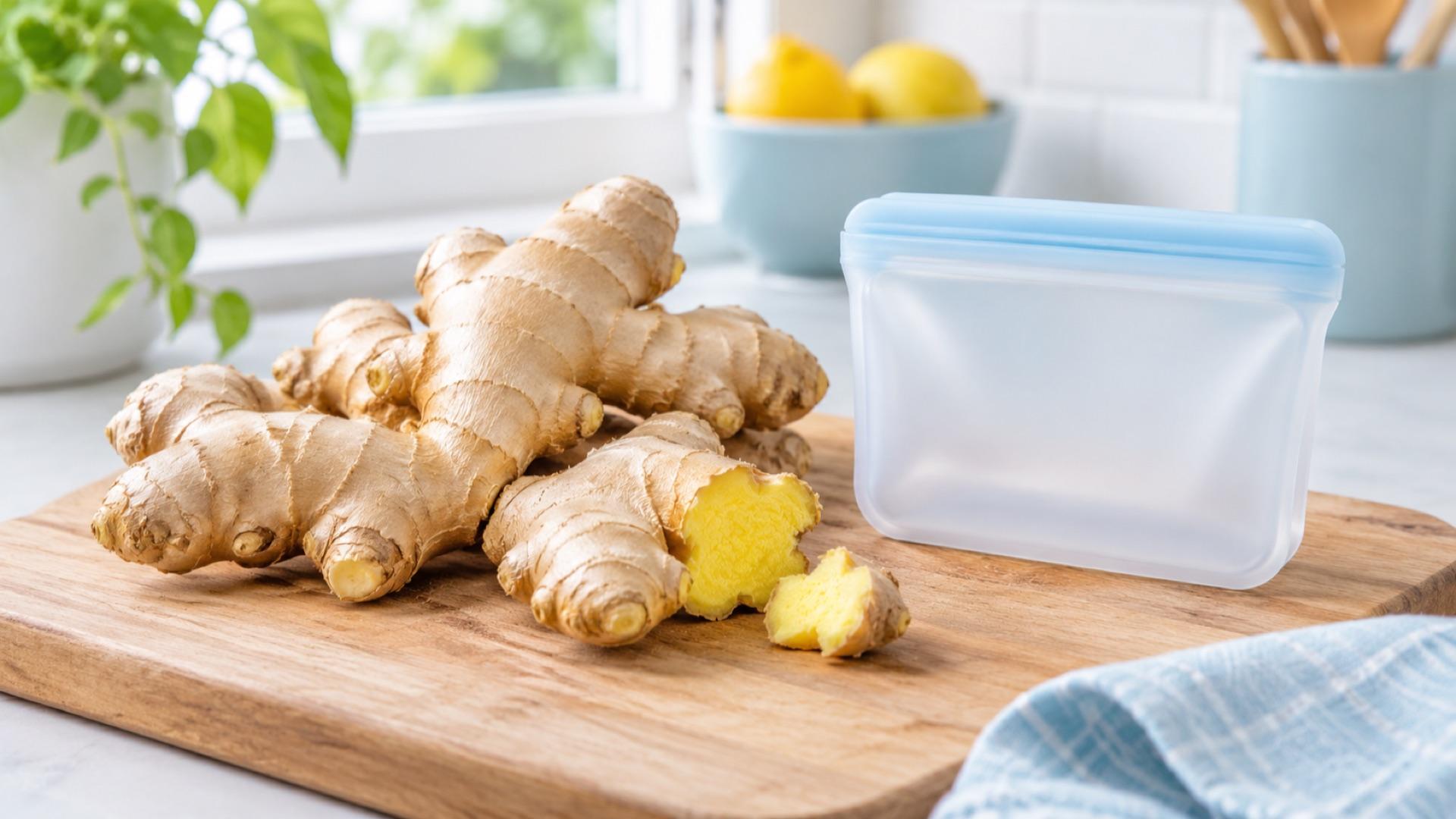
The best way to store fresh ginger root is unpeeled in a sealed bag in the refrigerator crisper, where it keeps for 2 to 3 weeks according to the USDA FoodKeeper. For longer storage, freeze it whole: frozen ginger lasts about 6 months and grates more easily than fresh, with no need to peel or thaw.
Most recipes call for a thumb-sized piece, so the rest of the root tends to dry out or mold in the back of the fridge. Here is how to store ginger on the counter, in the fridge and in the freezer, plus how to tell when it has gone bad.
How Long Does Fresh Ginger Last?
| Ginger | Counter | Refrigerator | Freezer, 0°F (-18°C) |
|---|---|---|---|
| Whole, unpeeled root | 2 to 5 days | 2 to 3 weeks | 6 months |
| Peeled or cut ginger | Not recommended | About 1 week (our guidance) | 6 months |
| Grated or minced ginger | Not recommended | A few days (our guidance) | 6 months |
| Ginger paste in a jar, opened | Follow the label | Follow the label | Follow the label |
Times for whole ginger root are from the USDA FoodKeeper. The FoodKeeper does not give separate times for peeled, cut or grated ginger, so those are our conservative suggestions: once the skin is removed, the flesh dries out and spoils faster. Freezer times are for quality. The USDA notes food kept constantly at 0°F (-18°C) stays safe indefinitely.
How to Pick Ginger That Lasts
Good storage starts with good ginger. Look for roots that are:
- Firm and heavy for their size, with no soft or wrinkled spots.
- Smooth, thin-skinned and shiny. Thick, wrinkled skin means the root is older and drier.
- Free of mold, especially where the knobs have been broken off.
- Sharp and spicy-smelling when you scratch the skin with a fingernail.
Buy only as much as you will use in a couple of weeks, or plan to freeze the rest. Since you can break off exactly the piece you need at the store, there is no reason to take home a whole hand of ginger.
How to Store Ginger on the Counter
Whole, unpeeled ginger can sit at room temperature for a short time. The USDA FoodKeeper gives it 2 to 5 days in the pantry. Keep it in a cool, dry, dark spot, away from the stove and direct sunlight, and loose rather than in a sealed bag, which would trap moisture.
The counter makes sense only if you will use the ginger within a few days. After that, it starts to shrivel and lose its juice and heat. For anything longer, move it to the fridge or freezer.
How to Store Ginger Root in the Refrigerator
The refrigerator is the right place for ginger you will use over the next couple of weeks. The FoodKeeper lists whole ginger root at 2 to 3 weeks refrigerated.
- Leave it unpeeled. The skin is a natural barrier against moisture loss and mold.
- Dry it. Pat off any moisture from the store.
- Seal it in a bag or airtight container. Press out as much air as possible from a zip-top bag. Less air means less drying.
- Store it in the crisper drawer. It is designed to hold produce at a stable humidity.
If you have already cut off a piece, blot the cut end dry before sealing the root. The exposed surface is where mold usually starts.
Storing Peeled Ginger
Peeled or cut ginger dries out quickly. Wrap it tightly in plastic wrap or keep it in a small airtight container in the fridge, and use it within about a week. If you peel more than you need, freezing it is a better option.
Pro tip: Peel ginger with the edge of a teaspoon instead of a knife or peeler. The thin skin scrapes right off and the spoon follows the knobs, so you waste far less of the root.
Can You Freeze Ginger?
Yes, and for many cooks it is the best way to store ginger. The USDA FoodKeeper gives fresh ginger root 6 months in the freezer. Freezing does soften the texture once thawed, so frozen ginger is not ideal for thin slices meant to stay crisp, but in cooked dishes, sauces, marinades, smoothies and tea you won't notice the difference.
Grate It Straight From Frozen
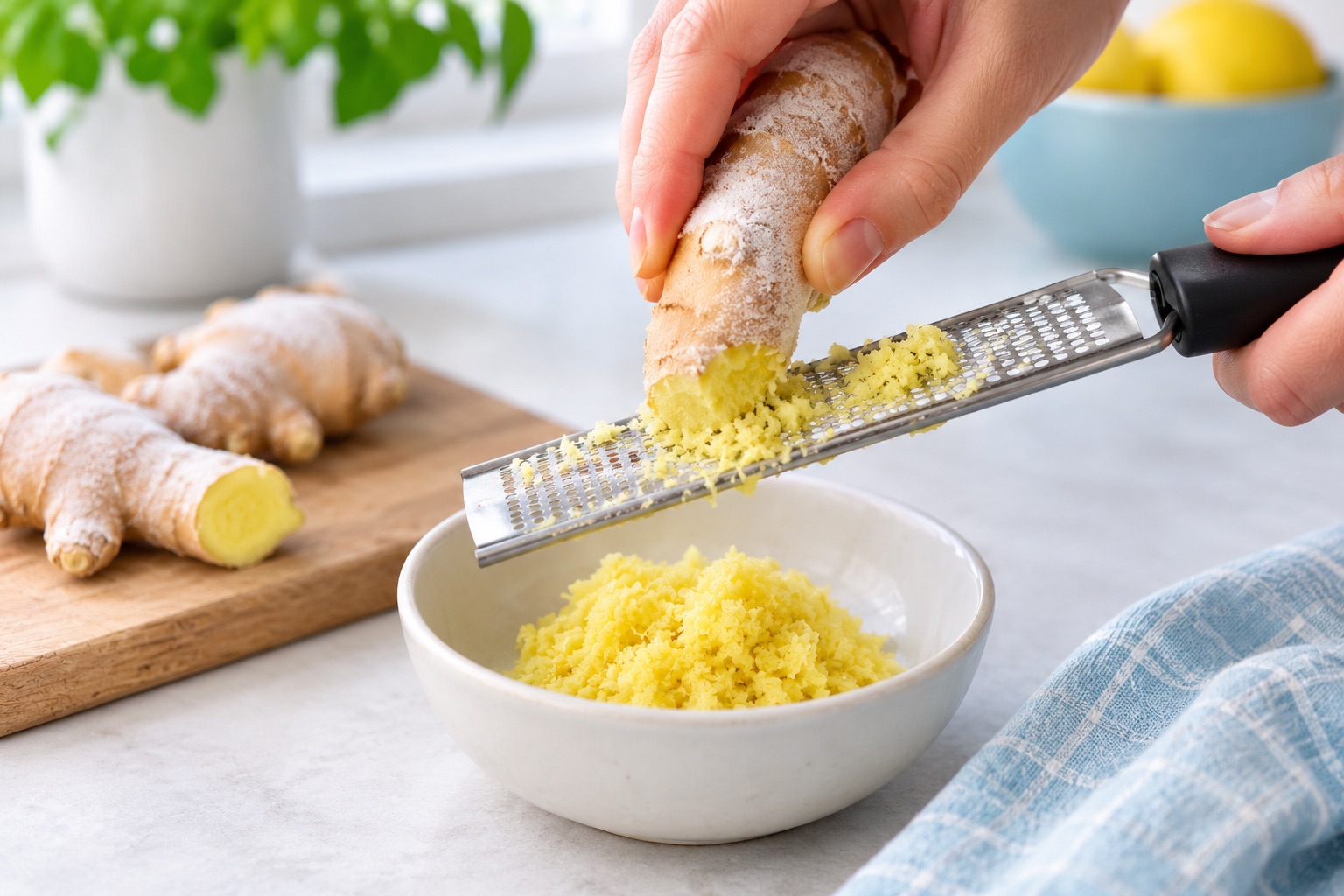
This is the main reason to freeze ginger. A frozen root is firm enough to grate on a microplane or fine grater without turning stringy. The fibers stay behind and the grated ginger comes out as a fine, fluffy powder that melts into whatever you are cooking.
You don't need to peel it, either. The skin of fresh, young ginger is thin, and when grated from frozen it all but disappears into the paste. If your ginger has thick, papery skin, scrape it off before freezing instead. You also don't need to thaw it: grate what you need and put the rest back in the freezer immediately.
How to Freeze Whole Ginger
- Rinse the root and dry it thoroughly.
- Decide whether to peel. Thin-skinned roots can be frozen as is; peel older, thick-skinned roots first.
- Place the whole root, or pieces about the size of your thumb, in a freezer bag. Press out the air and seal.
- Label with the date and freeze.
Thumb-sized pieces are handy because one piece is about the amount most recipes need, and you never have to saw through a frozen root.
Other Ways to Freeze Ginger
- Grated or minced portions: grate or mince fresh ginger, then freeze teaspoon-sized mounds on a parchment-lined tray. Once firm, transfer them to a freezer bag.
- Ginger paste cubes: blend peeled ginger with a little water or neutral oil and freeze in an ice cube tray. Each cube can go straight into a curry, soup or stir-fry.
- Sliced coins: slice peeled ginger into thin coins and freeze them in a single layer, then bag them. They work well for tea and broths.
The same portion-and-tray method works for other aromatics. Our guide on how to freeze fresh herbs uses the ice cube tray technique for herbs in oil and water. To keep small bags of ginger from getting lost, see our freezer organization ideas.
How to Tell If Ginger Has Gone Bad
Fresh ginger is firm, with smooth skin and bright yellow, juicy flesh. Signs that it is past its best or spoiled:
- Wrinkled, shriveled skin and dry, fibrous flesh: it is drying out. It is still safe, but weaker in flavor. Grate it into cooked dishes or brew it into tea.
- Soft, mushy or wet spots: spoilage has started. Discard the affected root.
- Mold: fuzzy white, gray, blue or green growth. The USDA Food Safety and Inspection Service says that for firm produce, you can cut away at least 1 inch (2.5 cm) around and below a small mold spot and use the rest, keeping the knife out of the mold. If the mold is widespread or the root is soft, throw it out.
- Gray or dark flesh, or a sour or off smell.
Some varieties of ginger have a faint blue-gray ring inside. That is natural pigment, not spoilage, as long as the root is firm and smells fresh.
Does Ginger Need to Be Refrigerated?
Not strictly, but it lasts much longer if it is. Whole ginger keeps only 2 to 5 days on the counter, compared with 2 to 3 weeks in the fridge and 6 months in the freezer, according to the FoodKeeper. If your kitchen is warm or humid, refrigeration is the better choice even for short storage.
Like potatoes and onions, ginger is a root crop that people often store in the wrong place. Our guide on how to store potatoes and onions covers produce that does best out of the fridge. For fruit that needs the opposite treatment, read how to store strawberries.
FAQ
What is the best way to store fresh ginger root?
Keep it whole and unpeeled in a sealed bag in the fridge crisper drawer for up to 2 to 3 weeks. For longer storage, freeze it, where it keeps about 6 months.
Can you freeze ginger without peeling it?
Yes. Thin-skinned ginger can be frozen unpeeled and grated straight from the freezer; the skin blends into the paste. Peel older, thick-skinned roots before freezing.
How long does ginger root last in the fridge?
Whole, unpeeled ginger root lasts 2 to 3 weeks in the refrigerator, according to the USDA FoodKeeper. Peeled ginger is best used within about a week.
Do you need to thaw frozen ginger before using it?
No. Grate it directly from frozen, which is actually easier than grating fresh ginger. Add it straight to your recipe.
Is shriveled ginger safe to use?
Yes, if there is no mold, soft rot or off smell. It is drier and milder, so grate it into cooked dishes or use it for tea.
Keep Ginger Within Reach
The easiest way to stop wasting ginger is to freeze it the day you bring it home, minus whatever you will use that week. It costs nothing and you will always have it ready for stir-fries, curries and tea. If you track your fridge and freezer in Freezer Inventory Tracker, adding the ginger takes a few seconds and means you will see it before buying another root you don't need.