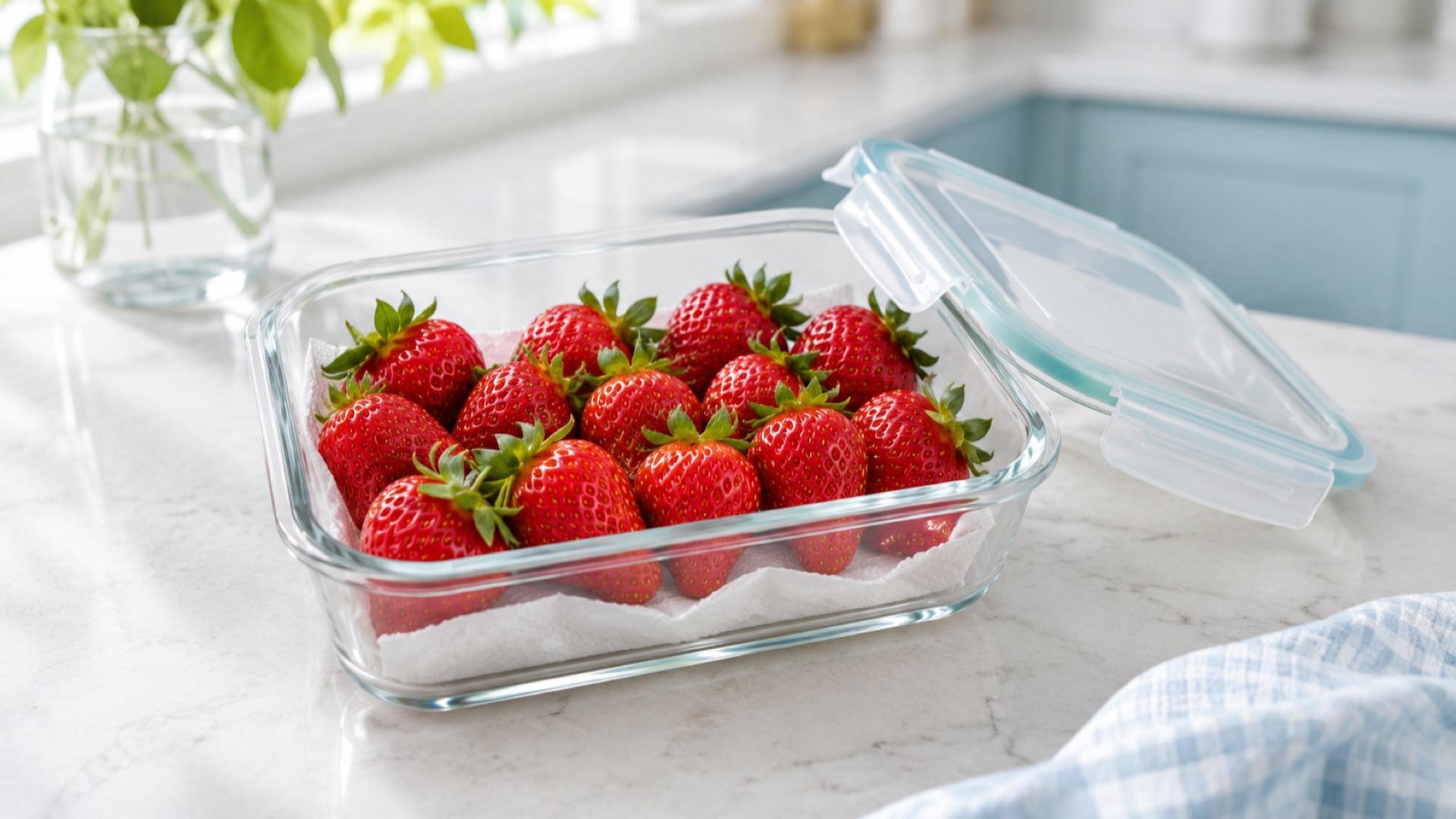
The best way to store strawberries is in the refrigerator, unwashed, with the green caps still on, in a container lined with a paper towel. Even stored well they are fragile: the USDA FoodKeeper gives fresh strawberries just 2 to 3 days in the fridge for best quality, so plan to eat them quickly or freeze them.
Strawberries are one of the most wasted fruits in American kitchens because they go from perfect to moldy so fast. A few habits at the store and in the fridge make a real difference. This guide covers how to choose, store and wash strawberries, how to keep blueberries and other berries, and how to freeze them.
How Long Do Strawberries Last?
| Berries | Counter | Refrigerator | Freezer, 0°F (-18°C) |
|---|---|---|---|
| Strawberries, whole | Same day | 2 to 3 days | 8 to 12 months |
| Raspberries | Same day | 2 to 3 days | 8 to 12 months |
| Blackberries | Same day | 3 to 6 days | Up to 12 months |
| Blueberries | 1 to 2 days | 1 to 2 weeks | 8 to 12 months |
| Cut or sliced strawberries | No more than 2 hours | 1 to 2 days (our estimate) | 8 to 12 months |
Refrigerator and freezer times are from the USDA FoodKeeper. Some extension services give a slightly wider window: the New Mexico State University storage guide lists berries at 3 to 7 days in the fridge, while Ohio State University Extension suggests eating strawberries within 1 to 3 days. The difference comes down to how fresh the berries were when you bought them. Counter times are our quality guidance, and the 2 hour limit for cut fruit follows the FDA's advice to refrigerate cut produce promptly.
Choose Berries That Will Last
Storage starts in the store. Strawberries do not ripen further after picking, so buy them fully red and ready to eat.
- Look for bright, uniformly red berries with fresh green caps and a natural shine.
- Check the bottom of the container. Juice stains or crushed berries mean damage, and damaged berries mold first.
- Skip cartons with any mold. Mold spreads quickly from berry to berry.
- Buy what you will eat in a few days. A big tray is only a bargain if you can eat or freeze it before it spoils.
When you get home, refrigerate berries promptly. The FDA recommends keeping fresh produce that needs refrigeration at 40°F (4°C) or below.
How to Store Strawberries in the Refrigerator
Follow these steps as soon as you get home:
- Sort them. Tip the berries out and remove any that are moldy, mushy or crushed. One bad berry can spoil the rest.
- Don't wash them yet. Moisture is what makes strawberries mold and turn soft. Wash only right before eating.
- Keep the caps on. The green tops protect the flesh. Hull berries only when you are ready to use them.
- Line a container with paper towels. A shallow glass or plastic container works well. The paper towel absorbs extra moisture.
- Arrange in a single layer if you can. Stacking crushes the berries on the bottom. If you need a second layer, put another paper towel between layers.
- Cover loosely. Leave the lid slightly ajar, or use the original vented clamshell. A little airflow prevents condensation.
- Store on a shelf, not the door. The door is the warmest part of the fridge.
Check the container every day and remove any berry that starts to soften or show mold.
Pro tip: Many crisper drawers have a humidity slider. Set it to the low humidity setting, often marked with an open vent, for berries and other fruit. High humidity is meant for leafy greens and will make strawberries mold faster.
Should You Wash Strawberries in Vinegar?
Some people soak berries in a dilute vinegar solution, rinse them and dry them thoroughly before storing. The idea is to reduce mold spores on the surface. If you try it, the drying step is critical, because wet berries spoil faster than unwashed ones. It is not an official food-safety recommendation, and the berries can pick up a vinegar taste. For most households, storing them dry and unwashed is simpler and works well.
How to Wash Strawberries
When you are ready to eat them, follow the FDA's general advice for fresh produce:
- Wash your hands first.
- Rinse the berries under cool running water just before eating, cutting or cooking. Don't let them soak in a sink full of water.
- Do not use soap, detergent or commercial produce wash. The FDA says plain running water is enough.
- Wash before hulling, so water does not get into the berry through the cut.
- Pat dry with a clean paper towel.
Wash only as many berries as you plan to eat.
How to Store Blueberries in the Refrigerator
Blueberries last much longer than strawberries: the USDA FoodKeeper lists 1 to 2 weeks in the refrigerator. They have a natural protective coating, called bloom, that helps keep them fresh.
- Keep them in their original vented container or a covered bowl lined with a paper towel.
- Don't wash them until you eat them, so you don't strip the bloom and add moisture.
- Remove any soft, shriveled or moldy berries.
- Store them on a fridge shelf.
Raspberries and Blackberries
Raspberries are the most delicate berry of all, at 2 to 3 days in the FoodKeeper, and blackberries are only slightly sturdier at 3 to 6 days. Store them the same way as strawberries: unwashed, in a single layer on paper towels, loosely covered. Eat them first.
Can You Freeze Strawberries?
Yes. Freezing is the best way to keep strawberries beyond a few days. The USDA FoodKeeper gives frozen strawberries 8 to 12 months of best quality at 0°F (-18°C), and food that stays frozen at that temperature remains safe indefinitely.
Frozen strawberries soften when thawed because ice crystals break down their cell walls, so they work best in smoothies, sauces, jams, baking and oatmeal rather than as fresh fruit.
Quick method:
- Wash the berries, hull them and pat them completely dry.
- Leave small berries whole; halve or slice large ones.
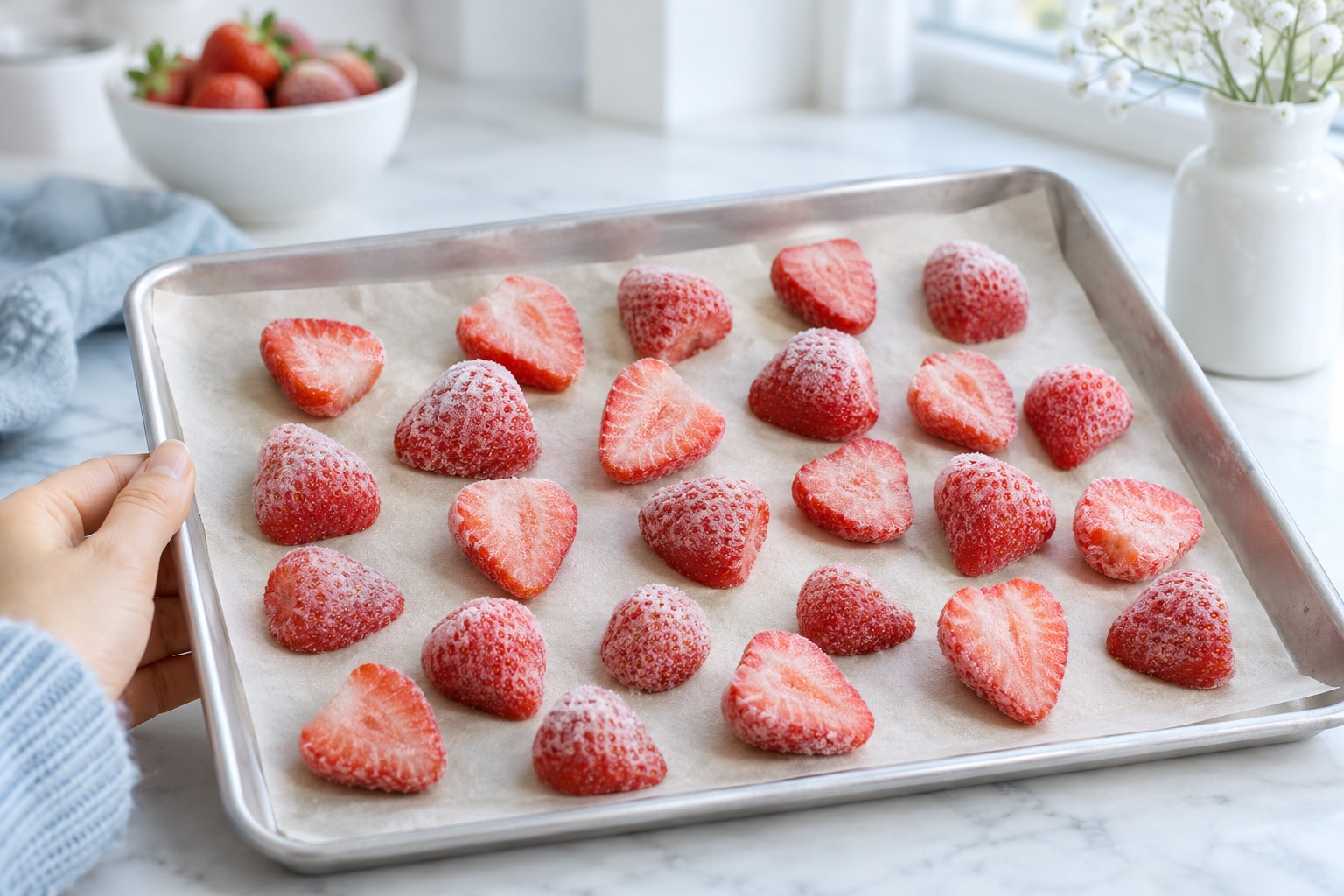
- Spread them in a single layer on a parchment-lined baking sheet and freeze until solid, 1 to 2 hours.
- Transfer them to a freezer bag, press out the air, seal and label with the date.
You can also freeze strawberries in a light sugar syrup or tossed with sugar, which helps them keep their color and texture for desserts. Our complete guide on how to freeze fruit covers sugar packs and other fruits. Blueberries freeze even more easily: freeze them unwashed and dry, then rinse them just before using.
Signs Strawberries Have Gone Bad
Throw out strawberries that show:
- Mold: white or gray fuzz, often starting where berries touch each other.
- Mushy, leaking flesh or dark, sunken spots.
- An off, fermented or sour smell.
The USDA Food Safety and Inspection Service fact sheet on molds says soft fruits, such as peaches and tomatoes, should be discarded if moldy, and strawberries belong in that group because mold can spread below the surface. If one berry in a container is moldy, discard it and any berries it was touching, then check the rest carefully. Berries that are slightly soft but not moldy are fine for smoothies or a quick sauce.
FAQ
What is the best way to store strawberries in the refrigerator?
Keep them unwashed with the caps on, in a single layer in a container lined with paper towels, loosely covered, on a shelf in the fridge. Eat them within a few days.
Should you wash strawberries before storing them?
No. Washing adds moisture that speeds up mold. The FDA advises washing produce just before eating it.
How do you store blueberries in the refrigerator?
Keep blueberries unwashed in a vented container or a covered bowl lined with a paper towel. The USDA FoodKeeper says they last 1 to 2 weeks.
Can you freeze strawberries whole?
Yes. Wash, hull and dry them, freeze them on a tray until solid, then bag them. They keep 8 to 12 months at 0°F (-18°C).
Can you leave strawberries on the counter?
Only briefly. Whole berries you will eat the same day can sit out, but they spoil quickly at room temperature. Refrigerate cut strawberries within 2 hours.
Keep Berries on Your Radar
The real enemy of strawberries is forgetting about them. A carton pushed behind leftovers is moldy by the time you find it. Put berries where you will see them, eat them early in the week, and freeze any you won't finish by day three. If you like a nudge, Freezer Inventory Tracker can remind you when the berries in the fridge are close to their limit. For more ways to use up produce before it spoils, see how to reduce food waste at home, and for other produce that is easy to store badly, read how to store potatoes and onions.