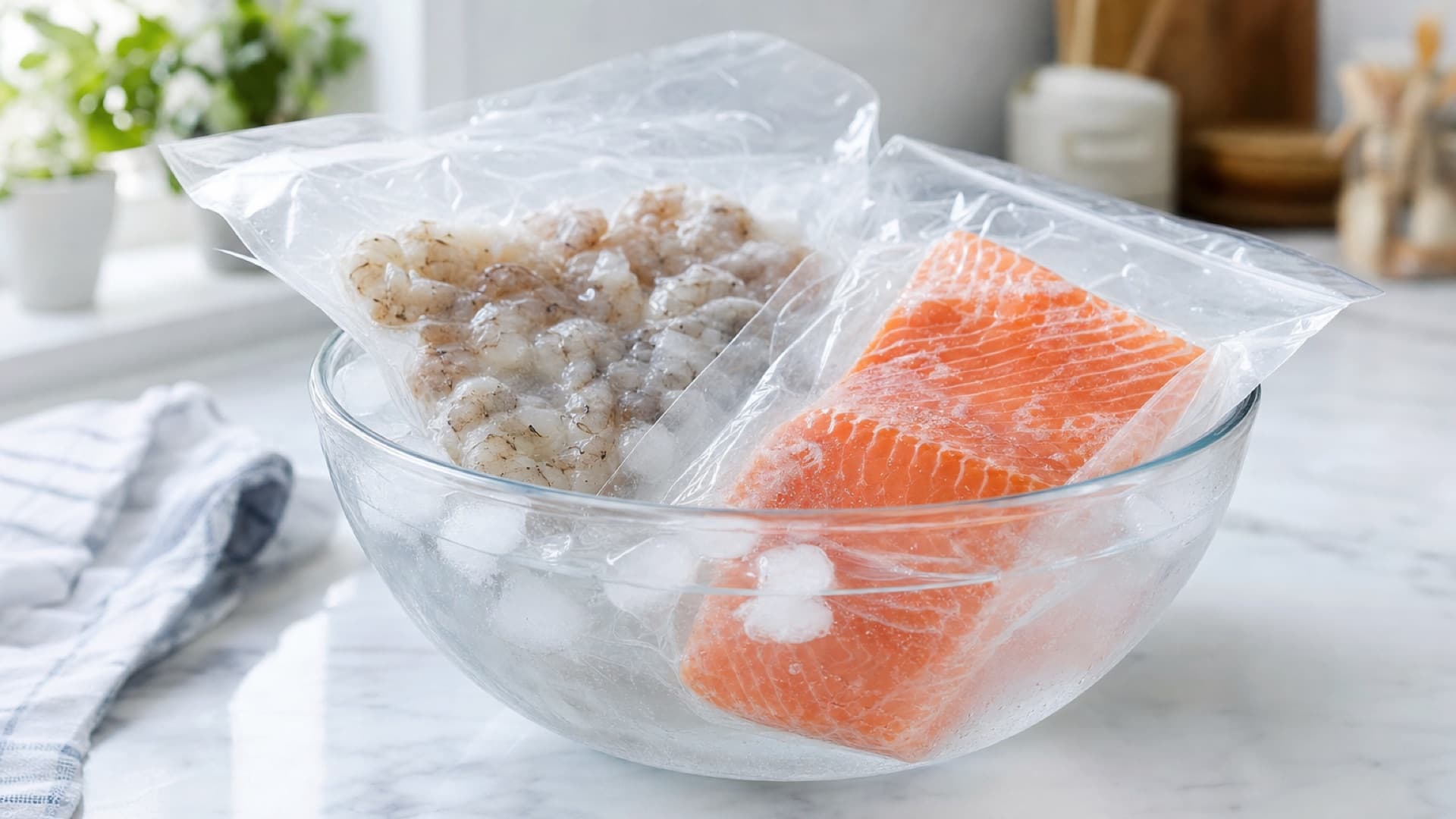
The quickest safe way to thaw shrimp or salmon is to seal it in a leak-proof bag and submerge it in cold tap water, changing the water every 30 minutes: about a pound (450 g) thaws in an hour or less, and small shrimp often thaw in much less time. For the best texture, thaw seafood overnight in the refrigerator; if you are in a real hurry, use the microwave's defrost setting and cook it immediately.
Seafood thaws faster than most meat because it is thin and delicate, which is good news for weeknight dinners. It also means warm water and the countertop can push it into unsafe temperatures quickly. Here is how to do each method properly.
The Basic Safety Rules
The FDA and USDA recommend three ways to thaw frozen seafood: in the refrigerator, in cold water, and in the microwave if you will cook it right away. Shrimp and salmon can also be cooked straight from frozen.
Avoid thawing seafood on the counter or in hot water. According to USDA, perishable food should not sit at room temperature for more than two hours, and the outside of a thawing package can reach the "Danger Zone" of 40°F to 140°F (4°C to 60°C), where bacteria multiply rapidly, while the inside is still frozen.
Method 1: Cold Water (Fastest With the Best Texture)
This is the go-to method for thawing shrimp and salmon quickly.
- Seal it. Put the seafood in a leak-proof zip-top bag and press out the air. If the shrimp or fillets came in a sealed bag, check that it has no holes. USDA notes that a leaking bag lets bacteria in and lets the flesh absorb water, which makes it mushy.
- Submerge it in cold tap water. Use a large bowl and weigh the bag down with a plate so it stays under.
- Change the water every 30 minutes so it stays cold, as USDA recommends.
- Cook it right away. Seafood thawed in cold water should be cooked immediately, and cooked before it is refrozen.
According to USDA, packages of meat, poultry or seafood weighing about a pound may thaw in an hour or less. Individually frozen shrimp spread loosely in the bag thaw quickly, often in well under an hour. A single thin salmon fillet usually thaws faster than a thick center-cut piece.
Pro tip: Spread shrimp into a single flat layer inside the bag before you submerge it. A flat layer thaws far faster than a frozen clump, and you can feel through the bag when the shrimp are soft all the way through.
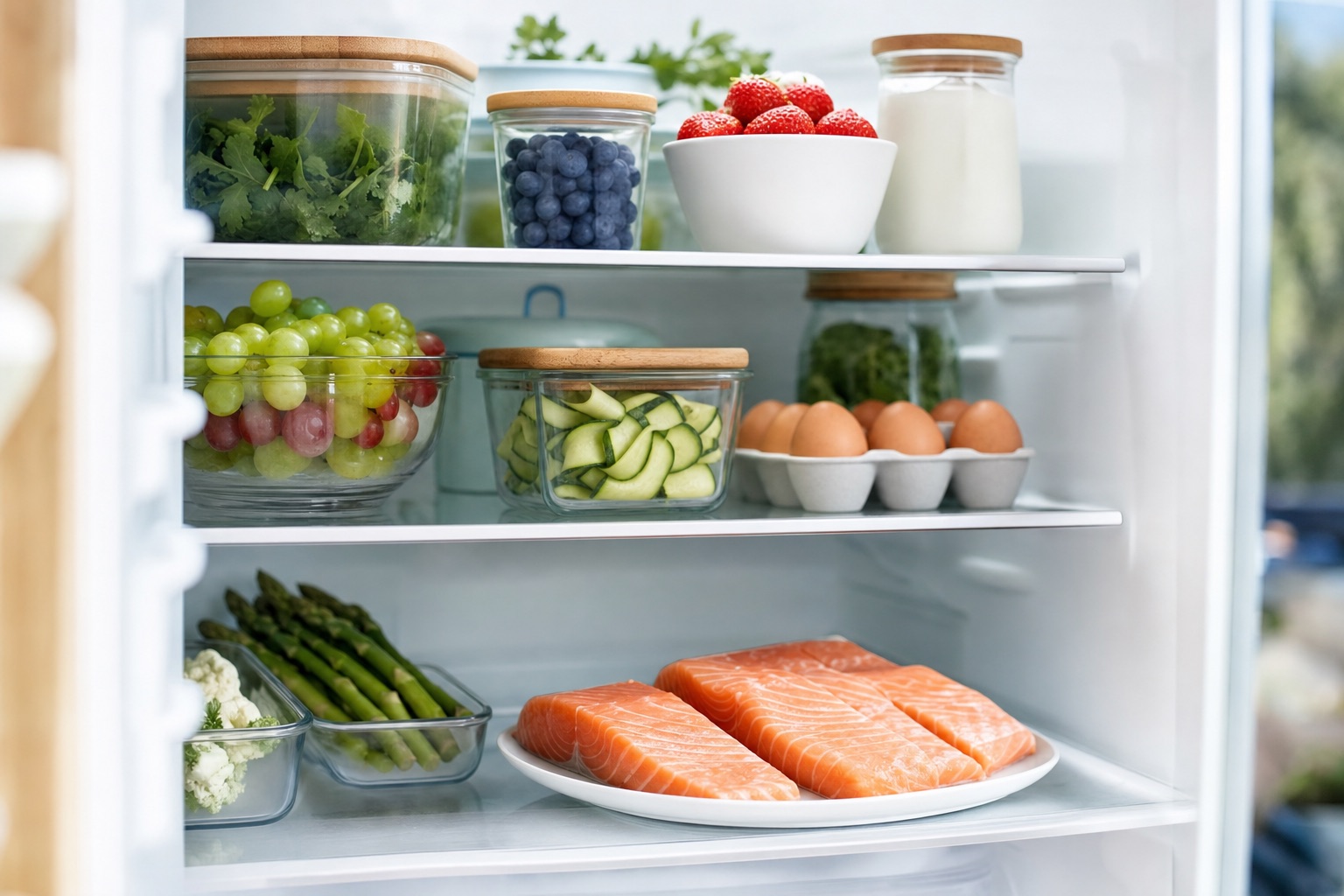
Method 2: Refrigerator Overnight (Best Quality)
The FDA recommends thawing frozen seafood gradually in the refrigerator overnight. It takes planning, but the texture is the best of any method, and you get flexibility:
- Place the seafood on a plate or in a container on the bottom shelf so any drips cannot reach other food.
- Most shrimp and salmon portions thaw overnight. Larger packages may need a full day.
- According to USDA, seafood thawed in the refrigerator stays safe and good quality for an additional day or two before cooking.
- Seafood thawed in the fridge can be refrozen without cooking, though it may lose some quality.
A note on vacuum-sealed fish. Many vacuum-packed frozen fish fillets carry a label telling you to remove the fish from its packaging, or at least cut the package open, before thawing it in the refrigerator. This is because reduced-oxygen packaging can allow Clostridium botulinum to grow if the fish warms. Always follow the instructions on the package.
Method 3: Microwave (Only If Cooking Right Away)
The FDA advises using the "defrost" setting and stopping the defrost cycle while the fish is still icy but pliable. This method is fast but uneven: thin edges of salmon and small shrimp can start to cook while thicker parts are still frozen.
Use it only when the seafood goes straight into the pan or oven. USDA advises cooking microwave-thawed food immediately and not refreezing it until it has been cooked.
Method 4: Cook It From Frozen
You can skip thawing altogether. USDA confirms it is safe to cook frozen food without thawing, and that cooking takes about 50% longer.
- Shrimp: add frozen raw shrimp straight to boiling water, a simmering sauce, soup or a hot skillet. Rinse off any ice glaze first so it does not water down the pan.
- Salmon: bake or roast frozen fillets. Rinse off ice crystals, pat dry, season after a few minutes once the surface thaws, and cook until done.
Cooking from frozen works best for shrimp and thin fillets. Thick salmon portions can cook unevenly, so thawing is better if you want a crisp sear.
Thawing Times at a Glance
| Seafood | Refrigerator | Cold water (sealed bag) | Microwave |
|---|---|---|---|
| Shrimp, 1 lb (450 g) | Overnight | 1 hour or less | Minutes, cook immediately |
| Salmon fillets, 1 lb (450 g) | Overnight | 1 hour or less | Minutes, cook immediately |
| Larger packs, 3 to 4 lb (1.4 to 1.8 kg) | About 1 day | 2 to 3 hours | Not recommended |
| After thawing | Cook within 1 to 2 days | Cook immediately | Cook immediately |
Times are based on USDA FSIS guidance on safe defrosting and FDA seafood guidance. Actual times depend on thickness and how the seafood is packed.
How to Tell When Shrimp and Salmon Are Cooked
The FDA recommends cooking most seafood to an internal temperature of 145°F (63°C). Visual signs, according to the FDA:
- Shrimp: the flesh becomes firm, pearly and opaque.
- Fish such as salmon: the flesh becomes opaque and separates easily with a fork.
A food thermometer is the most reliable check, especially when cooking from frozen.
Storage Before and After Thawing
Frozen seafood keeps best when it is well wrapped and kept at 0°F (-18°C). According to FoodSafety.gov's cold food storage chart, fatty fish such as salmon keeps its best quality for 2 to 3 months in the freezer. The same chart gives shrimp 6 to 18 months, while the older USDA FoodKeeper brochure lists 3 to 6 months, so aim to use frozen shrimp within about 6 months for the best texture.
In the refrigerator, the FDA advises using fresh seafood within 2 days. Cooked seafood leftovers keep 3 to 4 days in the fridge, in line with USDA guidance for leftovers.
For wrapping and freezing tips, see our guide on how to freeze fish and seafood.
Avoid These Thawing Mistakes
- Leaving seafood on the counter. Even thin fillets warm unevenly.
- Using warm or hot water. It speeds thawing at the surface and creates the same risk as the counter.
- Thawing in an open bowl of water. Without a sealed bag, the flesh soaks up water and loses flavor and texture.
- Refreezing seafood thawed in water or the microwave without cooking it first. Our guide on whether you can refreeze meat explains why the thawing method decides whether refreezing is safe.
The same methods work for other proteins. See our guides on how to thaw chicken fast and how to thaw ground beef fast.
FAQ
How do you defrost shrimp quickly?
Put the shrimp in a sealed zip-top bag, spread them flat, and submerge the bag in cold tap water. Change the water every 30 minutes. A pound usually thaws in an hour or less, and loose shrimp often much faster. Cook them right away.
How do you thaw frozen salmon quickly?
Seal the fillet in a leak-proof bag and submerge it in cold water, changing the water every 30 minutes. Thin fillets often thaw in under an hour. For dinner in minutes, use the microwave defrost setting and cook immediately.
Can you cook shrimp from frozen?
Yes. USDA confirms it is safe to cook food from frozen; it takes about 50% longer. Frozen raw shrimp work well in boiling water, soups, sauces and stir-fries. Cook until firm, pearly and opaque.
Can you thaw shrimp in warm water?
It is not recommended. Warm or hot water can bring the outside of the shrimp into the Danger Zone of 40°F to 140°F (4°C to 60°C) while the inside is frozen. Use cold water and change it every 30 minutes.
How long can thawed shrimp stay in the fridge?
If thawed in the refrigerator, shrimp and salmon stay safe and good quality for 1 to 2 days before cooking, according to USDA. If thawed in cold water or the microwave, cook them right away.
Plan Seafood Night the Night Before
Shrimp and salmon are among the easiest proteins to thaw: cold water in under an hour, the fridge overnight, or straight from frozen into the pan. The only thing that can go wrong is forgetting until the last minute. Freezer Inventory Tracker shows what seafood you have in the freezer and sends a defrost reminder, so it is thawed and ready when you start cooking.