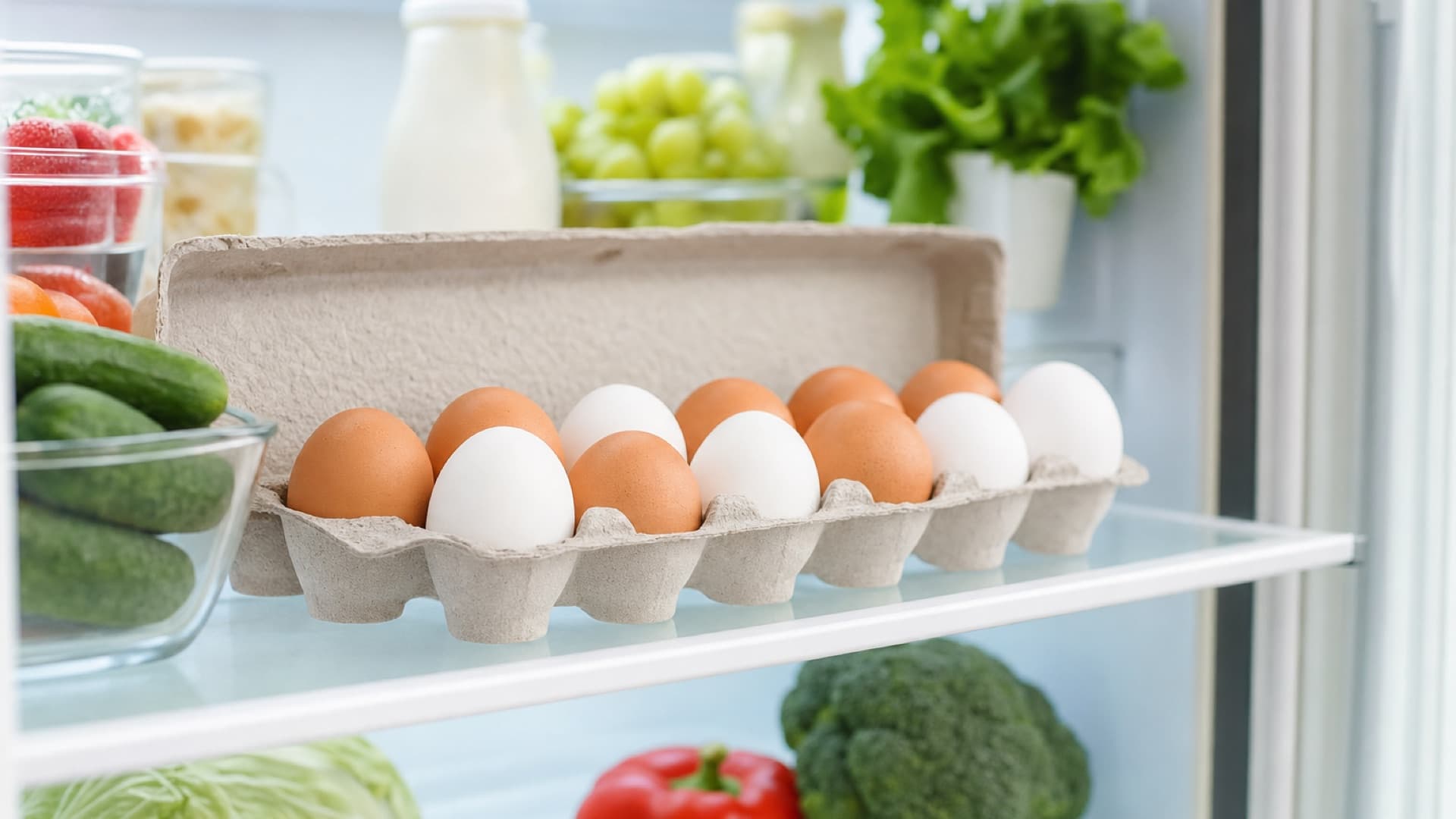
Raw eggs in the shell last 3 to 5 weeks in the fridge from the day you buy them, according to the USDA, as long as they are kept at 40°F (4°C) or below. That window often runs past the "sell-by" or expiration date printed on the carton, and the eggs are still safe to use.
The key word is refrigerated. Eggs sold in the US are washed before packing, which means they need to stay cold. This guide covers how long eggs last in every form, what the dates on the carton actually mean, how to read the pack date and why the float test tells you less than you think.
How Long Eggs Last: Quick Reference
| Egg type | Refrigerator, 40°F (4°C) | Freezer, 0°F (-18°C) |
|---|---|---|
| Raw eggs in the shell | 3 to 5 weeks | Do not freeze in the shell |
| Raw whites or yolks (out of the shell) | 2 to 4 days | 12 months |
| Hard-boiled eggs | 1 week | Not recommended whole |
| Egg dishes (quiche, casseroles) | 3 to 4 days | 2 to 3 months, after baking |
| Raw eggs that cracked on the way home | Use within 2 days, in a covered container | Not applicable |
Refrigerator and freezer times come from the USDA FoodKeeper and USDA FSIS guidance on shell eggs. Freezer times are for best quality: food kept at 0°F (-18°C) stays safe indefinitely.
How Long Are Eggs Good After the Expiration Date?
If your eggs have been refrigerated the whole time, they are usually good for some time after the date on the carton. USDA advises using eggs within 3 to 5 weeks of the date you purchase them for best quality and notes that the "sell-by" date will usually expire during that time, but the eggs are perfectly safe to use.
In practice:
- Count from the purchase date, not the carton date. If you bought eggs on November 1, plan to use them by early December, whatever the carton says.
- A "sell-by" date is for the store. It tells retailers how long to display the eggs. It is not a safety cutoff for you.
- A "use-by" or "best-by" date is a quality guide. Eggs will be at their best before it, but properly stored eggs do not become unsafe the day after.
What shortens the window is temperature, not the calendar. Eggs left out on the counter, or stored in a fridge that runs warmer than 40°F (4°C), lose quality faster and carry more food safety risk. Our guide on what temperature your fridge and freezer should be explains how to check yours.
Pro tip: When you unpack groceries, write the purchase date on the carton with a marker. It is the date that matters for the 3 to 5 week rule, and it is the one the carton does not show.
Sell-By vs. Expiration Date vs. Pack Date
Egg cartons can carry up to three different dates, and they mean different things.
The Pack Date (Julian Date)
Cartons that carry the USDA grade shield must show the date the eggs were packed. It is printed as a three-digit Julian date, which counts the days of the year: January 1 is 001 and December 31 is 365. A carton marked 032 was packed on February 1.
According to USDA guidance shared by the University of Nebraska-Lincoln Extension, fresh shell eggs can be stored in their carton in the refrigerator for four to five weeks beyond the pack date.
Sell-By and Expiration Dates
USDA notes that "sell-by" and "expiration" (EXP) dates are not federally required on eggs, although some states require them. When they appear, they guide the store's stock rotation and give you a rough idea of freshness. They are not safety dates.
Which Date Should You Trust?
Use the pack date to judge how fresh the eggs were when you bought them, and the purchase date to count your 3 to 5 weeks. Both are more useful than the sell-by date.
Does the Egg Float Test Work?
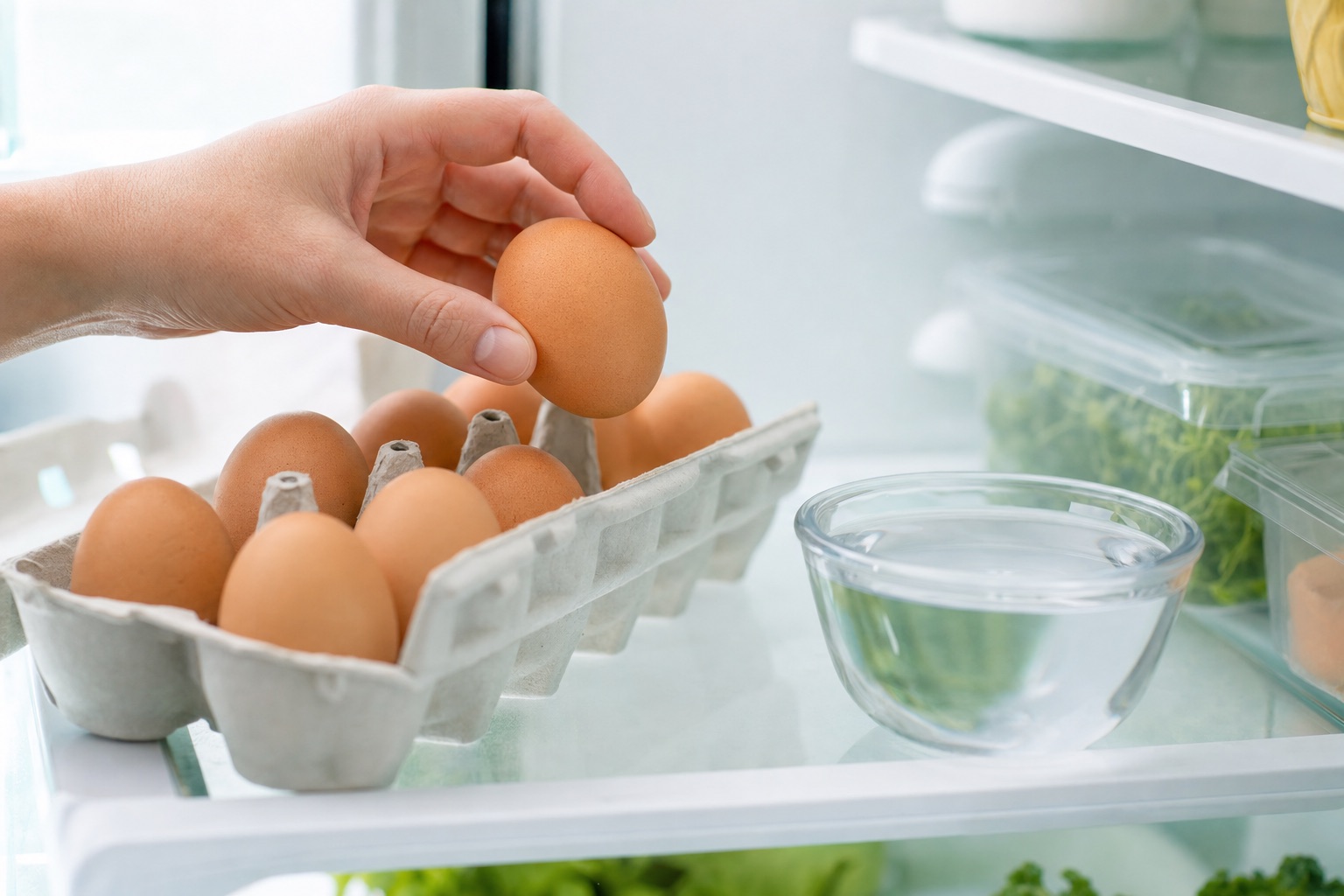
The float test is popular: put an egg in a bowl of water, and if it sinks it is fresh, if it floats it is old. Here is what it actually shows.
Every egg has a small air cell at its wide end. As an egg ages, moisture evaporates through the shell and the air cell grows. A very fresh egg lies flat on the bottom, an older egg stands on its end, and an egg with a large air cell floats.
So the float test measures age, not safety. A floating egg is old and may have lower quality, but floating does not mean it is spoiled. More importantly, a sinking egg is not guaranteed to be safe: Salmonella cannot be seen, smelled or detected by floating. Proper refrigeration and thorough cooking are what protect you.
A better check is simple: crack the egg into a separate small bowl before adding it to your recipe. An egg that has truly gone bad has an unmistakable sulfur smell. If it smells off, throw it out.
How to Store Eggs in the Fridge
Good storage keeps eggs fresh for the full 3 to 5 weeks:
- Keep them at 40°F (4°C) or below. Refrigerate eggs as soon as you get home.
- Leave them in the original carton. The carton protects the shells, limits moisture loss and keeps eggs from absorbing odors. It also keeps the pack date with the eggs.
- Store them on a shelf, not in the door. UNL Extension advises keeping eggs in the coldest part of the refrigerator. The door warms up every time it opens.
- Do not wash them. US eggs are already washed and sanitized before packing.
- Do not leave them out more than 2 hours. USDA advises that refrigerated eggs should not sit at room temperature longer than that, or 1 hour if it is above 90°F (32°C). A cold egg left out can sweat, which can help bacteria move into the egg.
- Skip cracked eggs at the store. If one cracks on the way home, USDA advises breaking it into a clean container, covering it, refrigerating it and using it within 2 days.
Hard-Boiled, Separated and Frozen Eggs
Cooking or cracking an egg changes the clock.
Hard-boiled eggs last 1 week in the fridge, peeled or unpeeled. Our guide on how long hard-boiled eggs last in the fridge covers storage and peeling in detail.
Raw whites and yolks left over from baking keep 2 to 4 days in a covered container in the fridge.
Frozen eggs keep their quality for up to 12 months, but only out of the shell. Whole eggs expand when frozen and can crack the shell. Beat them lightly, or freeze whites and yolks separately. See our guide on how to freeze eggs for step-by-step instructions, including how to stop yolks from turning gummy.
Egg dishes like quiche, strata and breakfast casseroles last 3 to 4 days in the fridge. Holiday leftovers that contain eggs follow the same rule; see how long Thanksgiving leftovers are good for.
When to Throw Eggs Out
Discard eggs if:
- They have been at room temperature for more than 2 hours
- The shell is cracked and the egg has not been used within 2 days
- They have a sulfur or sour smell when cracked
- The shell is slimy or powdery, which can signal mold or bacteria
- They have been in the fridge well beyond 5 weeks and you cannot remember when you bought them
If the power went out, eggs follow the same 4-hour rule as other refrigerated food. Our power outage food safety guide explains what to keep.
FAQ
How long after the expiration date are eggs good?
If they have been refrigerated continuously, eggs are generally good within 3 to 5 weeks of purchase, which often extends past the carton date. Crack each egg into a separate bowl and discard any with an off smell.
Is the egg float test reliable?
It is reliable for telling you how old an egg is, not whether it is safe. A floating egg is old, and a sinking egg can still carry bacteria. Use refrigeration, purchase dates and thorough cooking instead.
What is the difference between sell-by and expiration dates on eggs?
A sell-by date tells the store how long to display the eggs. An expiration or use-by date is a quality guide for you. Neither is a federal safety date. The pack date (Julian date) tells you when the eggs were packed.
Can you freeze eggs in the shell?
No. Eggs expand when frozen and the shells can crack. Crack them first, beat them lightly and freeze them in a covered container for up to 12 months.
Should eggs be kept in the fridge door?
No. The door is the warmest part of the fridge. Keep eggs in their carton on an inside shelf.
Keep Track of Your Eggs
Eggs last longer than the carton suggests, but only if you know when you bought them and keep them cold. Write the purchase date on the carton, store it on a shelf at 40°F (4°C) and use the oldest eggs first. Freezer Inventory Tracker tracks fridge items as well as frozen food, so you can log a new carton in seconds and get a reminder before it reaches the end of its window.