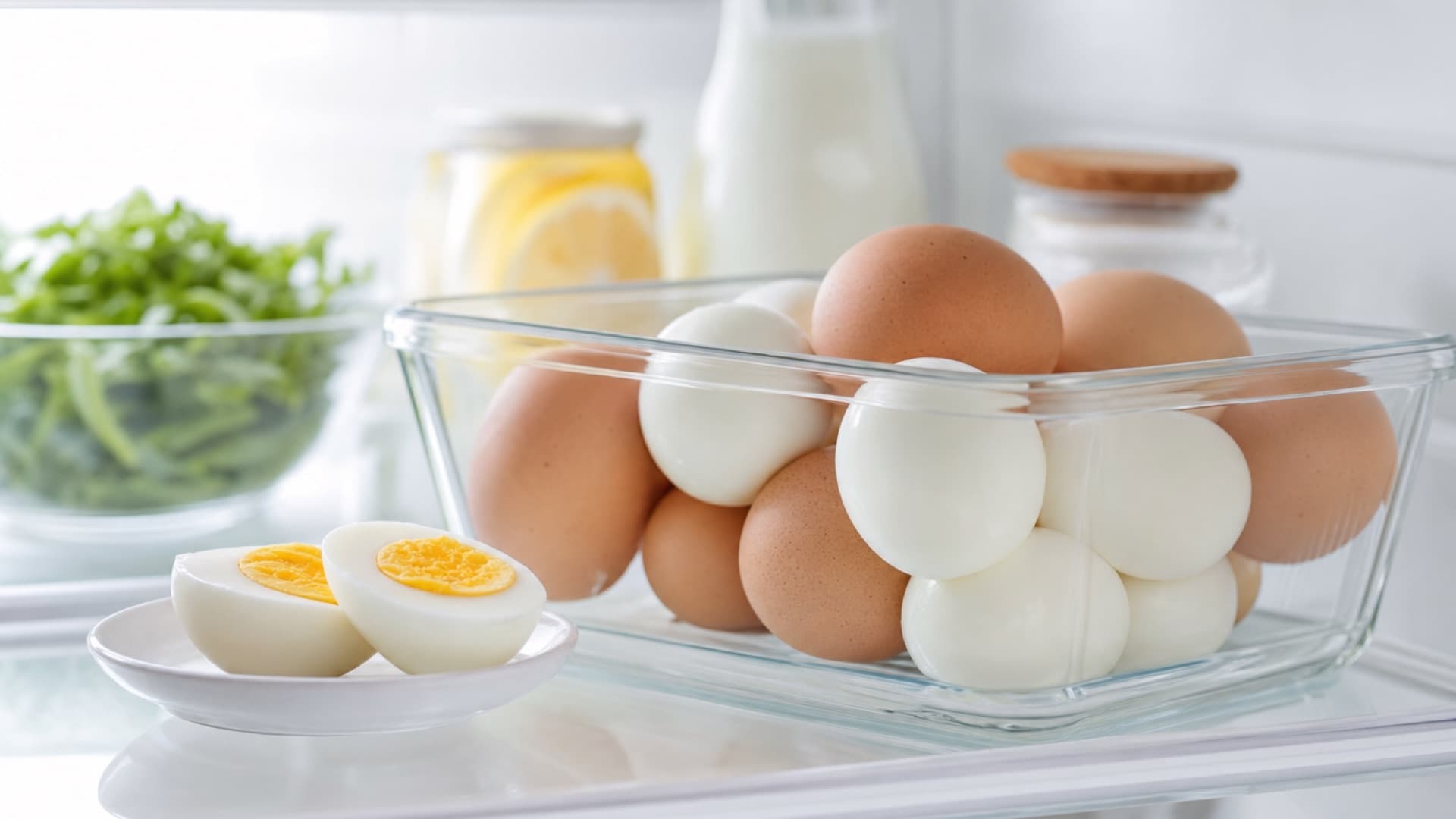
Hard-boiled eggs last 1 week in the refrigerator, whether they are peeled or still in the shell. Both the FDA and the USDA give the same limit: refrigerate them within 2 hours of cooking and eat them within 7 days.
That one-week window surprises many people, because raw eggs last much longer. Below is why cooked eggs spoil faster, how to store them peeled and unpeeled, and why the freezer is not a good backup plan.
Hard-Boiled Egg Storage Times
| Egg type | Where | How long |
|---|---|---|
| Hard-boiled, in the shell | Refrigerator, 40°F (4°C) or below | 1 week |
| Hard-boiled, peeled | Refrigerator, 40°F (4°C) or below | 1 week |
| Hard-boiled, any | Room temperature | 2 hours (1 hour above 90°F (32°C)) |
| Hard-boiled, whole | Freezer | Not recommended |
| Raw, in the shell | Refrigerator | 3 to 5 weeks |
Sources: FDA egg safety guidance, USDA FSIS, and the FoodSafety.gov cold food storage chart.
The 7 days start from the day you cooked the eggs, not from the date on the carton.
Why Cooked Eggs Spoil Faster Than Raw Eggs
It sounds backward, since cooking kills bacteria. The reason is the shell. According to the USDA, cooking washes away the egg's protective coating and leaves the pores in the shell open, so bacteria from your hands, the counter, or the fridge can get in.
That is also why the clock is the same for peeled and unpeeled eggs. The shell on a hard-boiled egg is no longer a reliable barrier.
How to Store Hard-Boiled Eggs
Follow these steps for every batch:
- Cool them quickly. Move cooked eggs into a bowl of ice water or under cold running water as soon as they are done.
- Refrigerate within 2 hours. The FDA says cooked eggs should not sit out longer than 2 hours, or 1 hour when it is above 90°F (32°C).
- Store them in a covered container. Eggs can absorb strong odors from the fridge, and a lid keeps them from drying out.
- Keep them on a shelf, not in the door. The door is the warmest part of the refrigerator and its temperature swings every time you open it.
- Label the container with the cooking date. After a few days, every batch of eggs looks the same.
Pro tip: Boil eggs on a day you will remember, like Sunday meal prep, and plan to finish them by the following Saturday. If you cannot eat them in a week, boil fewer next time.
Make sure the refrigerator itself is cold enough. The FDA recommends 40°F (4°C) or below, checked with an appliance thermometer.
Peeled vs. Unpeeled Hard-Boiled Eggs
Both last 1 week, but they need slightly different handling.
Unpeeled
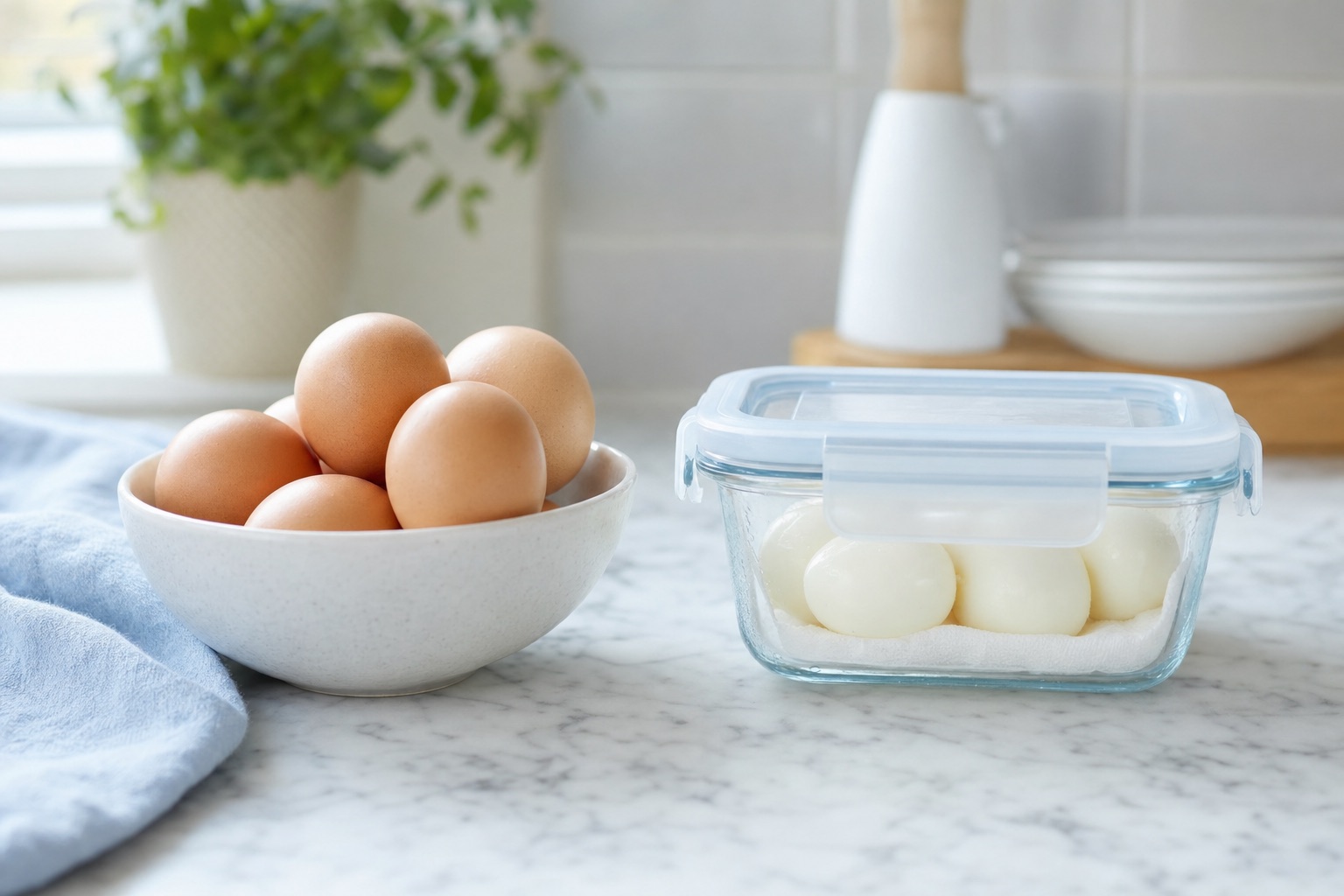
Leaving the shell on is the most convenient option. The shell helps keep the egg moist and protects the white from fridge odors. Keep them in a covered container or in a clean egg carton, and peel each one just before eating.
Peeled
Peeled eggs dry out and turn rubbery on the surface if left uncovered. To keep them moist:
- Place them in an airtight container.
- Lay a damp paper towel on the bottom and another on top of the eggs.
- Replace the paper towels if they dry out.
Peeled eggs are handy for meal prep, snacks, and salads, and they stay safe for the same 7 days as unpeeled ones as long as they stay covered and cold.
How to Tell If a Hard-Boiled Egg Has Gone Bad
The 1-week guideline is the main rule. Do not use smell or appearance to stretch it, because bacteria that cause foodborne illness usually do not change how food looks or smells. That said, throw out any hard-boiled egg that has:
- A strong sulfur or sour smell when you crack it
- A slimy or sticky shell or white
- Any mold or unusual discoloration on the white
When in doubt, throw it out. An egg costs much less than a bout of food poisoning.
What About the Green Ring?
A grayish-green ring around the yolk is not a sign of spoilage. It forms when eggs are cooked too long, as sulfur and iron compounds react at the surface of the yolk, according to the USDA. It is a cooking effect, not a freshness problem. To avoid it, do not overcook the eggs and cool them quickly in ice water.
Can You Freeze Hard-Boiled Eggs?
Not whole. The USDA cold storage chart says hard-cooked eggs should not be frozen. The cooked white turns tough, rubbery, and watery after thawing, so the result is unpleasant even though it is not unsafe.
If you want eggs ready in the freezer, freeze them raw instead. Beaten whole eggs, whites, and yolks all freeze well for later baking and scrambling. Our guide on how to freeze eggs covers each method, and our list of foods you should not freeze explains which other dishes suffer in the freezer for the same reason.
Dishes Made With Hard-Boiled Eggs
Egg salad, deviled eggs, and potato salad with chopped egg all follow the same 2-hour rule at the table. FoodSafety.gov lists egg salad at 3 to 4 days in the refrigerator, and it does not freeze well.
For holiday spreads, keep deviled eggs and egg salad on ice or put them back in the fridge well before the 2-hour mark. If you are planning a big meal, our guide to how long Thanksgiving leftovers are good for covers the rest of the table.
Dyed eggs follow the same rules. The USDA advises that eggs used for an egg hunt or left out at room temperature for more than 2 hours should be thrown out.
FAQ
How long do peeled hard-boiled eggs last in the fridge?
1 week, the same as unpeeled eggs. Store them in a sealed container with a damp paper towel so the whites do not dry out.
Can you eat hard-boiled eggs after 7 days?
It is not recommended. The FDA and USDA both set the limit at 1 week after cooking. Past that point, throw them out.
Can you freeze hard-boiled eggs?
The USDA advises against freezing whole hard-boiled eggs, because the whites become tough and watery. Freeze raw eggs instead if you want a freezer supply.
How long can hard-boiled eggs sit out?
No more than 2 hours at room temperature, or 1 hour if it is above 90°F (32°C). After that, they should be discarded.
Is it better to store hard-boiled eggs peeled or unpeeled?
Unpeeled is easier, since the shell keeps the egg moist. Peeled eggs last just as long if they are covered and kept cold.
Keep the Week in View
Hard-boiled eggs are one of the most useful meal prep foods, but the 7-day limit is short and easy to forget. Write the cooking date on the container, keep them on a cold shelf, and eat the oldest batch first. If you track your fridge in Freezer Inventory Tracker, you can add the batch in seconds and get a reminder before day 7. For more on what keeps where, see our freezing guide.