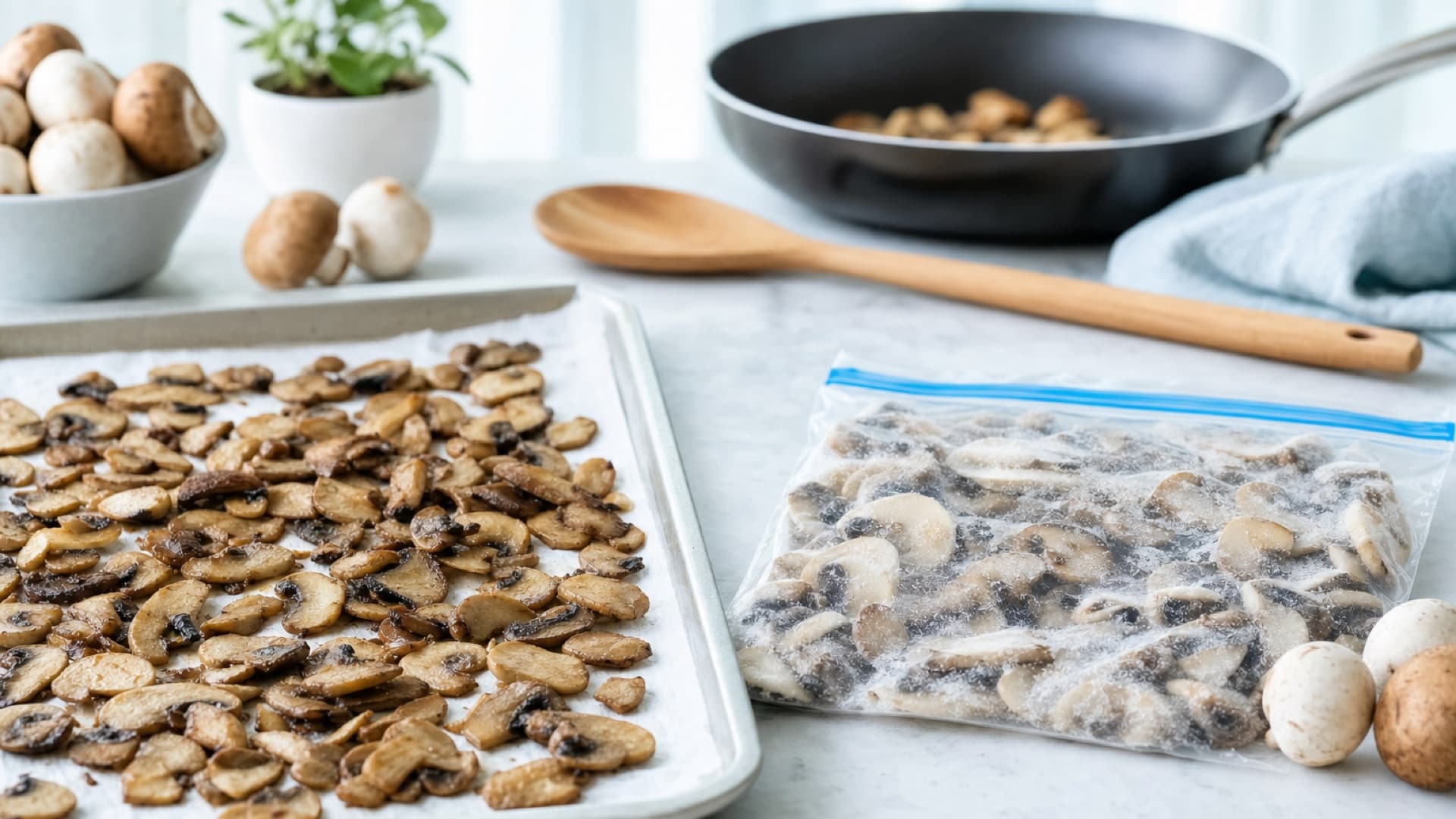
Yes, you can freeze mushrooms, but they freeze best when you cook them first by steaming or sautéing. Cooked and properly packaged, frozen mushrooms keep good quality for 10 to 12 months, according to the USDA FoodKeeper.
Raw mushrooms can go into the freezer too, but they come out soft, dark, and watery. This guide explains why, walks through both cooking methods recommended by university extension services, and covers how long fresh mushrooms last in the fridge so you know when it is time to freeze them.
Raw vs. Cooked: Which Freezes Better?
Mushrooms are mostly water. When they freeze raw, that water forms ice crystals that break the cell walls. On thawing, the mushrooms release liquid, collapse, and often turn gray or brown. They are still safe to eat if they were fresh when frozen, but the texture is closer to a sponge than a mushroom.
Cooking first solves most of the problem. Steaming or sautéing drives out some of the water, deactivates the enzymes that cause darkening, and firms up the texture before freezing. That is why university extension programs that follow National Center for Home Food Preservation guidance tell you to steam or sauté mushrooms before freezing rather than freezing them raw.
Here is how the two approaches compare:
| Frozen raw | Steamed, then frozen | Sautéed, then frozen | |
|---|---|---|---|
| Texture after thawing | Soft, watery | Tender, holds shape | Tender, holds shape |
| Color | Often darkens | Good (better with a lemon dip) | Browned, stable |
| Prep time | 5 minutes | 15 minutes | 15 to 20 minutes |
| Best uses | Blended soups, sauces | Soups, stews, casseroles | Pasta, risotto, omelets, pizza |
If you only plan to blend mushrooms into a soup or sauce, freezing them raw is acceptable. For anything else, take the extra 15 minutes.
Pro tip: Freeze mushrooms when they are firm and fresh, not when they are already slimy. Freezing preserves the condition food is in; it does not reverse spoilage.
How to Prepare Mushrooms for Freezing
Start with mushrooms that are firm, free of dark spots, and have no slimy film. Then:
- Clean them. Rinse quickly in cold water or wipe with a damp paper towel. Do this right before cooking, not days ahead, because damp mushrooms spoil faster.
- Trim the stems. Cut off the dry ends of the stems.
- Size them. Mushrooms larger than about 1 inch across should be sliced or quartered so they cook and freeze evenly.
From here, choose steaming or sautéing.
Method 1: Steaming
Steamed mushrooms keep a cleaner, more neutral flavor, which makes them flexible for later recipes.
- Optional anti-darkening dip. For better color, soak the mushrooms for 5 minutes in a solution of 1 teaspoon lemon juice (or 1½ teaspoons citric acid) per pint of water.
- Steam. Use these times from extension guidance (Missouri, Oregon State and Washington State University Extension):
- Whole mushrooms (up to 1 inch across): 5 minutes
- Buttons or quarters: 3½ minutes
- Slices: 3 minutes
- Cool quickly. Spread them on a tray or plunge the steamer basket into ice water, then drain well.
- Package. Pack into freezer bags or containers, press out the air, seal, label and freeze.
Method 2: Sautéing
Sautéed mushrooms have more flavor and are ready to drop straight into a finished dish.
- Cook in small batches. Heat a little butter or oil in an open skillet and cook the mushrooms until almost done. Crowding the pan makes them steam in their own liquid instead of browning.
- Cool. Let them cool on a tray, or set the pan in cold water to speed things up. Do not leave cooked mushrooms at room temperature for more than 2 hours.
- Package. Pack into containers leaving ½ inch of headspace, or into flat freezer bags with the air pressed out.
Flash Freeze for Loose Portions
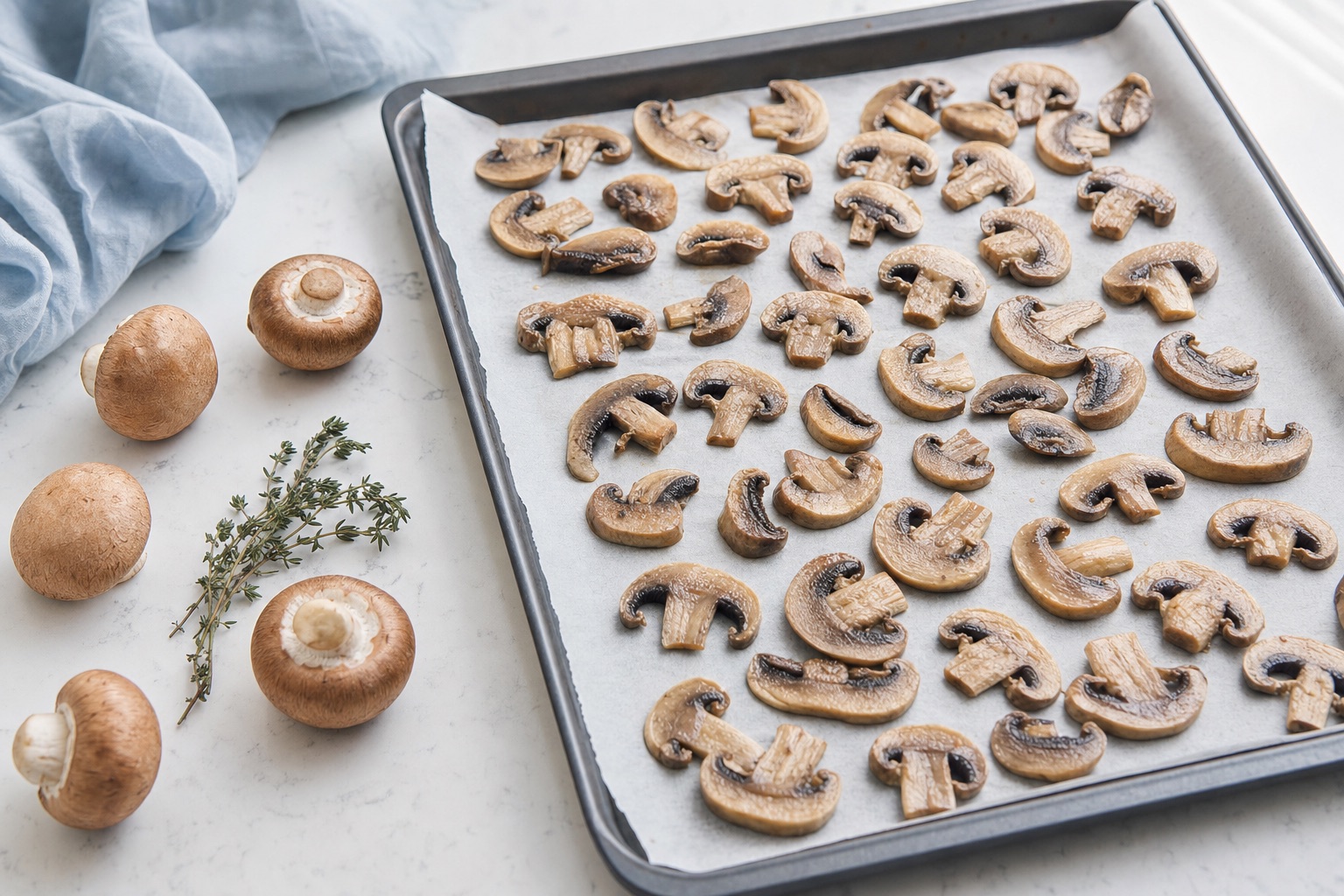
For mushrooms you can measure out a handful at a time, spread the cooled, cooked pieces in a single layer on a lined baking sheet, freeze until solid (1 to 2 hours), then transfer to a bag. They will not clump, so you can take exactly what a recipe needs. The same tray method works for most vegetables, as covered in our guide to freezing vegetables at home.
How Long Do Mushrooms Last in the Freezer?
Frozen mushrooms keep their best quality for 10 to 12 months at 0°F (-18°C), according to the USDA FoodKeeper. Food held at 0°F stays safe indefinitely; the time limit is about flavor and texture. If your freezer runs warmer than that, quality drops faster, so it is worth checking what temperature your freezer should be.
| Mushroom type | Refrigerator, 40°F (4°C) | Freezer, 0°F (-18°C) |
|---|---|---|
| Fresh, whole or sliced | 3 to 7 days | Not recommended raw |
| Steamed or sautéed for freezing | Use or freeze promptly | 10 to 12 months |
| Cooked mushroom side dishes and leftovers | 3 to 4 days | 1 to 2 months |
| Mushroom soup or stew (homemade) | 3 to 4 days | 2 to 3 months (cream may separate) |
Fresh and frozen mushroom times come from the USDA FoodKeeper. The leftover and side dish row uses the FoodKeeper times for cooked vegetable side dishes, and the soup row uses the USDA times for soups and stews.
The most common quality problem in frozen mushrooms is freezer burn: dry, leathery patches caused by air contact. Pressing the air out of bags, or using a vacuum sealer, prevents most of it. Our article on freezer burn explains what causes it and what to do with affected food.
How Long Do Mushrooms Last in the Fridge?
Fresh mushrooms last 3 to 7 days in the refrigerator, according to the USDA FoodKeeper. Pre-sliced mushrooms sit at the short end of that range because cutting exposes more surface to air and moisture.
To get the full week:
- Leave them in their original packaging if it is a ventilated tray with perforated film, or move them to a paper bag. Paper absorbs excess moisture while letting the mushrooms breathe.
- Avoid sealed plastic bags. Trapped moisture speeds up sliminess.
- Do not wash them until you use them. Water on the surface shortens their life.
- Store them on a shelf, not in the crisper drawer, where humidity tends to be higher.
Signs Mushrooms Have Gone Bad
Throw mushrooms out if they are slimy, have dark wet spots, smell sour or fishy, or show mold. Mild wrinkling or slightly darkened gills on an otherwise firm mushroom are signs of age, not spoilage; those are exactly the mushrooms to cook and freeze today.
How to Use Frozen Mushrooms
Frozen mushrooms do not need to be thawed. Add them directly to the pan or pot:
- Soups and stews: stir them in during the last 10 minutes of simmering. Mushroom barley soup and beef stew are both good candidates, and both freeze well themselves, as explained in how to freeze soup.
- Pasta sauces and risotto: add sautéed mushrooms straight from frozen while the sauce simmers.
- Omelets, frittatas and quiche: thaw briefly in a hot skillet first so their liquid evaporates and does not water down the eggs.
- Pizza: scatter sautéed frozen mushrooms on the pizza before baking; the oven heat thaws and crisps them.
- Casseroles and stuffing: mix them in frozen.
Avoid using frozen mushrooms anywhere you want a raw, crunchy texture, such as salads. Frozen mushrooms are a cooking ingredient only. For other foods with the same limitation, see our list of what not to freeze.
Pro tip: Freeze mushrooms flat in labeled bags of about 1 cup each. That portion matches most recipes and thaws in minutes in a hot pan.
Packaging and Labeling
Good packaging is what makes the 10 to 12 month window realistic:
- Freezer bags laid flat freeze fast and stack neatly. Press out the air before sealing.
- Rigid containers work well for sautéed mushrooms with their cooking liquid. Leave ½ inch of headspace for expansion.
- Vacuum sealing gives the longest quality, especially for steamed mushrooms.
Write the contents, the method (steamed or sautéed) and the date on every package. Our roundup of the best containers for freezer storage compares the options in detail.
FAQ
Can you freeze raw mushrooms?
You can, and they remain safe if they were fresh when frozen, but the texture becomes soft and watery and the color darkens. Extension services recommend steaming or sautéing before freezing. Raw frozen mushrooms are acceptable only for blended soups and sauces.
How do you freeze mushrooms without them getting mushy?
Cook them first. Steam slices for 3 minutes or sauté them until almost done, cool quickly, drain well, and freeze in a single layer before bagging. Then cook them from frozen instead of thawing them first.
How long do mushrooms last in the fridge?
Fresh mushrooms last 3 to 7 days in the refrigerator according to the USDA FoodKeeper. Cooked mushroom dishes last 3 to 4 days, the standard USDA window for cooked leftovers.
Do you have to thaw frozen mushrooms before cooking?
No. Add them straight to soups, sauces, stews and casseroles. For dishes like omelets, warm them in a hot skillet first so the extra moisture cooks off.
Can you freeze stuffed mushrooms?
Yes, though the caps soften, so expect a less firm bite than fresh. Bake them first, cool them, freeze on a tray until solid, then bag them. Reheat from frozen in the oven until the filling reaches 165°F (74°C), the USDA reheating temperature for leftovers.
The Bottom Line
Mushrooms freeze well once they are cooked. Steam or sauté them, cool them fast, pack them flat with the air pressed out, and they will be ready for soups, sauces and pastas for up to a year. The real trick is timing: fresh mushrooms only have about a week in the fridge, so the best moment to freeze them is a few days after you buy them. If you log your groceries in Freezer Inventory Tracker, an expiry reminder for that pack of mushrooms tells you when it is time to cook and freeze them.