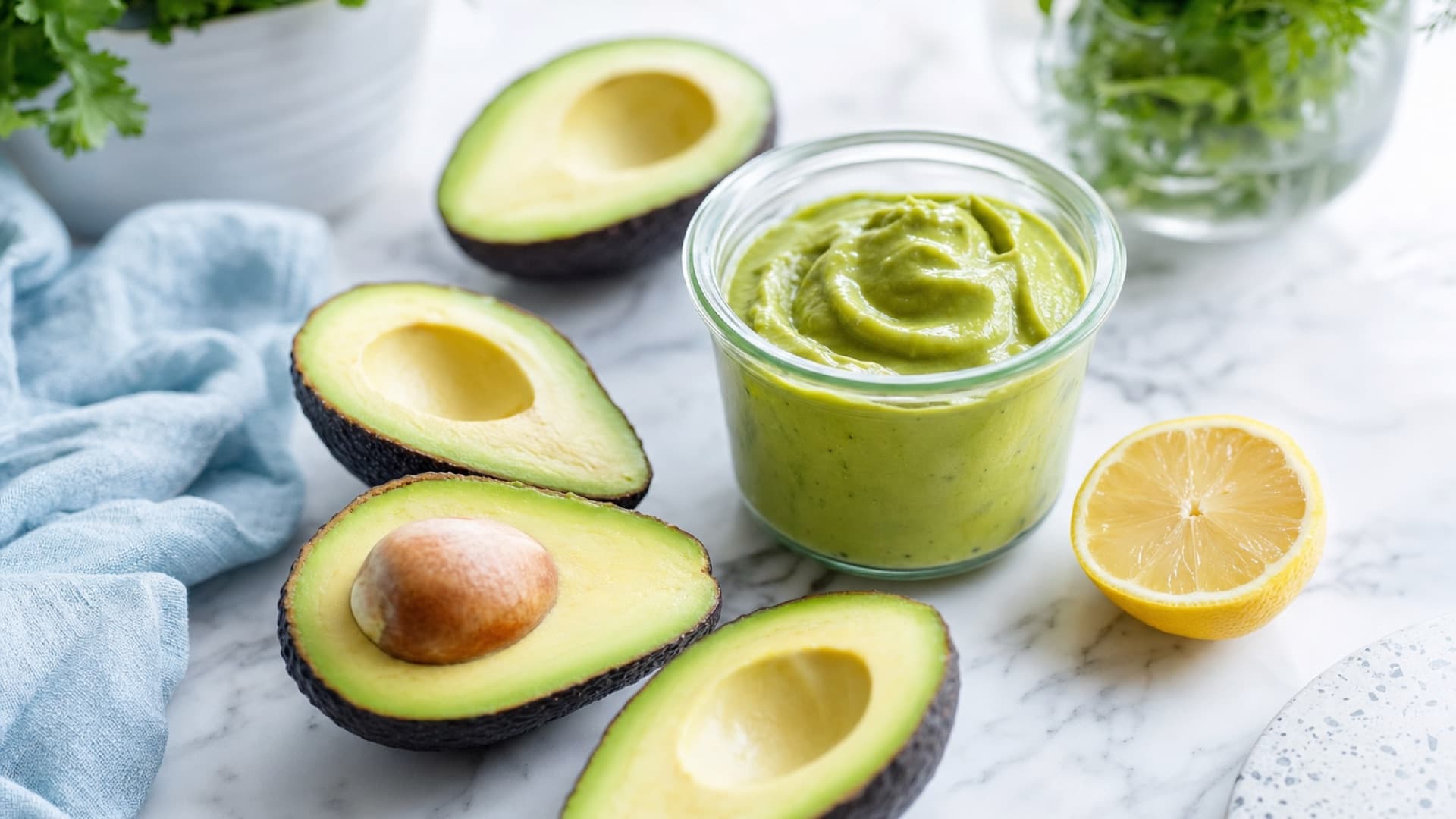
Yes, you can freeze avocado, and the best way is as a purée with lemon or lime juice, which the National Center for Home Food Preservation (NCHFP) recommends because whole or sliced avocados don't freeze well. Chunks and halves also work if you plan to blend or mash them later, but they won't keep the firm texture you want for slicing onto toast.
Frozen avocado is perfect for guacamole, smoothies, dressings and spreads. Here are the three methods, ranked from best to most limited.
What Happens When You Freeze Avocado
Avocados are high in fat and water. Freezing forms ice crystals that break the cell walls, so thawed avocado is softer and slightly watery. The flavor holds up well; the texture does not.
The other challenge is browning. Cut avocado flesh darkens when exposed to air, a reaction driven by an enzyme in the fruit. Freezing slows it but doesn't stop it, and it speeds up again as the avocado thaws. Acid (lemon or lime juice, or ascorbic acid) and keeping air out are the two defenses.
That is why the NCHFP states that avocados are not satisfactorily frozen whole or sliced, and recommends purée instead. A purée can be fully coated in acid and packed with almost no air.
Method 1: Avocado Purée (Best Results)
This is the NCHFP method and gives the best color and flavor.
- Pick ripe avocados. Choose ones that yield to gentle pressure, with no dark blemishes on the skin.
- Peel, halve and pit. Scoop the flesh into a bowl.
- Mash or blend until smooth.
- Add acid. The NCHFP suggests 1 tablespoon of lemon juice per 2 avocados, or 1/4 teaspoon of ascorbic acid per quart of purée. Lime juice works the same way as lemon.
- Pack and seal. Spoon into small freezer containers or heavy freezer bags, press out as much air as possible and leave a little headspace in rigid containers for expansion.
- Label and freeze. Write the date and amount on each package.
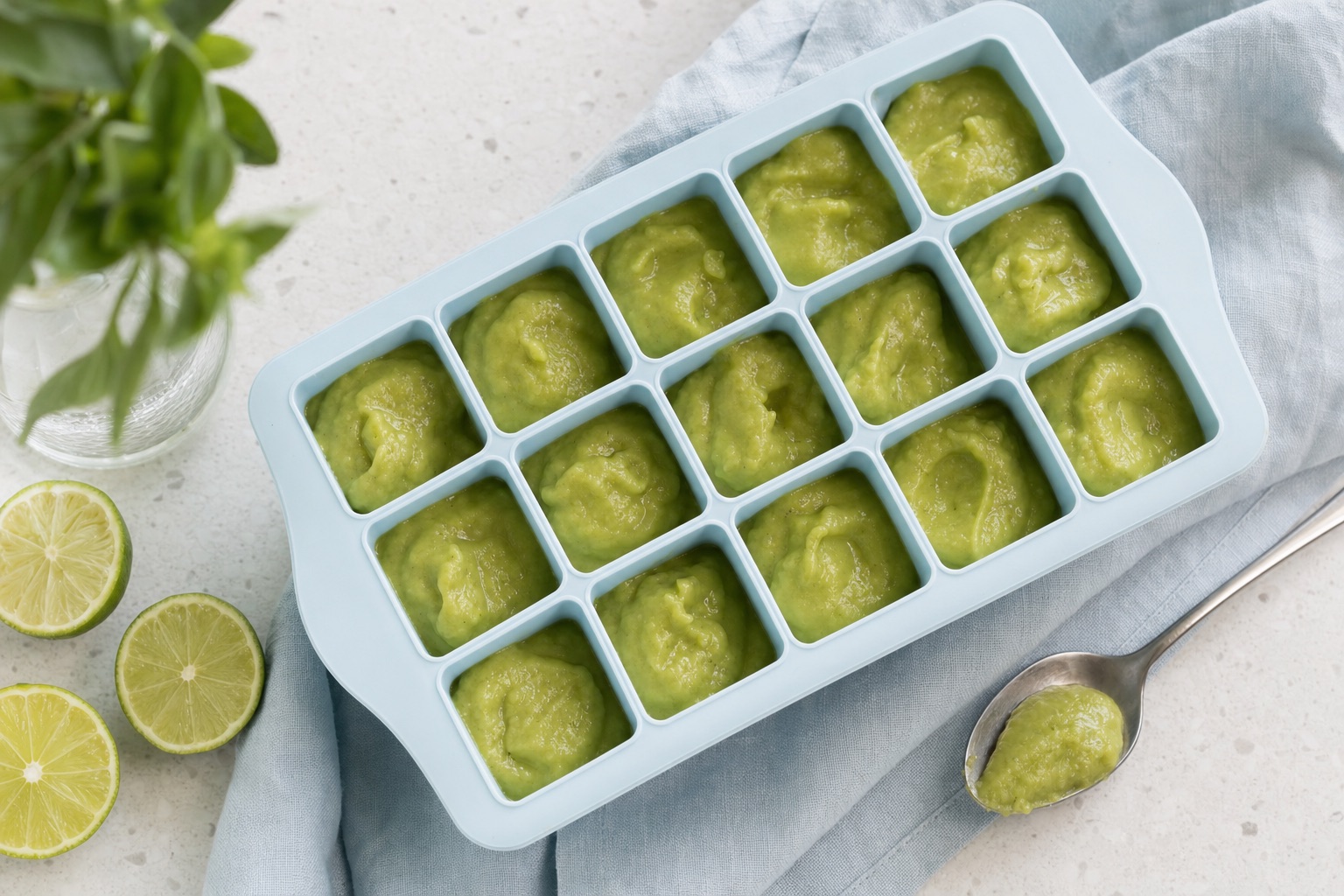
Portion tip: freeze purée in an ice cube tray, then pop the cubes into a freezer bag. Two or three cubes are enough for a sandwich spread or a smoothie.
The NCHFP notes that unsweetened purée is suited to salads and sandwiches. You can also season it with salt before freezing if you know it is going into guacamole.
Pro tip: Press plastic wrap directly against the surface of the purée before closing the container. Less air contact means less browning on top.
Method 2: Frozen Avocado Chunks for Smoothies
Chunks are the most convenient option if most of your avocado goes into smoothies, where texture doesn't matter.
- Peel, pit and cut the avocado into 1-inch cubes.
- Toss the cubes in lemon or lime juice so every surface is coated.
- Spread them on a parchment-lined tray in a single layer and freeze until solid, about 2 hours.
- Transfer the frozen cubes to a freezer bag, squeeze out the air, label and seal.
Because they were frozen separately, the cubes won't clump, so you can grab a handful straight from the bag and drop them into the blender without thawing. Frozen avocado gives smoothies a thick, creamy texture.
Expect some darkening on the cut faces over time. It doesn't affect safety, and in a green smoothie you won't notice.
Method 3: Frozen Avocado Halves
Halves are the quickest method, but also the least reliable. The large exposed surface browns easily and the flesh turns soft on thawing.
- Cut the avocado in half and remove the pit. Leave the skin on.
- Brush the cut surface generously with lemon or lime juice.
- Wrap each half tightly in plastic wrap, pressing it against the flesh, then place in a freezer bag and remove the air.
Use frozen halves for mashing: guacamole, avocado toast spread, baking. Don't expect clean slices.
Method Comparison
| Method | Effort | Best for | Texture after thawing |
|---|---|---|---|
| Purée with lemon juice | Medium | Guacamole, spreads, dressings, sandwiches | Smooth, closest to fresh |
| Chunks (flash frozen) | Medium | Smoothies, blended soups | Soft, fine for blending |
| Halves | Low | Mashing, baking | Soft, prone to browning |
| Whole, unpeeled | Not recommended | None | Mushy and discolored |
How Long Does Frozen Avocado Last?
The NCHFP's general guideline for frozen fruits and vegetables stored at 0°F (-18°C) is 8 to 12 months, and it recommends using the shorter end of any range for best quality. For avocado, which browns and loses flavor more noticeably than most fruit, aim for the shorter end and use it within a few months.
According to the USDA, food kept continuously frozen at 0°F (-18°C) remains safe indefinitely. Time affects quality, not safety. Beyond a few months you may see more browning, ice crystals or a flatter flavor.
For comparison, here is how long avocados keep before you freeze them:
| Avocado | Counter | Refrigerator, 40°F (4°C) |
|---|---|---|
| Whole, unripe | Until ripe | Not recommended until ripe |
| Whole, ripe | Use within a day or two | 3 to 4 days |
| Cut, with lemon juice, tightly wrapped | 2 hours max | About 1 day for best color |
The refrigerator times for ripe whole avocados follow the FoodKeeper guide developed with Cornell University and USDA. Cut avocado keeps safely for longer than a day if refrigerated, but its surface usually browns quickly.
How to Thaw and Use Frozen Avocado
- Purée: thaw in the refrigerator for several hours or overnight. Stir before using, because a little liquid can separate. Use within a day of thawing.
- Chunks: use straight from the freezer in smoothies. For guacamole, thaw in the fridge and mash.
- Halves: thaw in the fridge, then scoop and mash.
Thaw only what you need, and don't refreeze thawed avocado. The texture gets worse each time.
Best uses for frozen avocado
- Guacamole (add fresh onion, cilantro and tomato after thawing)
- Smoothies and smoothie bowls
- Creamy salad dressings and pasta sauces
- Sandwich and toast spreads
- Baking, as a partial butter substitute in brownies and quick breads
FAQ
Can you freeze an avocado whole?
You can, but the NCHFP says avocados don't freeze satisfactorily whole or sliced. A whole frozen avocado thaws mushy and often discolored. Peel and purée or cube it first.
How do you freeze avocados for smoothies?
Cut them into cubes, toss in lemon or lime juice, flash freeze on a tray, then bag them. Add the frozen cubes straight to the blender.
Can you freeze guacamole?
Yes, plain guacamole freezes like avocado purée. Fresh tomato and onion get watery when thawed, so it is better to freeze a simple base of avocado, lime juice and salt and add the fresh ingredients after thawing.
Why did my frozen avocado turn brown?
Exposure to air. Coat the flesh in lemon or lime juice and remove as much air as possible from the package. Browning on the surface is a quality issue and is safe to eat, though you can scrape it off.
Does frozen avocado taste the same?
The flavor stays close to fresh, especially in purée form. The texture is softer, which is why frozen avocado works best mashed or blended.
Don't Lose Track of the Purée
Small containers of green purée are easy to lose behind frozen vegetables. Label each one with the date, and log it as you freeze it so you know how many portions are left. Freezer Inventory Tracker lets you do that from your phone and reminds you to use older portions first. For more fruit, see our guides on how to freeze fruit, the best containers for freezer storage and how to prevent freezer burn.