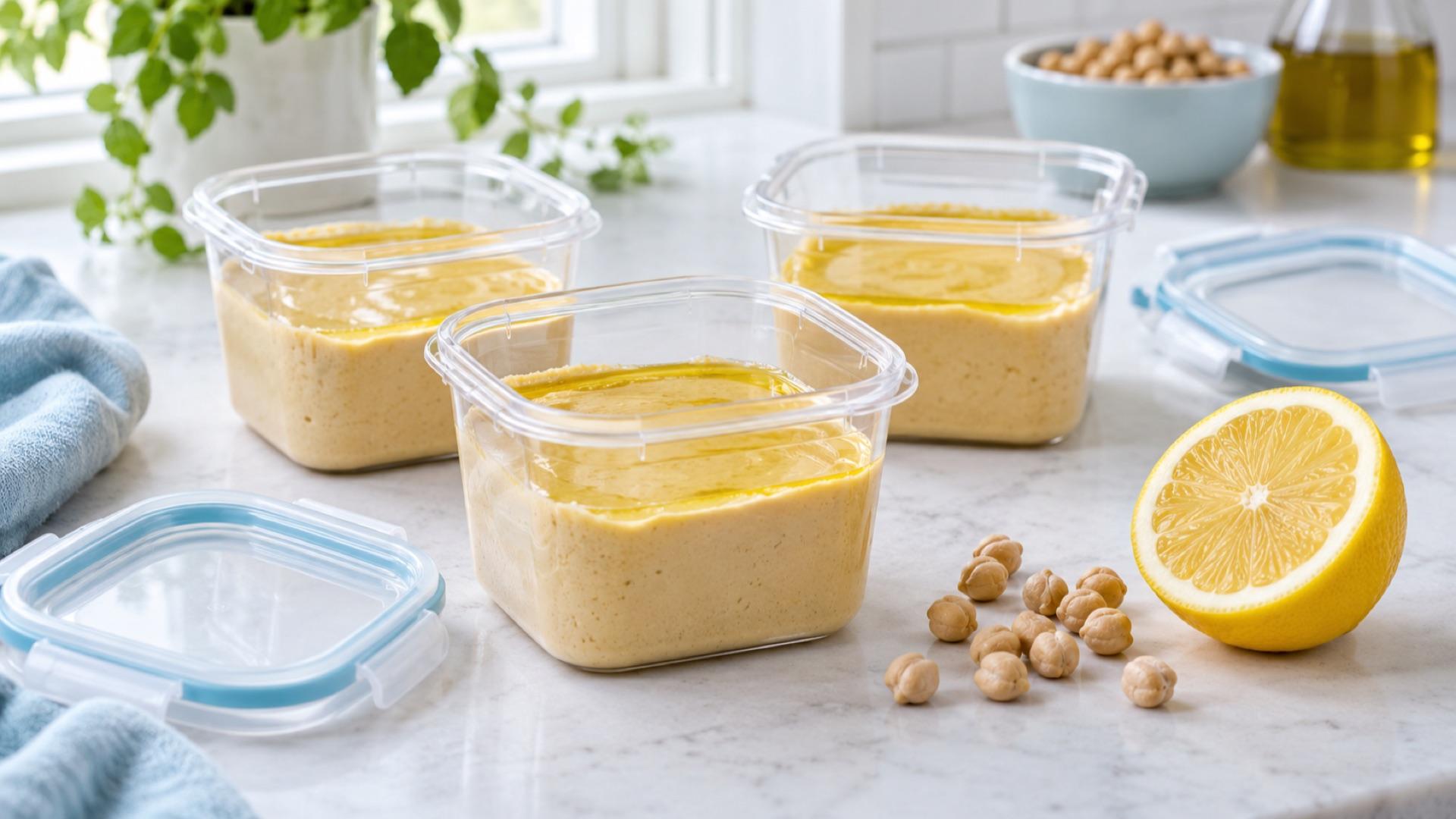
Yes, you can freeze hummus. It is perfectly safe, but freezing changes the texture: thawed hummus tends to be grainier and can separate, which is why the USDA FoodKeeper does not recommend freezing it for best quality.
In practice, frozen hummus is still very good in wraps, as a sandwich spread, stirred into sauces, or whipped back to smoothness with a little olive oil. This guide explains how to freeze and thaw hummus, and how long it lasts in the fridge once opened.
How Long Does Hummus Last?
| Hummus | Refrigerator, 40°F (4°C) or below | Freezer, 0°F (-18°C) |
|---|---|---|
| Store-bought, pasteurized, unopened | Up to 3 months, or follow the package date | Not recommended for quality |
| Store-bought, after opening | 7 days | Safe; best within 1 to 2 months (our guidance) |
| Fresh hummus without preservatives (deli or refrigerated case) | 7 days | Safe; best within 1 to 2 months (our guidance) |
| Homemade hummus | 3 to 4 days (our conservative guidance) | Safe; best within 1 to 2 months (our guidance) |
| Any hummus left at room temperature | No more than 2 hours | Not applicable |
The refrigerator times for store-bought and preservative-free hummus come from the USDA FoodKeeper, which also lists freezing as "not recommended" because of the quality change. The FoodKeeper does not give a freezer time for hummus, so the 1 to 2 month figure is our suggestion, borrowed from the FoodKeeper's range for frozen leftovers without meat. Food kept constantly at 0°F (-18°C) stays safe indefinitely, according to the USDA.
How Long Is Hummus Good After Opening?
Once you open a container of store-bought hummus, the USDA FoodKeeper says to use it within 7 days, keeping it refrigerated. The clock starts when you break the seal, even if the "use by" date on the lid is weeks away. That printed date applies to the unopened product.
A few habits help hummus last the full week:
- Always use a clean spoon or knife. Double-dipping with chips, vegetables or fingers introduces bacteria and moisture.
- Put it back in the fridge right after serving. The USDA's 2 hour rule applies to perishable foods like hummus: discard it if it has been at room temperature for more than 2 hours, or more than 1 hour above 90°F (32°C).
- Smooth the surface and seal it. Pressing the top flat and adding a thin layer of olive oil reduces drying. Keep the lid tight.
- Serve a portion, not the tub. For parties, spoon some into a bowl and keep the rest cold.
Homemade Hummus
Homemade hummus has no preservatives and is not pasteurized. The FoodKeeper lists preservative-free hummus at up to 7 days, but homemade batches vary with how clean your equipment was and how quickly the hummus was chilled. We suggest the more conservative 3 to 4 days the USDA gives for most leftovers. Our guide to how long leftovers last in the fridge explains where that number comes from.
Pro tip: Write the opening date on the lid with a marker the moment you open a tub. Seven days is easy to lose track of when the container looks the same on day two and day nine.
How to Tell If Hummus Has Gone Bad
Throw hummus away if you notice:
- A sour or fermented smell, or a taste that is noticeably sharper than usual.
- Mold, in any color. Do not scoop it off. The USDA Food Safety and Inspection Service advises discarding soft foods with mold, since it can spread below the surface.
- A slimy or bubbly texture.
- It is past its 7-day window, even if it looks fine.
A thin layer of oil or liquid on top is normal separation; stir it back in. When in doubt, throw it out.
Can You Freeze Hummus? What Changes
Hummus is mostly chickpeas, tahini, lemon juice, garlic and oil. Freezing does not make any of these unsafe, but water in the mixture forms ice crystals that disrupt the smooth emulsion. After thawing, you may notice:
- A grainier, slightly drier texture.
- Some separation, with liquid or oil on the surface.
- Milder flavor, especially garlic and lemon.
These changes are why the USDA FoodKeeper does not recommend freezing hummus. It is a quality judgment, not a safety one. Freezing works best for plain or lightly flavored hummus. Hummus with toppings such as whole chickpeas, pine nuts, fresh herbs or roasted vegetables changes more, so freeze plain hummus and add toppings after thawing.
Chickpeas themselves freeze very well. If you make hummus from scratch, consider freezing cooked chickpeas and other beans instead, and blend a fresh batch when you need it.
How to Freeze Hummus
- Freeze it fresh. Freeze store-bought hummus well before its 7-day window ends, ideally soon after opening. Freezing pauses quality loss; it does not reverse it.
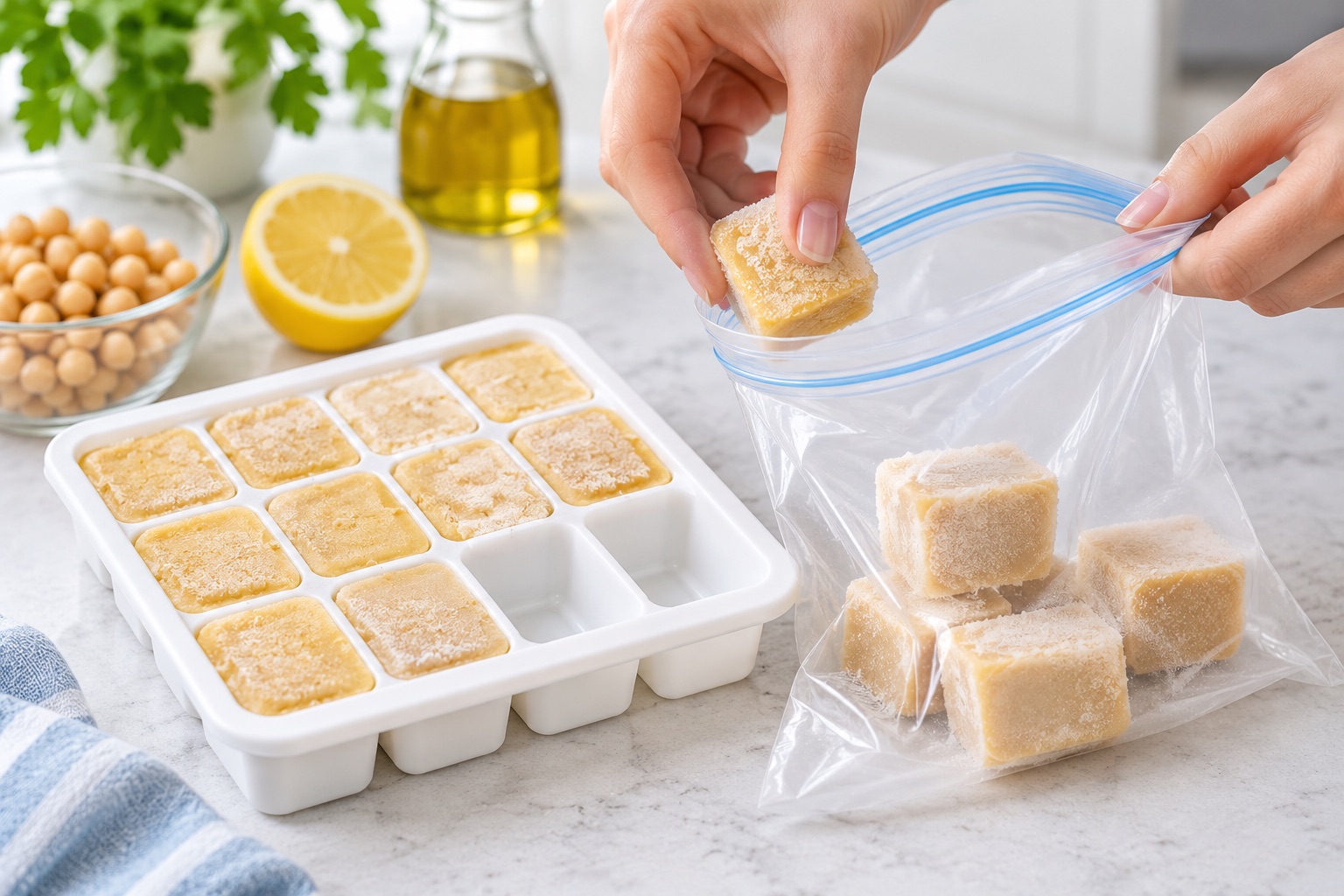
- Portion it. Small containers, half-cup jars or an ice cube tray work best. Smaller portions freeze and thaw faster and with less separation.
- Leave headspace. Hummus expands as it freezes. Leave about half an inch (1 cm) at the top of each container.
- Top with olive oil. A thin layer of oil on the surface helps prevent drying and freezer burn.
- Seal tightly. Use airtight containers or freezer bags with the air pressed out. Our comparison of the best containers for freezer storage can help you choose.
- Label with the date. Include the date you opened it if it was already open.
An unopened tub of store-bought hummus can go into the freezer as is, though small portions give better results.
How to Thaw Frozen Hummus
- Thaw it in the refrigerator, overnight for a small container or about 24 hours for a larger one. Do not thaw hummus on the counter. Like other perishable foods, it should stay out of the 40°F to 140°F (4°C to 60°C) danger zone.
- Stir it well. Mix the separated liquid back in.
- Restore the texture. Add a drizzle of olive oil, a squeeze of lemon or a spoonful of tahini, then whisk or blend for a few seconds. Most of the smoothness comes back.
- Use it within a few days. Count any days it was open before freezing toward its 7-day fridge window.
- Don't refreeze it. It is safe if it was thawed in the fridge, but a second freeze makes the texture much worse.
Best Uses for Thawed Hummus
Thawed hummus is great where texture matters less:
- Spread on wraps, sandwiches and toast
- Thinned with lemon juice or water as a salad dressing
- Stirred into pasta sauce or soup for creaminess
- As a base for grain bowls
- Mixed into mashed potatoes or deviled egg filling
For other spreads and dips that freeze less gracefully, see what not to freeze. Dairy-based dips follow different rules, covered in can you freeze sour cream.
FAQ
Does freezing hummus ruin it?
No. It changes the texture, making it slightly grainier, but stirring in a little olive oil or blending it briefly brings most of the smoothness back. It is safe to eat.
How long is hummus good after opening?
Seven days in the refrigerator, according to the USDA FoodKeeper. Keep it covered at 40°F (4°C) or below and use a clean utensil each time.
Can you freeze store-bought hummus in its original container?
Yes, if it is unopened and sealed. For better texture and easier thawing, divide opened hummus into small airtight portions with a little headspace.
How long can hummus sit out?
No more than 2 hours at room temperature, or 1 hour if it is above 90°F (32°C), following the USDA's guidance for perishable foods.
Can you eat hummus past the expiration date?
The USDA says package dates are mostly about quality rather than safety, so unopened hummus kept cold is usually fine a day or two past its date if it looks and smells normal. Once opened, follow the 7-day rule and discard it if it smells sour or shows mold.
Keep the Tub on the Clock
Most hummus gets thrown away not because it spoiled overnight but because nobody remembers when it was opened. A date on the lid solves that, and so does freezing half of a large tub the day you open it. If you use Freezer Inventory Tracker, you can log the tub in the fridge, get a reminder before day seven, and keep track of any portions you move to the freezer.