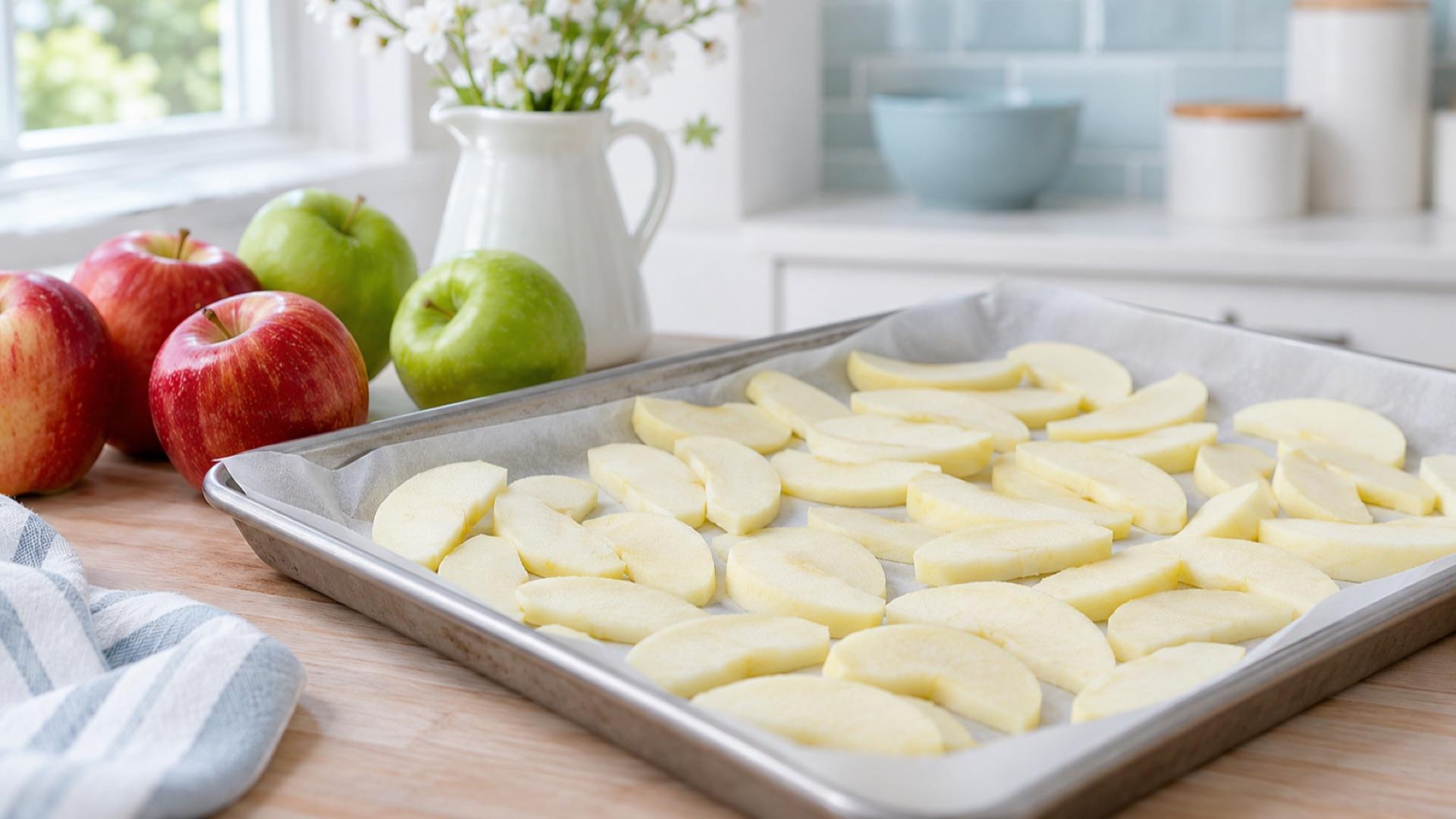
Yes, you can freeze apples, and they keep their best quality for about 8 months in the freezer at 0°F (-18°C), according to the USDA FoodKeeper. Freeze them sliced and treated against browning, cooked into pie filling or as applesauce; frozen apples lose their crunch, so they are best for baking, smoothies and cooking rather than eating raw.
Fall is when apples are cheapest and most plentiful, which makes it the right time to freeze a batch. Below are the methods from the National Center for Home Food Preservation (NCHFP), how to keep slices from turning brown, and how to store fresh apples so they last as long as possible.
How Long Apples Last
| Apples | Storage | How long | Source |
|---|---|---|---|
| Whole, fresh | Counter or pantry | About 3 weeks | USDA FoodKeeper |
| Whole, fresh | Refrigerator, 40°F (4°C) | 4 to 6 weeks | USDA FoodKeeper |
| Sliced, raw | Refrigerator, covered | Refrigerate within 2 hours; use within a few days | FDA (2-hour rule) |
| Frozen slices or cooked apples | Freezer, 0°F (-18°C) | About 8 months | USDA FoodKeeper |
| Homemade applesauce | Freezer, 0°F (-18°C) | 8 to 12 months | USDA FoodKeeper |
| Opened applesauce | Refrigerator | 7 to 10 days | USDA FoodKeeper (commercial, after opening) |
| Baked apple pie | Freezer, 0°F (-18°C) | About 8 months | USDA FoodKeeper (fruit pies) |
FoodKeeper freezer times are about quality. The USDA says food kept constantly at 0°F (-18°C) stays safe indefinitely, but frozen apples slowly dry out, absorb freezer odors and lose flavor after the recommended window.
Why Apples Turn Brown (and How to Stop It)
When you cut an apple, an enzyme in the fruit reacts with oxygen and turns the flesh brown. Browning is not a safety problem, but it looks unappealing and the flavor can turn flat. Freezing slows the reaction without stopping it, so slices need protection before they go in.
NCHFP lists three options:
- Ascorbic acid (vitamin C). The most effective. NCHFP recommends 1/2 teaspoon (1,500 mg) of ascorbic acid dissolved in 3 tablespoons of water, sprinkled over the slices. You can buy pure ascorbic acid powder or a commercial produce protector made from it in the canning aisle.
- Steam blanching. Steam the slices for 1 1/2 to 2 minutes, then cool them quickly. This deactivates the browning enzyme but softens the slices slightly.
- Syrup pack. Covering slices completely in syrup keeps air away. NCHFP adds 1/2 teaspoon of ascorbic acid per quart of syrup.
Lemon juice is the common kitchen shortcut. It helps, but it is less effective than ascorbic acid and adds a noticeable lemon flavor. If you use it, toss the slices in it right after cutting.
How to Freeze Apple Slices
Pick firm, crisp, full-flavored apples. Mealy apples get mushier after freezing. NCHFP suggests cutting medium apples into twelfths and large apples into sixteenths.
Dry pack (no sugar)
The most versatile method, good for pies, crisps, oatmeal and smoothies.
- Wash, peel and core the apples, then slice them.
- Treat the slices with ascorbic acid solution or steam blanch them for 1 1/2 to 2 minutes.
- Spread the slices on a lined tray in a single layer and freeze until solid, 2 to 4 hours.
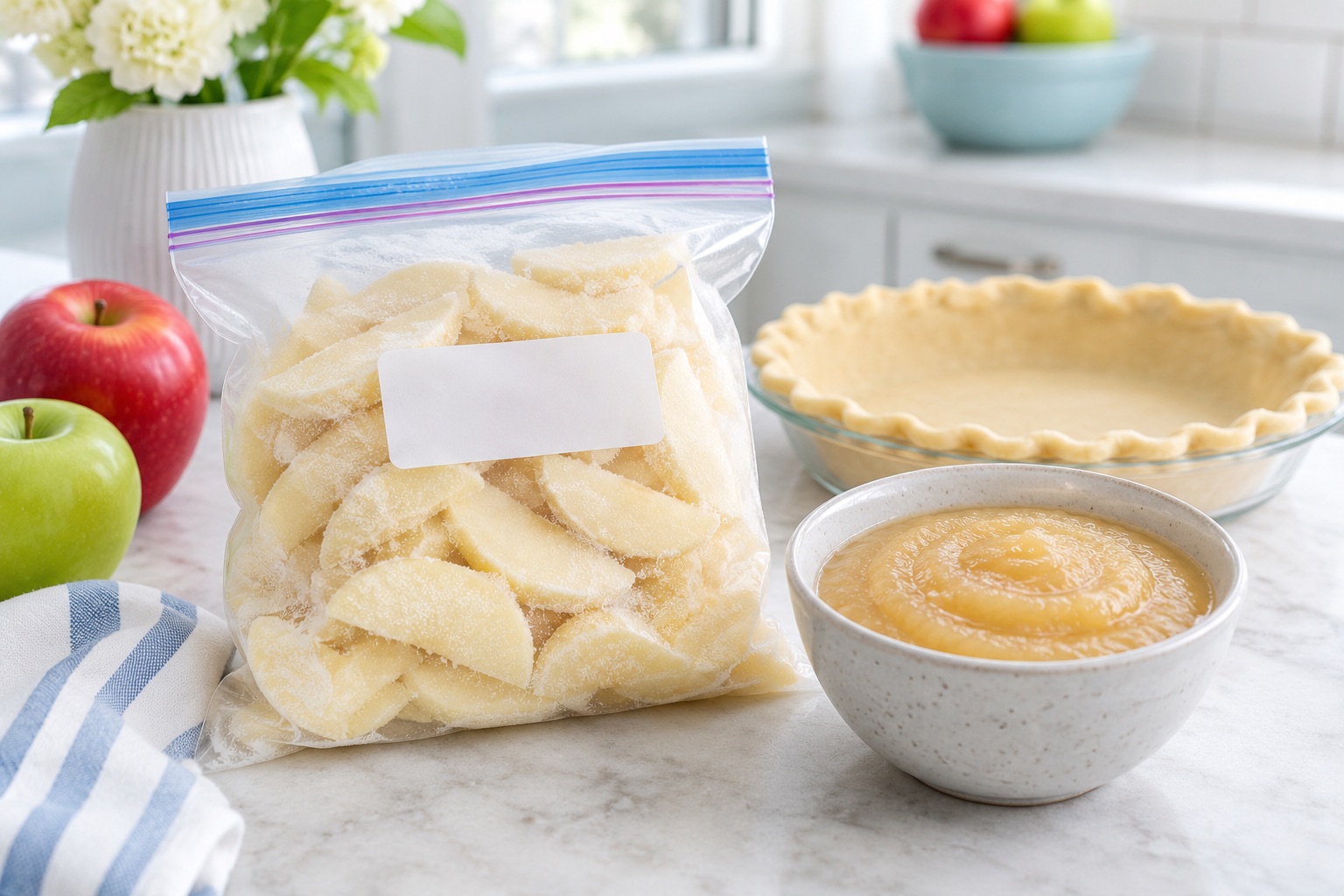
- Transfer to freezer bags or containers, press out the air and seal. Leave about 1/2 inch of headspace in rigid containers.
- Label with the date and the apple variety if you plan to bake with them.
Tray freezing first keeps the slices from freezing into one solid block, so you can pour out exactly what you need. The same trick works for bananas and berries.
Sugar pack
NCHFP recommends a sugar pack for apples you will use in pies. Treat the slices against browning, then mix 1/2 cup of sugar with each quart (about 1 1/4 pounds) of slices. Pack firmly into containers, leave headspace, seal and freeze.
Syrup pack
Best for apples you will eat uncooked, such as in a fruit salad or over yogurt. Use a cold 40% syrup (roughly 2 3/4 cups sugar per 4 cups water, a medium syrup) with 1/2 teaspoon of ascorbic acid per quart. Put 1/2 cup of syrup in each pint container, slice the apples directly into it, press them down and add syrup to cover. A small piece of crumpled parchment on top keeps the slices submerged.
Pro tip: Measure your favorite pie recipe's apples (often 6 to 8 cups) and freeze exactly that amount per bag. On baking day, you grab one bag instead of weighing frozen slices.
How to Freeze Apple Pie Filling
Freezing filling lets you bake a fresh pie with almost no prep.
- Prepare the filling as usual: sliced apples tossed with sugar, spices and a thickener. Many bakers prefer flour or tapioca here, since cornstarch-thickened fillings can turn spongy or watery after freezing.
- Line a pie plate with plastic wrap or foil and pour in the filling.
- Freeze until solid, then lift out the frozen disk, wrap it tightly and put it in a freezer bag.
- To bake, drop the frozen disk straight into an unbaked crust, top it, and bake. Add 15 to 20 minutes to your recipe's baking time, and check that the center bubbles.
You can also freeze a whole baked apple pie. The FoodKeeper lists fruit pies at 8 months frozen. Cool the pie completely, wrap it well and reheat it from frozen in the oven. For other holiday desserts, see can you freeze pumpkin pie, which follows different rules because it is an egg and milk custard.
How to Freeze Applesauce
Applesauce is one of the easiest fruit products to freeze, and the FoodKeeper gives homemade applesauce 8 to 12 months in the freezer.
- Cool the sauce quickly and refrigerate or freeze it within 2 hours of cooking.
- Portion it into freezer containers, bags or a muffin tin for single servings.
- Leave headspace, about 1/2 inch for pints, because it expands.
- Seal, label and freeze.
Thaw applesauce in the refrigerator overnight and stir it well; some liquid separation is normal. Use thawed applesauce within a few days.
Can You Freeze Whole Apples?
You can, but it is not the best use of the freezer. Whole frozen apples turn soft and mealy when thawed, and they are hard to cut while frozen. If you have apples about to go soft, it is better to slice or cook them first. Our general guide on how to freeze fruit lists which fruits freeze well whole and which do not.
How to Best Store Fresh Apples
If you plan to eat them fresh, the refrigerator is the best place. The FoodKeeper gives whole apples about 3 weeks at room temperature but 4 to 6 weeks in the fridge.
- Use the crisper drawer. It is slightly more humid, which keeps apples from shriveling. A perforated plastic bag works too.
- Keep them away from other produce. Apples give off ethylene gas, which speeds ripening and spoilage in nearby produce and encourages potatoes to sprout. Store them apart from potatoes, as explained in how to store potatoes and onions, and away from leafy greens.
- Sort them. One bruised or rotting apple speeds up the rest. Use damaged ones first, or turn them into applesauce.
- Don't wash until you eat them. Moisture on the skin encourages mold.
- Refrigerate cut apples. The FDA says cut fruits should be refrigerated within 2 hours. Keep slices in a sealed container, treated with a little lemon juice to limit browning.
The same principle, store dry and wash right before eating, applies to most fresh fruit, including strawberries.
FAQ
Can you freeze an apple without peeling it?
Yes. The peel is safe to freeze and adds fiber to smoothies and baked goods. It can turn a bit chewy after thawing, so peel apples you plan to use in smooth fillings or applesauce.
How do you keep frozen apples from turning brown?
Treat the slices before freezing with an ascorbic acid solution (1/2 teaspoon in 3 tablespoons of water), a short steam blanch or a syrup pack, as NCHFP recommends. Lemon juice helps but works less well.
How long do frozen apples last?
About 8 months for best quality at 0°F (-18°C), according to the USDA FoodKeeper. Homemade applesauce can last 8 to 12 months.
Can you use frozen apples in a pie?
Yes. Use them straight from frozen and add a little extra thickener, because frozen slices release more juice. Extend the baking time until the filling bubbles in the center.
What is the best way to store apples?
Whole apples last longest in the refrigerator crisper drawer, about 4 to 6 weeks per the FoodKeeper, kept apart from other produce because of the ethylene gas they release.
Turn an Apple Haul Into Months of Baking
Freezing apples is a simple way to stretch the fall harvest: treat the slices to prevent browning, tray freeze them, and use them within about 8 months. Pie filling and applesauce save even more time later. Freezer Inventory Tracker lets you log each bag with its date and contents, so you know whether that bag in the back is pie filling or plain slices, and get a reminder before it passes its best.