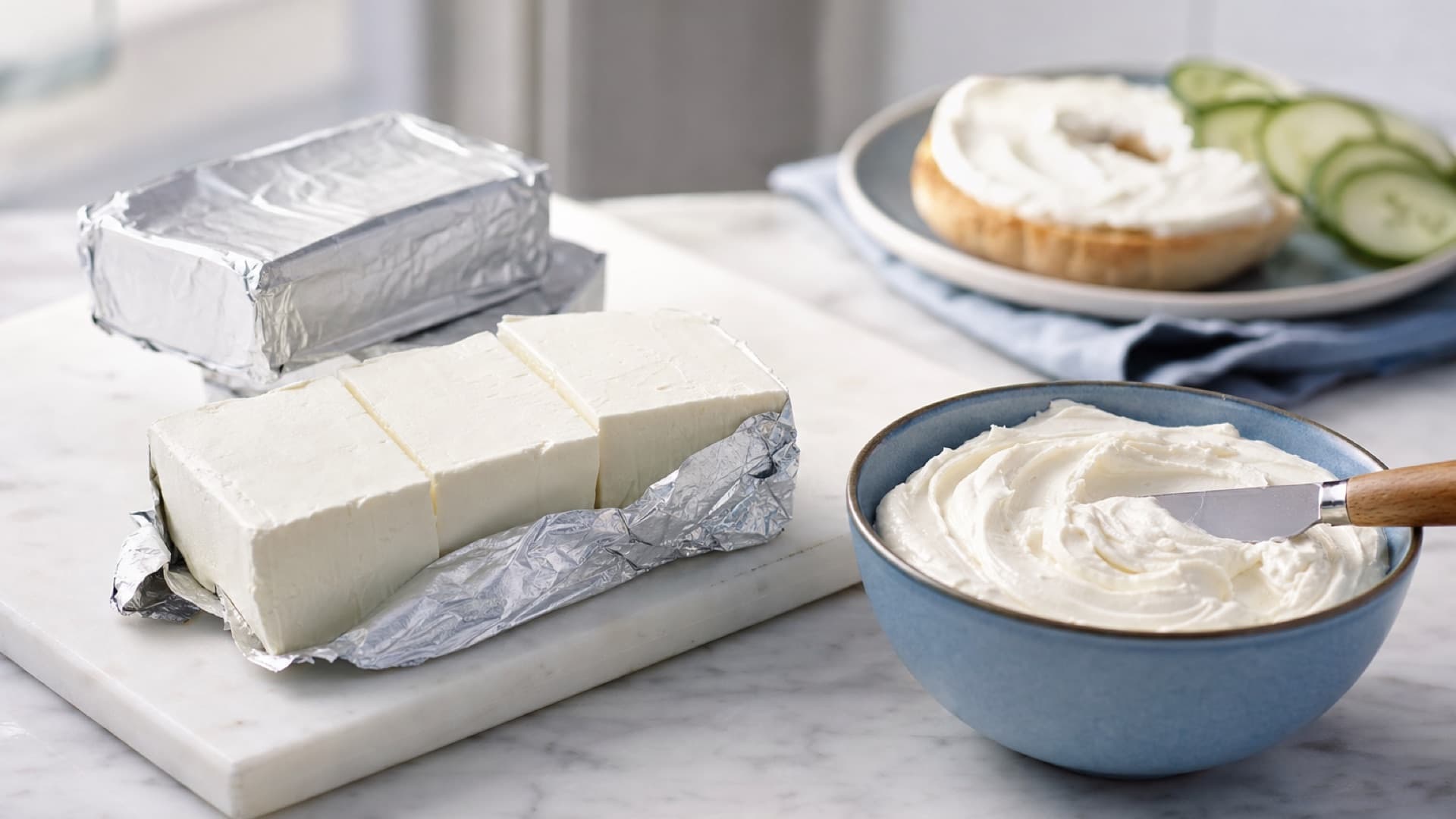
Yes, you can freeze cream cheese, and it is safe to eat after thawing, but the texture changes: it turns crumbly and slightly grainy instead of smooth. Frozen cream cheese works well in baked goods, sauces, soups and dips, but it is a poor choice for spreading on a bagel.
That texture change is why many dairy storage charts list freezing cream cheese as "not recommended," even though freezing does not make it unsafe. This guide explains what happens in the freezer, how to freeze and thaw cream cheese so it stays usable, and which recipes hide the difference.
What Happens When You Freeze Cream Cheese
Cream cheese is a soft, high-moisture cheese held together as an emulsion of milk fat, protein and water. When it freezes, that water forms ice crystals that push the fat and protein apart. When it thaws, the water does not fully bind back in. The result:
- Crumbly, slightly grainy texture instead of a smooth block
- Some liquid separation, which you may see as moisture on the surface
- Flavor that stays largely the same
North Dakota State University Extension notes that cream cheese can be frozen for later use in cooking, in dips or as icing, which matches what most home cooks find: once it is mixed and heated, the graininess is hard to notice.
Food safety is not the issue here. According to the USDA, food kept frozen at 0°F (-18°C) stays safe indefinitely. Freezer times for dairy are about quality, not safety.
How Long Cream Cheese Lasts
| Storage | How long | Notes |
|---|---|---|
| Fridge, unopened | Until the package date | Keep at 40°F (4°C) or below |
| Fridge, opened | About 2 weeks | Wrap tightly; use a clean knife |
| Freezer | Best within about 2 months | Safe longer at 0°F (-18°C); texture declines |
| Thawed in the fridge | Use within a few days | Do not refreeze |
The refrigerator time for opened cream cheese follows widely used dairy storage charts based on USDA guidance. USDA does not publish an official freezer time for cream cheese, so the 2-month figure is our recommendation for best quality, not a safety limit. Like other perishable dairy, cream cheese should not sit at room temperature for more than 2 hours.
Pro tip: If you only need cream cheese for a bagel this week and a cheesecake next month, split the block now. Keep the bagel portion in the fridge and freeze the baking portion right away, while it is still fresh.
How to Freeze Cream Cheese
Unopened Blocks
An unopened foil-wrapped brick can go straight into the freezer. For longer storage, slip it into a freezer bag and press out the air to reduce the chance of freezer burn and absorbed odors. This works for Philadelphia and any other brand of brick cream cheese.
Opened or Partial Blocks
- Portion it. Cut the cream cheese into the amounts your recipes use, such as 4-ounce (113 g) or 8-ounce (227 g) pieces.
- Wrap tightly. Wrap each portion in plastic wrap, then in foil, pressing out air.
- Bag it. Place the wrapped portions in a freezer bag, remove the air and seal.
- Label it. Write the amount and the date, or log it in an inventory app so you know how long it has been frozen.
Tubs, Whipped and Flavored Cream Cheese
Spreadable tub cream cheese can be frozen in its tub with a layer of plastic wrap pressed on the surface, but expect the same crumbly result. Whipped cream cheese contains added air, and flavored versions often contain vegetables, herbs or fruit that release water when thawed. Both are best saved for cooking after freezing, such as stirring into a pasta sauce or baking into a savory dip.
How to Thaw Frozen Cream Cheese
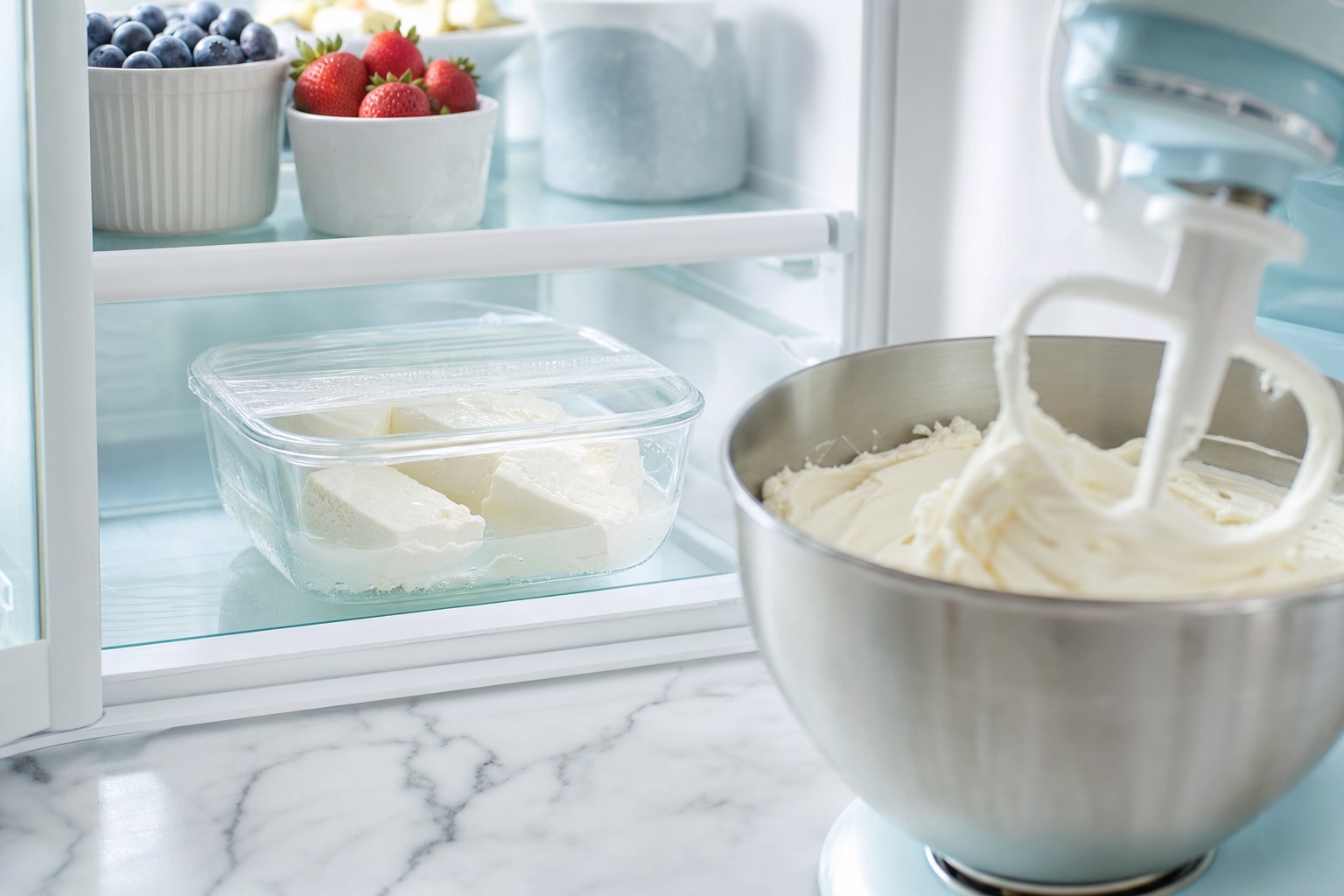
Thaw cream cheese in the refrigerator, not on the counter. A standard 8-ounce block usually needs several hours to overnight, depending on its size and shape.
Once it is thawed:
- Drain any liquid that has separated on the surface, or stir it back in if your recipe can use it.
- Beat it smooth. A stand mixer or hand mixer on medium speed for a minute or two brings back much of the creamy texture. A short spell in the microwave at low power can also soften it before mixing.
- Use it soon. NDSU Extension advises using thawed dairy products soon after thawing and not refreezing them.
If you need cream cheese softened for a recipe today, thawing in the microwave on the defrost setting is fine as long as you use it right away. Check it every 15 to 20 seconds so the edges do not melt.
Best Uses for Frozen Cream Cheese
Thawed cream cheese works best anywhere it is mixed, melted or baked:
- Cheesecake. The baking process and other ingredients mask the texture. Our guide on whether you can freeze cheesecake covers freezing the finished dessert.
- Baked dips. Spinach artichoke dip, buffalo chicken dip and crab dip all come out creamy.
- Pasta sauces and soups. Cream cheese melts into a smooth sauce when heated with liquid.
- Mashed potatoes. Beat a few ounces into hot potatoes for extra richness. See our guide on whether you can freeze mashed potatoes for make-ahead tips.
- Casseroles and breakfast bakes.
- Quick breads, muffins and brownies with a cream cheese swirl.
It works less well for bagels, cold spreads, no-bake cheesecake and cold dips, where a smooth texture is the whole point.
Can You Freeze Cream Cheese Frosting?
Yes. Cream cheese frosting usually freezes better than plain cream cheese because the butter and sugar help keep it smooth. Store it in an airtight container with plastic wrap pressed onto the surface, thaw it in the refrigerator and re-whip it before spreading. If it looks a little loose, beat in a spoonful of powdered sugar.
You can also freeze a cake or cupcakes that are already frosted with cream cheese frosting. Freeze them uncovered on a tray until the frosting is firm, then wrap them tightly. Thaw them in the refrigerator, still wrapped, so condensation forms on the wrap rather than on the frosting.
Because cream cheese frosting is a perishable dairy product, keep it refrigerated and do not leave it out for more than 2 hours.
Other Soft Cheeses in the Freezer
Cream cheese is not alone. Most soft, high-moisture cheeses change texture when frozen. Ricotta and cottage cheese turn watery and grainy, while hard cheeses like cheddar become more crumbly but keep their flavor. Our full guide on how to freeze cheese covers each type, and our list of foods that do not freeze well explains which dairy products are better kept in the fridge. For butter, cream and milk, see our guide on freezing butter and dairy.
FAQ
Can you freeze Philadelphia cream cheese?
Yes. Philadelphia and other brick cream cheeses freeze the same way: wrap tightly, freeze and thaw in the fridge. The texture will be crumbly after thawing, so use it in baking or cooking rather than as a spread.
Is frozen cream cheese safe to eat?
Yes. Freezing does not make cream cheese unsafe. Food kept at 0°F (-18°C) stays safe indefinitely, according to the USDA. The change is in texture, not safety.
Can you freeze cream cheese in the original package?
An unopened foil-wrapped block can be frozen in its package. Adding a freezer bag around it helps protect it from freezer burn. Once opened, rewrap it in plastic wrap and foil.
Can you refreeze cream cheese?
It is better not to. Each freeze and thaw breaks down the texture further, and extension guidance advises against refreezing thawed dairy. Freeze cream cheese in recipe-sized portions so you thaw only what you need.
Can you freeze cream cheese frosting?
Yes. Freeze it in an airtight container, thaw it in the refrigerator and re-whip it before using. It usually holds up better than plain cream cheese.
Freeze It on Purpose, Not as a Rescue
Freezing cream cheese is a good way to save half a block before it goes bad, as long as you plan to bake or cook with it. Portion it, label it and freeze it while it is fresh. Freezer Inventory Tracker can hold it in your fridge with an expiry reminder, then track it in the freezer once you move it, so that cheesecake portion does not get forgotten.