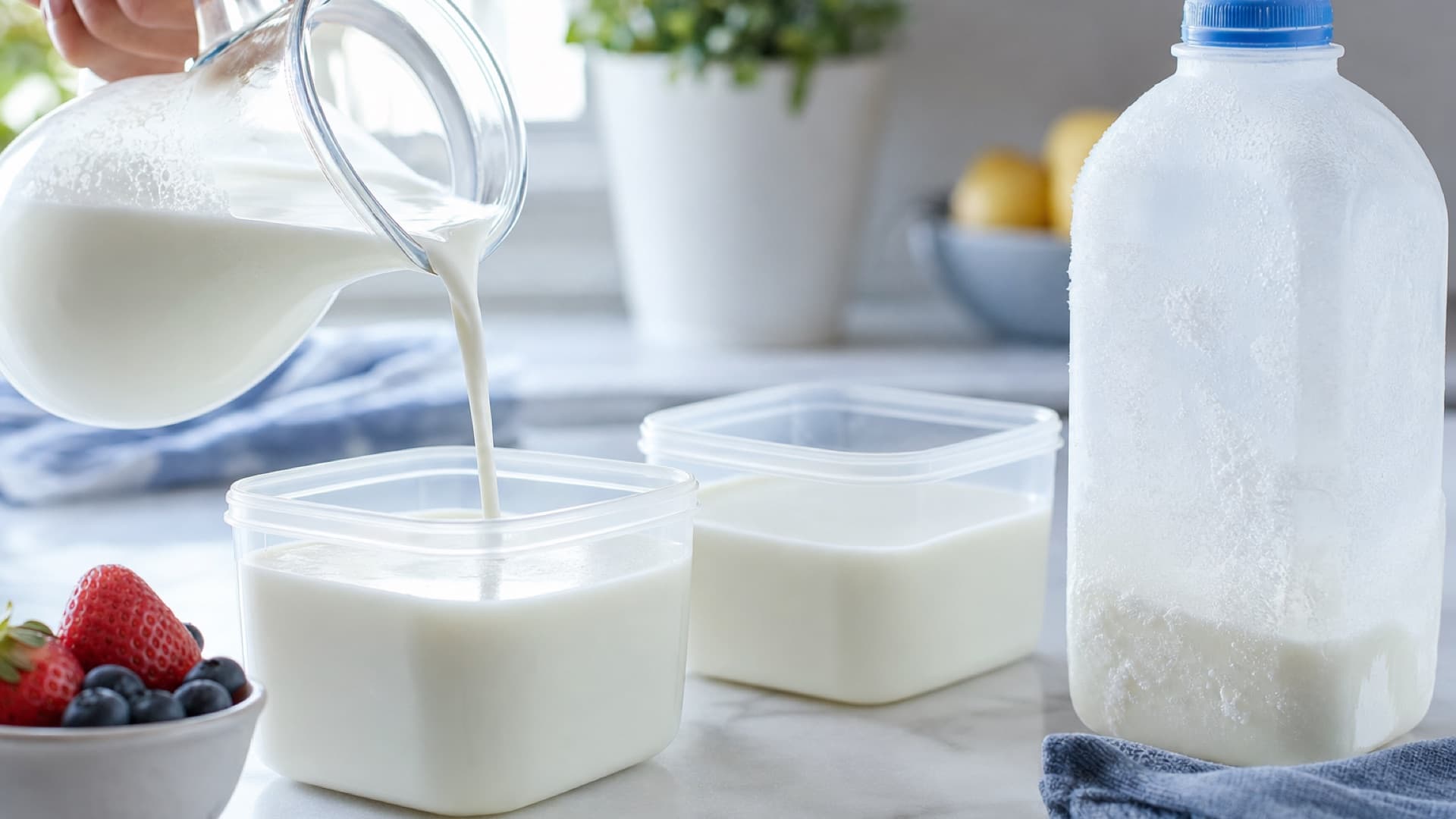
Yes, you can freeze milk. Whole, 2%, skim and buttermilk all freeze safely and keep their best quality for about 3 months at 0°F (-18°C), according to the USDA and Cornell University FoodKeeper guidance. The catch is texture: thawed milk often separates and can look grainy, so it works best for cooking, baking and smoothies rather than a tall glass.
Freezing is a simple way to save milk before a trip, use up a sale, or rescue a jug that will not be finished before its date. Here is how to do it so the container does not crack and the milk thaws safely.
Is Frozen Milk Safe?
Freezing does not make milk unsafe. The USDA Food Safety and Inspection Service explains that food kept continuously at 0°F (-18°C) stays safe indefinitely, because freezing stops bacteria from growing. The recommended storage times are about quality, not safety.
Two conditions matter:
- Freeze milk while it is still fresh. Freezing pauses bacteria; it does not kill them. Milk that is close to spoiling when it goes in will be close to spoiling when it comes out.
- Thaw it in the refrigerator. Like any perishable food, milk should not sit at room temperature for more than two hours.
What Happens to Milk in the Freezer
Milk is mostly water with fat and protein spread through it. As it freezes, the water forms ice crystals that push the fat and protein apart. When it thaws, you may see:
- A yellowish layer of fat on top or flecks of fat throughout
- A slightly grainy or watery texture
- A faint change in flavor if the container was not airtight, since milk picks up freezer odors
Lower-fat milk usually separates less noticeably than whole milk. Shaking or blending the thawed milk brings most of it back together. The texture change does not affect safety or nutrition.
How to Freeze Milk Step by Step
- Check the date. Freeze milk well before the date on the carton, ideally soon after buying it.
- Leave room for expansion. Milk expands as it freezes. If you freeze it in the original plastic jug, pour out about a cup first. In other containers, leave at least an inch (2.5 cm) of headspace.
- Choose the right container. Plastic jugs, freezer-safe plastic containers and heavy freezer bags all work. Avoid glass bottles, which can crack, and paper cartons, which can split at the seams.
- Portion it. Freezing milk in 1- or 2-cup portions lets you thaw only what a recipe needs. Ice cube trays work for small amounts for coffee or smoothies; transfer the cubes to a bag once frozen.
- Label and date it. Write the freezing date on the container so you know when the 3-month window ends.
- Freeze it upright and away from strong odors such as fish or onions.
Pro tip: Freeze milk in flat freezer bags laid on a baking sheet. Once solid, they stack like files and thaw much faster than a full jug.
How Long Milk Lasts: Fridge vs. Freezer
| Milk type | Refrigerator (40°F / 4°C) | Freezer (0°F / -18°C) |
|---|---|---|
| Whole, 2%, 1% or skim milk | About 1 week | 3 months |
| Buttermilk | 1 to 2 weeks | 3 months |
| Thawed milk | Use within a few days, by the original date | Do not refreeze for quality |
| Plant-based milks | Follow the carton | Not listed in USDA charts; check the manufacturer |
Dairy times are from the FoodKeeper guidance developed by USDA FSIS with Cornell University. Freezer times are for best quality; frozen milk kept at 0°F stays safe beyond them.
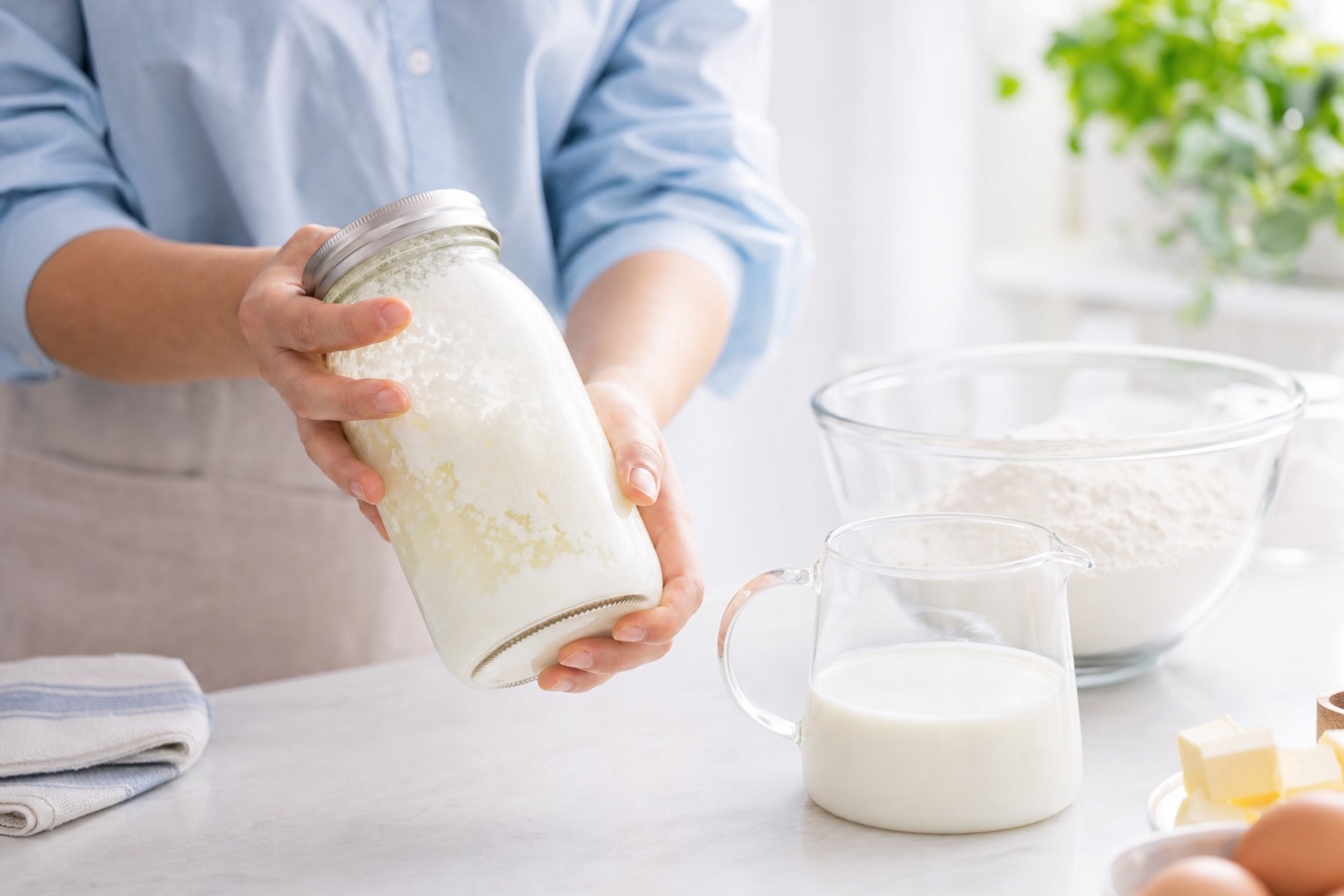
How to Thaw Frozen Milk
The refrigerator is the safest method. Move the container to the fridge and allow about a day for a quart or more; small portions and cubes thaw faster.
If you need it sooner, place the sealed container or bag in a bowl of cold water and change the water every 30 minutes. This follows the same cold-water approach the USDA recommends for thawing other perishable foods.
Avoid thawing milk on the counter or in hot water. The outside warms past 40°F (4°C) while the center is still frozen.
Once thawed:
- Shake or blend it to bring the fat back into the milk.
- Keep it in the fridge and use it within a few days. Do not keep it past the original date on the carton.
- Use it in recipes first. Thawed milk is ideal for baking, pancakes, oatmeal, soups, sauces, mashed potatoes and smoothies. Many people find it fine to drink after a good shake, but the texture can be slightly different.
Can You Freeze Whole Milk?
Yes. Whole milk freezes safely for about 3 months, but it separates more visibly than skim because of its higher fat content. Expect a layer of fat when it thaws. Shake it hard or give it a few seconds in a blender. Whole milk that will be used in baking or sauces needs nothing more.
Can You Freeze Buttermilk?
Yes, and it is one of the best dairy products to freeze. Most recipes call for a cup or less, so a full carton often goes to waste. Freeze buttermilk in 1/2-cup or 1-cup portions, or in an ice cube tray, for up to 3 months. It separates when thawed, so whisk it before using. Because buttermilk is mostly used in pancakes, biscuits, marinades and baked goods, the texture change rarely matters.
What About Almond Milk and Other Plant Milks?
USDA storage charts do not give freezer times for plant-based milks, so check the manufacturer's guidance on the carton. Almond, oat and soy milks can be frozen, but they tend to separate noticeably and may turn grainy, and many brands advise against freezing. If you freeze them, use them in smoothies or cooking where texture matters less. Shelf-stable cartons are best left unopened in the pantry until you need them.
Milk Products That Freeze Poorly
Not every dairy product handles the freezer well. Sour cream, yogurt and soft cheeses change texture noticeably, and cream-based sauces can split. For details, see our guides on freezing butter and dairy, whether you can freeze cream cheese and what not to freeze.
Container choice matters as much as the food itself. Our guide to the best containers for freezer storage covers which jars, bags and tubs handle expansion.
FAQ
Can you freeze milk in the plastic jug?
Yes, as long as you pour out about a cup first to leave room for expansion. A completely full jug can bulge or split as the milk freezes.
Does freezing milk change the taste?
Usually only slightly. The bigger change is texture, since the fat separates. If the container is not airtight, milk can absorb odors from other foods, so seal it well and keep it away from strong-smelling items.
How long is milk good in the freezer?
According to FoodKeeper guidance from USDA and Cornell University, milk keeps its best quality for about 3 months in the freezer. It remains safe longer if kept continuously at 0°F (-18°C), but quality declines.
Can you refreeze milk after thawing?
It is not recommended for quality. Each freeze and thaw cycle makes the texture worse. Thaw only what you need, which is why freezing in small portions helps.
Can you freeze buttermilk for baking?
Yes. Buttermilk freezes well for up to 3 months and works perfectly in pancakes, biscuits and cakes after thawing. Whisk it first to smooth out separation.
Keep Frozen Milk on Your Radar
Freezing milk is easy: leave headspace, freeze it fresh, thaw it in the fridge and use it within about 3 months. The hardest part is remembering it is there. Freezer Inventory Tracker records the date each container goes in and sends an expiry reminder before it passes its best, so the milk ends up in pancakes instead of the trash.